


How is Ocean Freight Calculated? This is a crucial question for businesses exploring the costs of international maritime freight shipping. A clear understanding of how freight charges are calculated helps companies budget expenses, compare rate quotes between shipping providers, and minimize unexpected costs.
Basically, Ocean Freight is calculated based on the shipping method:
-
FCL (Full Container Load): Freight is typically calculated by the number and type of containers, such as 20ft or 40ft containers.
-
LCL (Less than Container Load): Freight is usually calculated by volume (CBM) or weight (tons), whichever is higher based on the W/M principle.
In addition to basic ocean freight, the total shipping cost may include carrier surcharges, origin and destination port fees, documentation fees, customs clearance, or inland transportation, depending on the scope of service.
1. What is Ocean Freight?
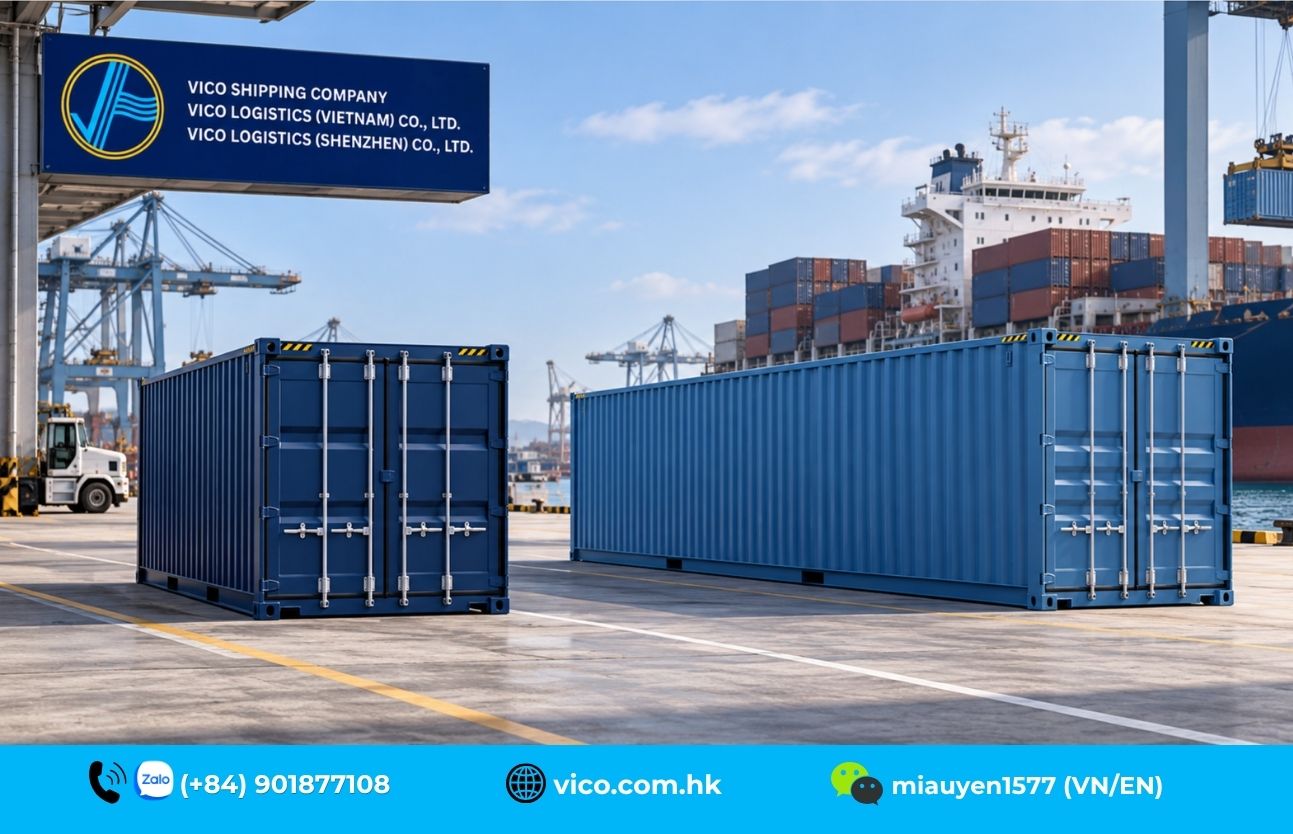
Ocean Freight is the cost of transporting goods by sea from the Port of Loading (POL) to the Port of Discharge (POD).
In import-export operations, Ocean Freight is commonly referred to as sea freight or maritime freight charges.
For example, a business in Vietnam importing raw materials from China can ship goods by sea vessel from Shenzhen Port to Cat Lai Port, Ho Chi Minh City.
The business will need to determine:
-
Quantity and characteristics of the cargo.
-
Ports of departure and destination.
-
Shipping method: FCL or LCL.
-
Schedule and shipping timeline.
-
Fees to be paid by the buyer or the seller.
Is Ocean Freight the Total Shipping Cost?
Not necessarily.
It is essential to distinguish between Base Ocean Freight and Total Shipping Cost.
General Formula
Total Sea Shipping Cost = Base Ocean Freight + Freight Surcharges + Local Charges + Incidental Services
Actual fees depend on rate quotations, Incoterms, and the scope of service. Not every shipment incurs all possible charges.
For instance, if a business receives an Ocean Freight quote of $800/container, this does not mean the total shipment cost is only $800, because the quote may exclude THC, documentation, handling, or inland trucking.
Therefore, businesses should clearly verify what is included and excluded before confirming a booking.
2. What Factors Affect Ocean Freight Rates?
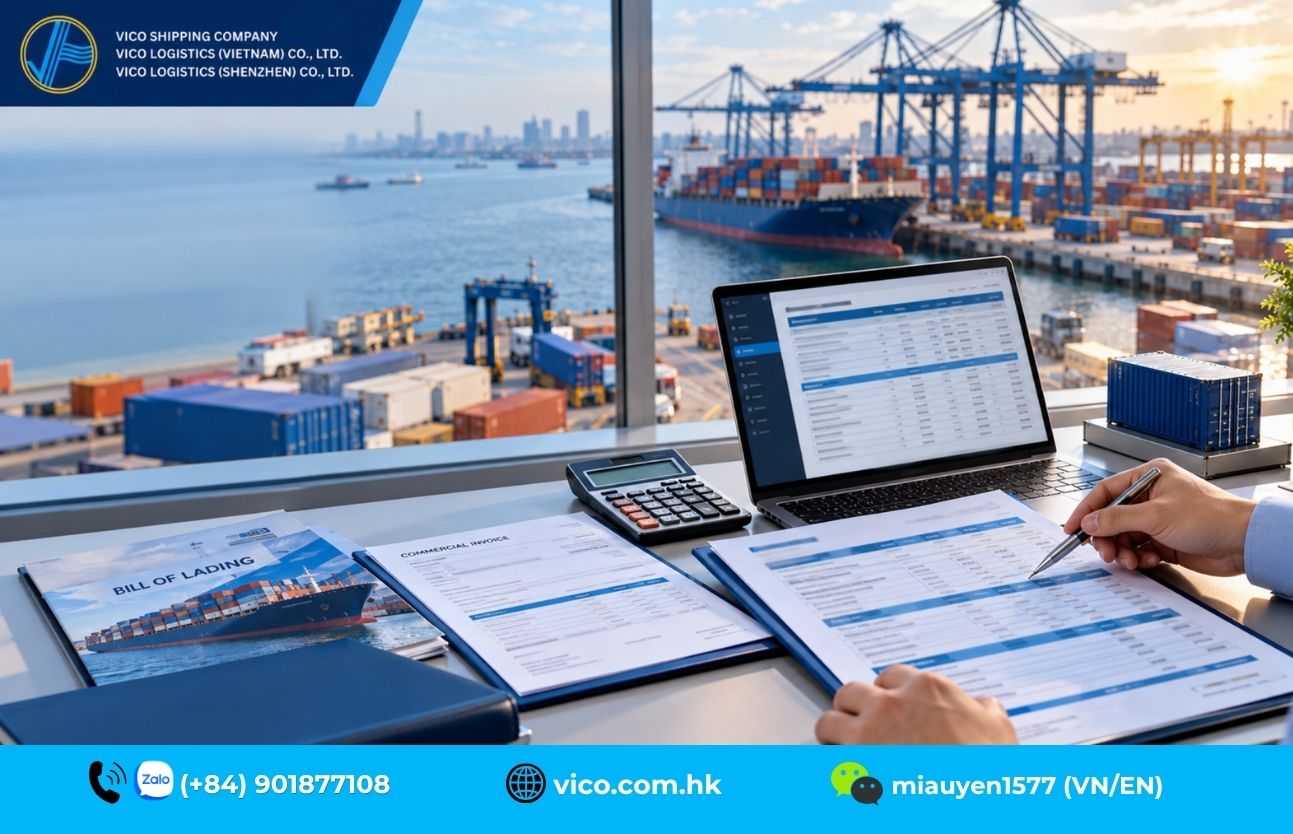
Ocean freight rates are not fixed for every shipment. Even when shipping along the same route, costs can vary depending on timing and shipping conditions.
2.1. Routes and Shipping Ports
Distance, shipping routes, number of transshipments, port connectivity, and congestion levels can impact freight rates. For example, a direct shipping route from China to Vietnam may have a different cost structure than a route requiring transshipment via a third port.
2.2. Container Types and Shipping Methods
Common container types include:
-
20ft Container (20GP).
-
40ft Container (40GP).
-
40ft High Cube Container (40HC).
-
Refrigerated Container (Reefer).
-
Specialized containers, depending on cargo characteristics.
Reefer or specialized containers may incur specific fees due to equipment and operational requirements.
2.3. Cargo Characteristics
Cargo type, weight, volume, dimensions, and preservation requirements can all affect costs. For example, standard cargo and temperature-controlled cargo may carry different rates despite sharing the same route.
2.4. Shipping Timing
Rates fluctuate based on market supply and demand, peak seasons, fuel costs, container shortages, and schedule adjustments. Surcharges like PSS or GRI can also increase rates during certain periods.
2.5. Trade Terms and Scope of Service
Incoterms such as FOB, CIF, or DAP affect transport organization responsibilities, cost-sharing, and risks between buyer and seller. Therefore, when comparing quotes, businesses must ensure that the options share the same scope of service.
3. How to Calculate FCL (Full Container Load) Ocean Freight
FCL is a shipping method where cargo fills an entire container. A single shipper utilizes a container exclusively for their shipment rather than sharing space with other cargo owners.
FCL freight is usually quoted per container, with rates depending on the container type and shipping route.
3.1. FCL Calculation Formula
Basic FCL Sea Freight:
Where:
-
N: Number of containers.
-
R: Rate per container.
Total Estimated Cost:
Note: Some quotations already include a portion of surcharges within the unit freight rate. Do not double-count items to avoid duplicate expenses.
3.2. FCL Calculation Example
Suppose a business imports two 40HC containers from China to Vietnam.(Illustrative hypothetical data, not a current VICO Logistics quote.)
|
Category
|
Value
|
|
Container Quantity
|
2 × 40HC
|
|
Freight per container
|
850 USD
|
|
Total Ocean Freight
|
1,700 USD
|
|
Additional Surcharges (total shipment)
|
200 USD
|
|
Local Charges (total shipment)
|
300 USD
|
|
Total Estimated Cost
|
2,200 USD
|
Therefore:
Total Estimated Cost = 1,700 + 200 + 300 = 2,200 USD
The above figure only illustrates the calculation method and excludes costs outside the hypothetical scope, such as import duties, inland transport, or cargo insurance.
3.3. Does FCL Freight Depend on Cargo Weight?
Standard FCL freight is quoted per container and does not directly multiply by the weight of the goods. However, cargo weight remains critical because businesses must comply with container payload limits, transport vehicle limits, and related regulations. For heavy cargo, carriers or forwarders may apply specific conditions or surcharges.
4. How to Calculate LCL (Less than Container Load) Ocean Freight
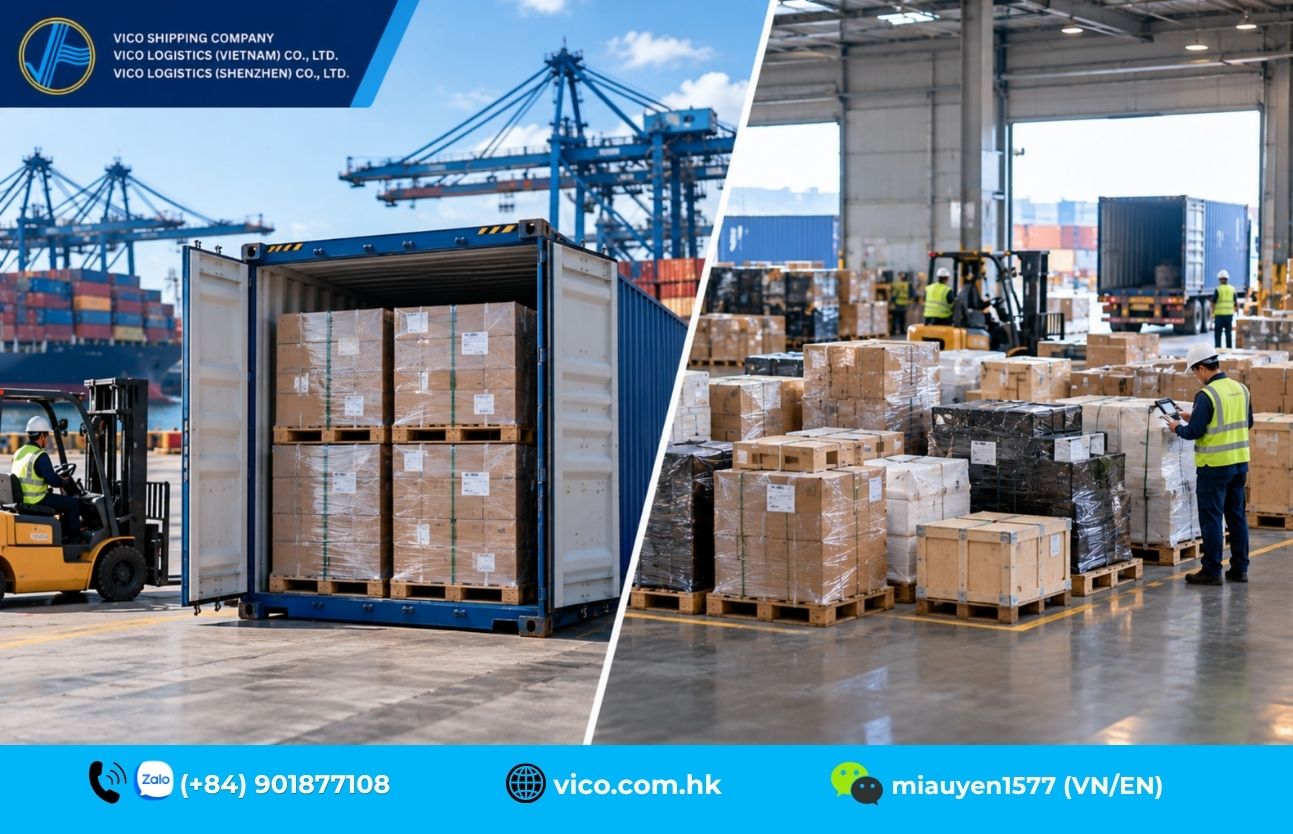
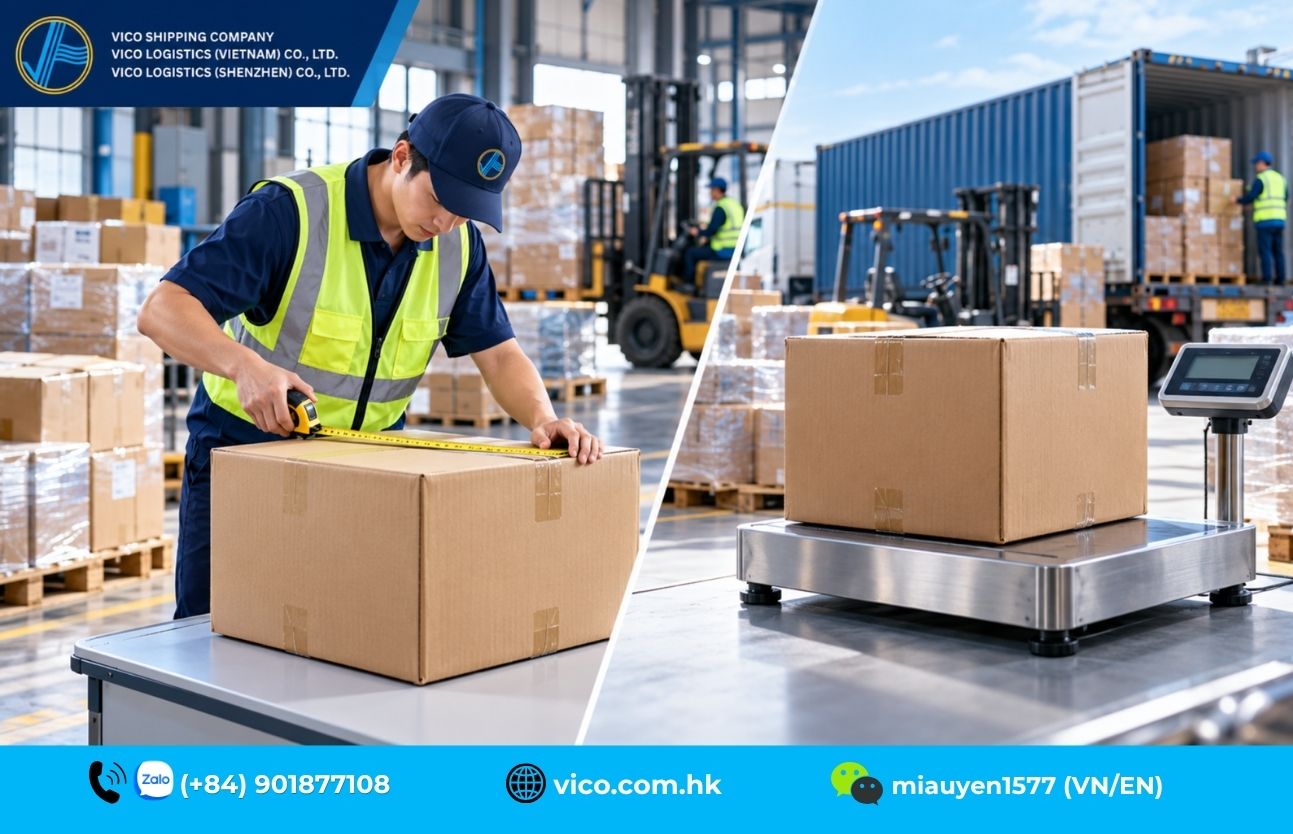
LCL is a shipping method where multiple shipments from different owners are consolidated into a single container. This method suits businesses lacking sufficient volume to fill an entire container.
Unlike FCL, LCL freight is typically calculated using the W/M (Weight or Measurement) unit.
4.1. What is W/M in Maritime Shipping?
W/M is the principle of calculating freight based on either the weight or volume of the cargo.
According to common calculation methods:
-
1 CBM = 1 m³ of cargo (Cubic Meter)
-
1 MT = 1 ton = 1,000 kg (Metric Ton)
The billing unit is the higher value between CBM and weight in tons. This billing unit is also called a Revenue Ton (RT).
Note: Units, conversion factors, minimum freight charges, and rounding rules must be verified against the supplier’s tariff schedule.
4.2. CBM Calculation Formula
Formula (when dimensions are in meters):
CBM = Length (m) × Width (m) × Height (m) × Number of packages
If dimensions are measured in centimeters (cm):
CBM = (Length × Width × Height × Number of packages) ÷ 1,000,000
Example:
A business ships 10 cartons with dimensions per carton:
-
Length: 100 cm
-
Width: 80 cm
-
Height: 60 cm
Volume of one carton:
1 × 0.8 × 0.6 = 0.48 CBM
Total volume of 10 cartons:
0.48 × 10 = 4.8 CBM
Businesses can use this formula to calculate cargo volume before requesting an LCL quotation.
4.3. LCL Calculation Formula
-
Step 1: Determine W/M (Revenue Ton / Billable Weight or Volume)
Billable W/M = Higher value between [CBM] and [Weight in kg ÷ 1,000]
-
Step 2: Calculate Ocean Freight
LCL Freight = Billable W/M × Rate per W/M
(Apply the supplier's minimum billing level and rounding rules if applicable.)
4.4. LCL Calculation Example
Suppose a business has a shipment with the following details:
-
Total Volume: 4.8 CBM
-
Total Weight: 2,000 kg
-
Ocean Freight Rate: 75 USD/W/M
-
Step 1: Convert weight:
2,000 kg = 2 tons
-
Step 2: Compare weight and volume:
-
By volume: 4.8 CBM
-
By weight: 2 tons
-
Take the higher value: 4.8 W/M
-
-
Step 3: Calculate ocean freight:
4.8 × 75 = 360 USD
This is the basic ocean freight, excluding CFS warehouse fees, documentation fees, or other handling charges.
4.5. How is Heavy Cargo with Small Volume Calculated?
Suppose a business has a shipment with:
-
Volume: 2 CBM
-
Weight: 3,500 kg
-
Rate: 75 USD/W/M
The converted weight is 3.5 tons, which is greater than 2 CBM.
Therefore:
-
Billable W/M = 3.5 W/M
-
Ocean Freight = 3.5 × 75 = 262.50 USD
This example shows that not all LCL shipments are billed strictly on CBM. For heavy cargo, weight can be the determining factor.
5. Quick LCL Sea Freight Calculation Tool
You can use the interactive table below to estimate basic LCL ocean freight for a shipment.
|
Information
|
Value
|
|
Total Volume
|
4.8 CBM
|
|
Total Weight
|
2,000 kg
|
|
Freight Rate
|
75 USD/W/M
|
-
Calculated Billable W/M: 4.8 W/M
-
Estimated Basic Ocean Freight: 360 USD (Excludes surcharges, local charges, taxes, and potential minimum freight charges).
SEO Implementation Tip on VICO Website: Develop the CBM/W/M calculator into a dedicated utility or embed it directly in the article. This creates practical value, helps readers compute independently, and provides a reason to return to the website.
6. Common Surcharges in Maritime Transport
When receiving an Ocean Freight quotation, businesses may encounter various surcharges alongside the main transport fee.
|
Fee Type
|
Full Name
|
Meaning
|
|
THC
|
Terminal Handling Charge
|
Container handling and lifting fees at the port
|
|
BAF
|
Bunker Adjustment Factor
|
Fuel adjustment surcharge
|
|
LSS
|
Low Sulphur Surcharge
|
Low sulfur fuel compliance surcharge
|
|
PSS
|
Peak Season Surcharge
|
Peak season demand surcharge
|
|
CIC
|
Container Imbalance Charge
|
Equipment imbalance surcharge
|
|
D/O
|
Delivery Order Fee
|
Release order issuance fee
|
|
CFS
|
Container Freight Station
|
Handling fee at LCL warehouse
|
|
Documentation Fee
|
Documentation Fee
|
Document processing and issuance fee
|
|
Demurrage
|
Demurrage
|
Container storage fee at port past free time
|
|
Detention
|
Detention
|
Container late return fee outside port past free time
|
7. Examples of Total Sea Transport Cost
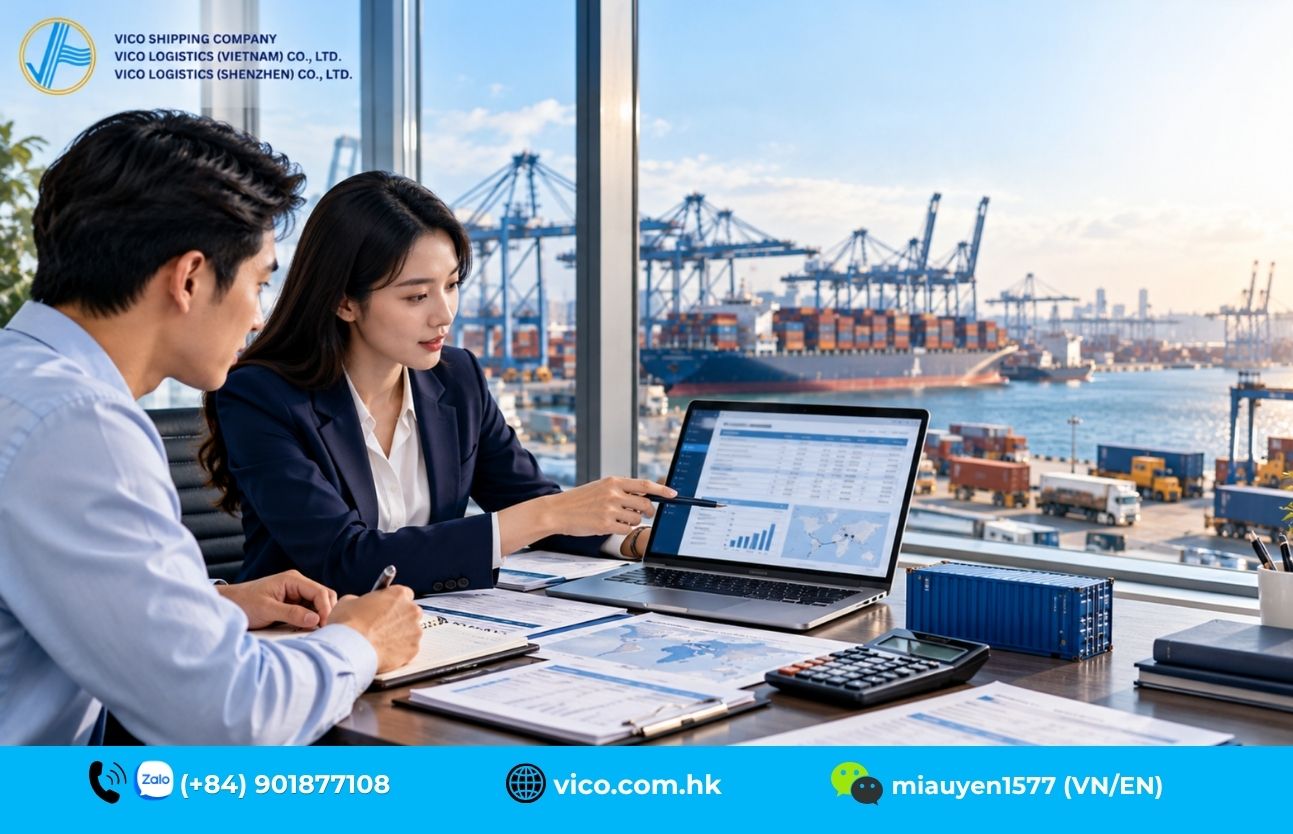
To better understand the difference between ocean freight and total cost, examine the two hypothetical scenarios below.
7.1. FCL Total Cost Example
A business imports one $20\text{GP}$ container from China to Vietnam.
|
Fee Item
|
Illustrative Cost
|
|
Ocean Freight
|
650 USD
|
|
Uncalculated Freight Surcharges
|
100 USD
|
|
Origin Local Charges
|
150 USD
|
|
Destination Local Charges
|
180 USD
|
|
Inland Transport in Vietnam
|
120 USD
|
|
Total
|
1,200 USD
|
The illustrative total cost is 1,200 USD, which is 550 USD higher than the basic ocean freight. This hypothetical scenario assumes the buyer absorbs all listed expenses; in reality, costs may be split per Incoterms.
7.2. LCL Total Cost Example
A business imports a shipment with a volume of 3 CBM and a weight of 900 kg.
Assuming a rate of 80 USD/W/M:
-
Billable W/M = 3 W/M (since 3 CBM > 0.9 tons)
-
Ocean Freight = 3 × 80 = 240 USD
|
Fee Item
|
Illustrative Cost
|
|
Ocean Freight
|
240 USD
|
|
CFS and Handling at Origin
|
60 USD
|
|
CFS and Handling at Destination
|
90 USD
|
|
Documentation Fee
|
35 USD
|
|
Total
|
425 USD
|
The illustrative total cost is $425\text{ USD}$, excluding customs clearance, duties, and inland transport. All price figures in both examples are solely for illustrating cost calculation methods and do not reflect specific market rates.
Why is Ocean Freight Quoted Low While Total Cost is High?
A forwarder may quote a low Ocean Freight rate while omitting certain origin or destination fees. Conversely, a higher quote may bundle multiple services. Therefore, rather than solely comparing base freight rates, businesses should request an itemized breakdown aligned with the exact scope of service, cargo type, route, shipping schedule, and associated conditions. Transparently itemized quotes are generally more reliable than unrealistically low freight numbers hiding unexpected fees.
8. Should You Choose FCL or LCL to Optimize Costs?
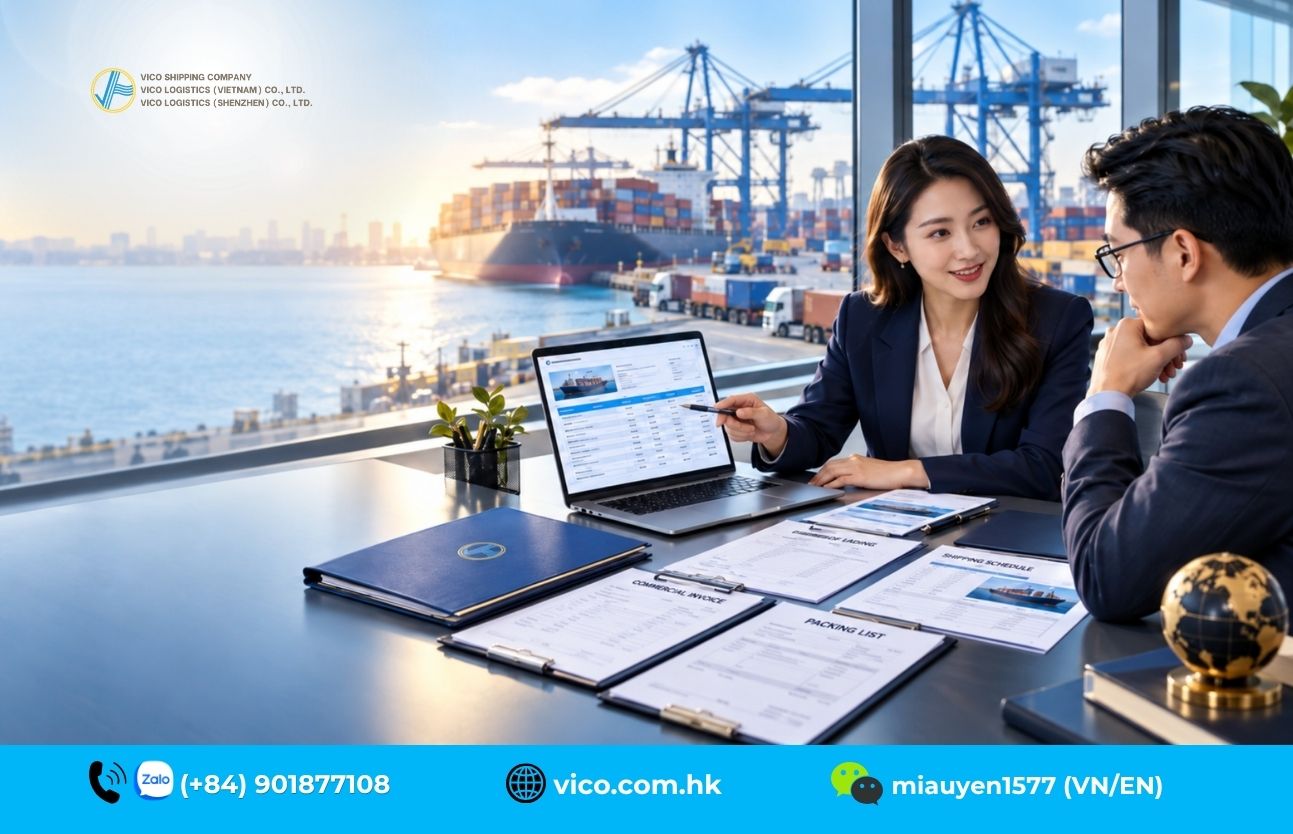
The choice between FCL and LCL depends on cargo volume, weight, delivery requirements, and total actual costs.
|
Criteria
|
FCL
|
LCL
|
|
Format
|
Full Container
|
Consolidated Container
|
|
Billing Unit
|
Per container
|
Usually per W/M
|
|
Suitability
|
Large shipments or dedicated container needs
|
Small shipments
|
|
Cost
|
Per container even if space isn't fully utilized
|
Based on billable cargo volume/weight
|
|
Cargo Handling
|
Fewer consolidation/deconsolidation steps
|
Requires consolidation and deconsolidation
|
|
Transit Time
|
Dependent on vessel schedule and container workflow
|
May include CFS processing time
|
Comparison Example
Suppose there is a shipment of $18\text{ CBM}$ weighing $8\text{ tons}$.
|
Category
|
LCL
|
FCL 20GP
|
|
Assumed Base Rate
|
$75\text{ USD/W/M}$
|
$900\text{ USD/container}$
|
|
Transport Cost
|
$1,350\text{ USD}$
|
$900\text{ USD}$
|
|
Illustrative Additional Fees
|
$250\text{ USD}$
|
$500\text{ USD}$
|
|
Total
|
$1,600\text{ USD}$
|
$1,400\text{ USD}$
|
Under this assumption, FCL has a total cost $200\text{ USD}$ lower than LCL. However, if another route features higher container rates or differing destination fees, results could reverse. Businesses should request both FCL and LCL quotes before deciding.
9. How to Optimize Ocean Freight Costs?
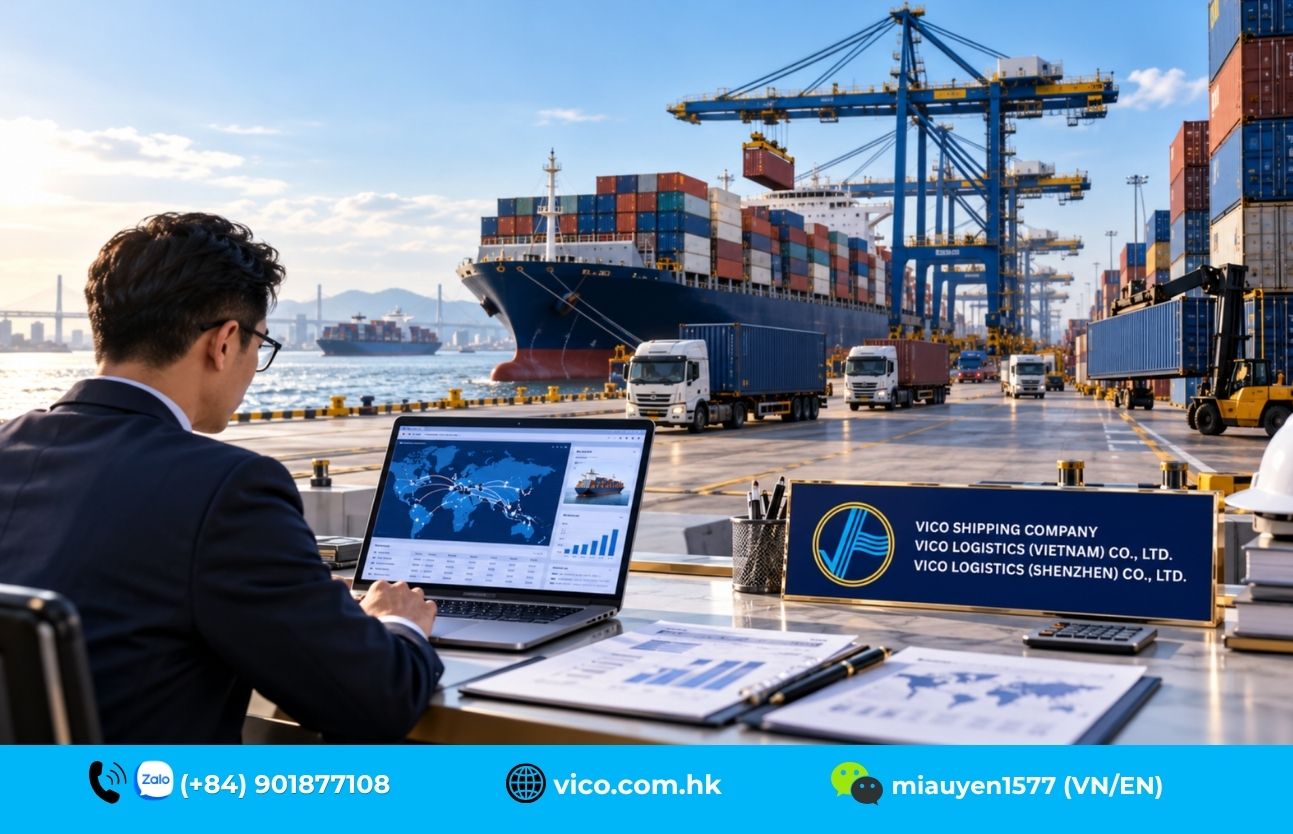
Understanding the pricing formula is just the first step. To save actual costs, businesses must also optimize their shipping operations.
9.1. Choose FCL or LCL Based on Total Cost
Do not default small shipments to LCL or large shipments to FCL. Always compare the total transport cost of both options, including related local and handling fees.
9.2. Optimize Packaging and Cargo Volume
For LCL, CBM volume directly dictates billable units. Using rational packaging dimensions minimizes wasted space while maintaining cargo safety.
9.3. Proactively Plan Shipments
When import-export demand can be forecasted, businesses should book early to allow adequate time to compare schedules, freight rates, and shipping terms.
9.4. Fully Verify Surcharges
Before confirming a booking, check:
-
Does the ocean freight include BAF, LSS, or PSS?
-
How are origin and destination local charges calculated?
-
Are there CFS or specialized cargo handling fees?
-
What is the container free storage time?
-
Until what date is the quotation valid?
-
Are customs duties, clearance, and inland trucking within the scope of the quote?
9.5. Coordinate with Experienced Logistics Partners
A qualified logistics partner not only helps book transport space but also reviews schedules, delivery terms, pricing structures, and potential risks. For businesses trading regularly between China and Vietnam, evaluating costs, transit times, and route stability simultaneously enhances supply chain efficiency.
10. What Information is Required for an Accurate Ocean Freight Quote?
|
Information
|
Example
|
|
Port of Loading (POL)
|
Shenzhen, China
|
|
Port of Discharge (POD)
|
Cat Lai, Vietnam
|
|
Cargo Type
|
Components, machinery, raw materials
|
|
Shipment Type
|
FCL or LCL
|
|
Volume
|
$5\text{ CBM}$
|
|
Weight
|
$2,500\text{ kg}$
|
|
Container Options
|
20GP, 40GP, 40HC
|
|
Target Shipping Date
|
Expected ETD
|
|
Incoterms
|
FOB, EXW, CIF, etc.
|
|
Required Service
|
Port-to-Port or Door-to-Door
|
For reefer, oversized, or special-handling cargo, provide matching technical parameters.
Consult Ocean Freight with VICO Logistics
Every shipment has unique requirements regarding routes, schedules, container types, and service scopes. Therefore, an appropriate quote must be built on actual data rather than generic reference rates.
VICO Logistics assists businesses in finding and selecting FCL/LCL maritime transport solutions, combining related logistics services according to operational needs.
Are you looking to ship goods from China to Vietnam or manage imports/exports via sea freight? Send your shipment details for VICO Logistics to evaluate transport options, advise on FCL/LCL, and prepare a tailored quotation.
Proposed Website CTA: Request Sea Freight Quotation (Link CTA to VICO Logistics' contact page or official quote request form).
11. Frequently Asked Questions about Ocean Freight Calculation
11.1. Is Ocean Freight calculated by kg or CBM?
This depends on the shipping method. FCL is usually billed per container. LCL is typically billed via W/M, comparing CBM volume against metric tons and taking the higher value.
11.2. How many kg is 1 CBM in maritime shipping?
In standard LCL W/M rules, 1 CBM is compared equivalently to a billing unit of $1,000\text{ kg}$. This is a billing convention rather than a physical conversion from volume to mass.
11.3. Is a 20ft container cheaper than a 40ft container?
A 20ft rate can be lower than a 40ft rate on many routes, but not always. Specific quotations must be verified by carrier, timing, and equipment availability.
11.4. Does Ocean Freight include THC?
It depends on quotation terms. Some rate levels bundle certain handling charges, while others list THC separately. Businesses must clarify this point.
11.5. Does sea freight include import duties?
Generally, basic ocean freight excludes import duties and import VAT. These must be reviewed separately under regulatory and trade terms.
11.6. How often do ocean freight rates change?
Depending on the market, carriers, and contract types, spot quotes change frequently, whereas recurring service contracts may apply agreed-upon duration pricing.
11.7. How to find out the exact Ocean Freight rate?
Businesses must provide the shipping route, cargo type, quantity, weight, volume, container type, Incoterms, and expected shipping date. Logistics providers will use these details to check applicable freight and surcharges.
Conclusion
Ocean Freight is calculated based on the shipping method, billable cargo quantity, route, and relevant surcharges.
For FCL, businesses generally pay per container. For LCL, freight relies on W/M, representing volume or converted weight based on rating rules. However, for accurate budget estimation, companies must evaluate total expenses from origin to destination instead of relying solely on base ocean freight.
Understanding formulas, identifying surcharges, and selecting optimal shipping modes help businesses maintain active control over logistics costs.
Contact VICO Logistics for tailored sea transport solutions and quotes suited to your actual requirements.
- Factory Coffee: The Global Coffee Harvest Calendar
- What's So Good About Vietnam Manufacturers
- Electronics Shipping: Mastering The Logistics Of High-Value Technology
- Door To Door Cambodia Shipping: The Ultimate Logistics Solution For 2026
- Trucking Cambodia - Vietnam: Fast & Reliable Cross-Border Solutions 2026
Get a Logistics Quote in just 5 minutes
Professional international transportation and supply chain solutions tailored for your business.
Get a quote now ↗Quick Contact
🇻🇳 Ms Uyen
Hotline / Zalo
(+84) 901 877 108WeChat (VN/EN)
miauyen1577Scan to Contact
Zalo
🇨🇳 Ms Schyler
Office Hotline
(+852) 3759 9300WeChat ID
Schyler_skylarScan to Contact
VICO International Logistics — Your Trusted Logistics Partner in Indochina
Senior member of international logistics and trade associations: Eurocham, JCtrans, VICOFA, VITAS, and more.