

Table of Contents 1. Introduction: Why Invest in Da Nang’s Logistics Revolution? 2. Why Logistics Da Nang is Rising with FTZ and IFC 3. Logistics Da Nang Infrastructure: Ports, Airports, Railways, and Artificial Islands 4. Policy Advantages for FTZ and Logistics Development 5. Opportunities and Challenges in Logistics Da Nang 6. VICO Logistics Services: Trucking and Customs Clearance 7. Investor Checklist: Setting Up in Da Nang FTZ 8. Roadmap 2025–2027: Growth with FTZ and IFC 9. Conclusion: Partner with VICO for Success |
1. Introduction: Why Invest in Da Nang’s Logistics Revolution?
Looking for the next big hub to transform your supply chain?
What if one destination offered cutting-edge ports, high-speed railways, and artificial islands to redefine global trade?
Welcome to Da Nang City, Vietnam’s rising star for investors.
On June 13, 2025, the Free Trade Zone (FTZ) was launched, spanning 1,881 hectares across seven specialized zones in Liên Chiểu and Hòa Vang Districts for production, logistics, digital economy, and high-tech industries.
Paired with the Vietnam IFC, effective September 1, 2025, with a 6.17-hectare core on Võ Văn Kiệt Street, Logistics Da Nang is reshaping investment landscapes. With Liên Chiểu Port (handling 50 million tonnes by 2050), a 350 km/h North-South railway, and a visionary 1,500-hectare artificial islands project in Đà Nẵng Bay, the city is set for explosive growth.
By 2030, the FTZ will drive 8–9% of Đà Nẵng’s GRDP, reaching 25% by 2050.
Why act now? Da Nang offers unmatched infrastructure, policies, and investor momentum from giants like Adani and Sun Group, making it a prime destination for logistics, manufacturing, and finance.

2. Why Logistics Da Nang is Rising with FTZ and IFC
2.1 Free Trade Zone: A Next-Generation Model
The Free Trade Zone, Vietnam’s first, covers 1,881 hectares across seven strategic locations, as outlined by VietnamNet:
- 500 hectares from Hòa Hiệp Bắc Ward to Hòa Liên Commune (Liên Chiểu District).
- 559 hectares in Hòa Ninh Commune (Hòa Vang District).
- 90 hectares at Bà Nà Hills (Hòa Vang District).
- 23 hectares in Hòa Liên Commune for digital economy and innovation.
- 70 hectares in Hòa Nhơn Commune for trade and services.
- 350 hectares in Hòa Phong Commune for high-tech industries.
- 289 hectares in Hòa Phú Commune for multi-modal logistics.
Launched with a VNĐ800 billion (US$32 million) project by Sun Group on August 27, 2025, at Bà Nà Hills, the FTZ supports:
- Production and logistics: High-value manufacturing and multi-modal hubs.
- Trade and services: Zones for global commerce.
- Digital and high-tech: Areas for AI, semiconductors, blockchain, and renewable energy.
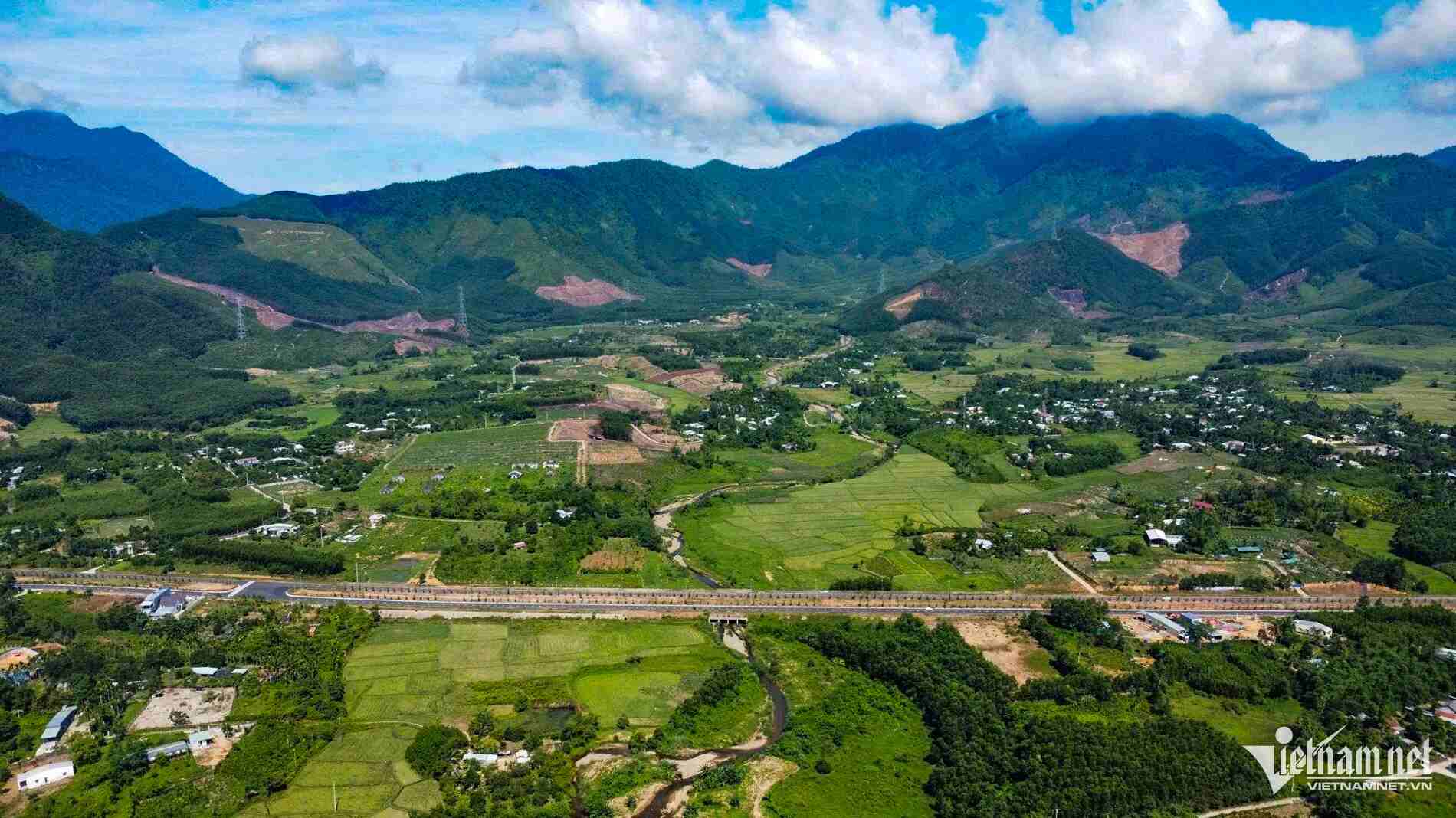
Photo: Vietnamnet
By 2030, the FTZ is projected to generate VNĐ36 trillion (US$1.44 billion), support 1,500 enterprises, and create 150,000 jobs, contributing 25% to GRDP by 2050.
2.2 International Financial Center: Finance Meets Logistics
The Vietnam IFC, part of a dual-city model with Ho Chi Minh City, operates from a 6.17-hectare hub on Võ Văn Kiệt Street. It focuses on:
- Green finance: Funding sustainable logistics and renewable energy.
- Fintech and digital assets: Platforms for digital currencies and blockchain solutions.
- Fund management: Attracting remittance funds and boutique managers.
Operational since September 2025 with a temporary 8-story office at Software Park No. 2, the International Financial Center aims for a 22-story, 27,000 m² building by year-end, targeting VNĐ10 trillion (US$400 million) in transactions by 2027.
3. Logistics Da Nang Infrastructure: Ports, Airports, Railways, and Artificial Islands
Import-export ports:
Liên Chiểu Port:
- Completed in 2025 with a 1.17 km sea dike, 7.3 km shipping channel, and 20 berths, handling 8,000–18,000 TEU containers by 2030 and 50 million tonnes by 2050. Investment: VNĐ23,335 billion for 12–15 berths (8 liquid/gas, 8 container, 6 general cargo; 4,220–5,745 m). A six-lane, 2.95 km coastal road opens in Q1 2026.
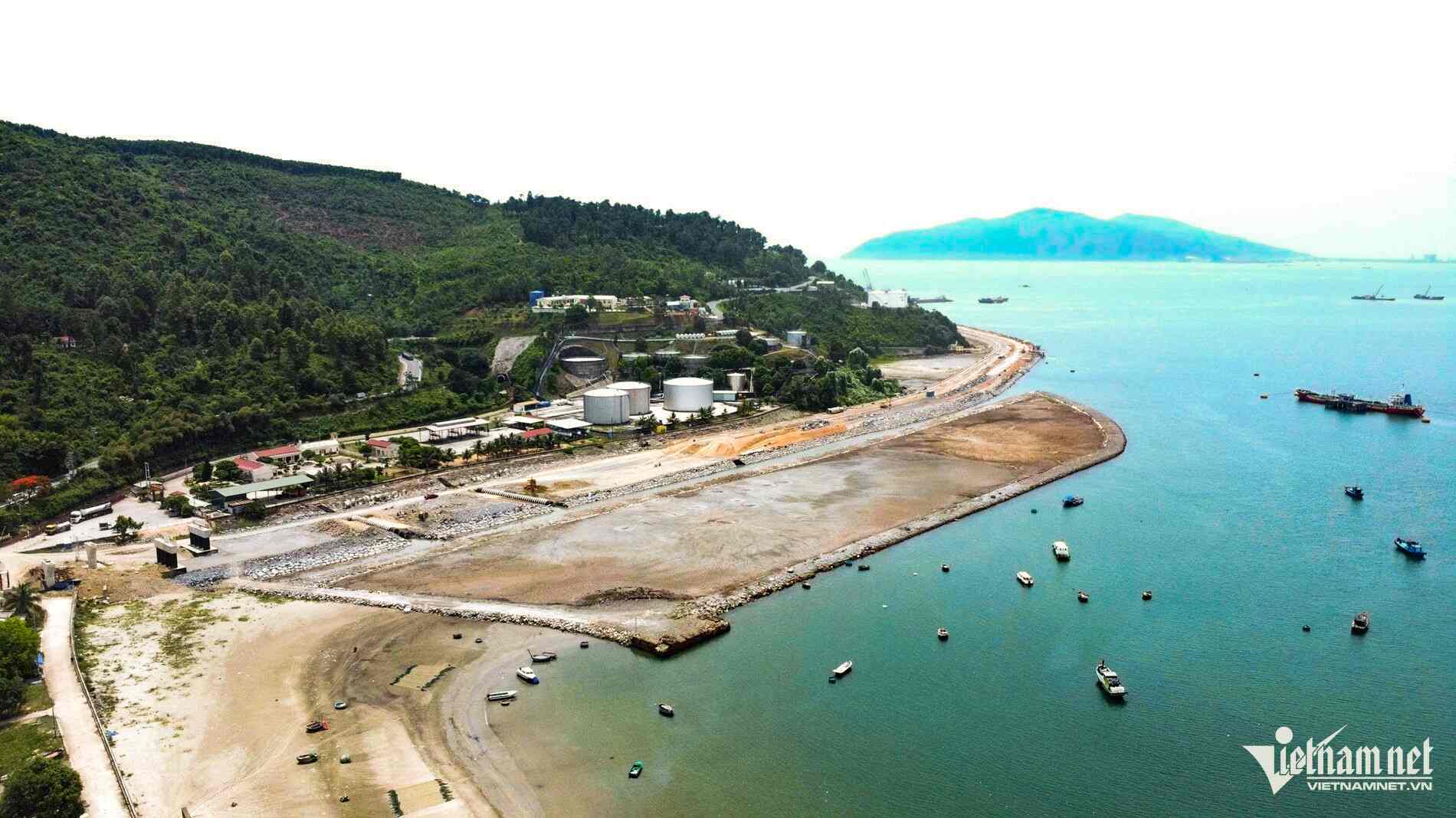
Photo: Vietnamnet
Tiên Sa Port:
- Handles 12 million tonnes/year and 750,000 TEU in 2024 (up 13%), critical until Liên Chiểu scales up.
- Airports and cargo: Đà Nẵng International Airport supports 15 million passengers and 200,000 tonnes of cargo by 2030. A VNĐ631 billion cargo terminal expansion to 100,000 tonnes/year is operational in 2025.
Railway projects:
- North-South High-Speed Railway: Spans 116 km in Đà Nẵng, affecting 2,100 households. Investment: VNĐ16,600 billion for land clearance, with a 47,000 m² resettlement area (VNĐ76 billion) started August 19, 2025, in Điện Bàn Bắc Ward. Design speed: 350 km/h; total cost: VNĐ1,713,548 billion.
- Urban railways: Plans for 2 MRT lines, 11 LRT lines, and 3 tourist LRT lines. Tender for Da Nang–Quang Nam LRT feasibility study in Q3 2025. Proposed revival of Hội An–Da Nang railway and relocation in Thanh Khê, Liên Chiểu, and Hải Châu.
Artificial islands project:
- A proposed 1,500-hectare project in Đà Nẵng Bay to create 48 km of new coastline, inspired by Dubai’s Palm Jumeirah. In planning (August 2025) with environmental assessments ongoing.
Multi-modal connectivity:
- Free Trade Zone zones, like the 90-hectare Hòa Ninh hub, link to ports, airports, and rail via the East-West Economic Corridor.
4. Policy Advantages for FTZ and Logistics Development
Resolution 136/2024 (Free Trade Zone):
- 10% CIT for 15 years, with 4-year full exemption and 9-year 50% reduction.
- No investment registration for foreign investors.
- Non-tariff zone status: Priority customs processing and 70-year land rent exemptions.
Resolution 222/2025/QH15 (Vietnam IFC):
- 10% CIT for 30 years on priority projects, with 4-year exemptions and 9-year 50% reductions.
- Personal income tax exemptions for foreign professionals until 2030.
- 70-year land leases for financial institutions.
National alignment:
Resolution 43-NQ/TW targets 36% annual GRDP growth for logistics and trade by 2030, with exports growing 8–9% in 2025.
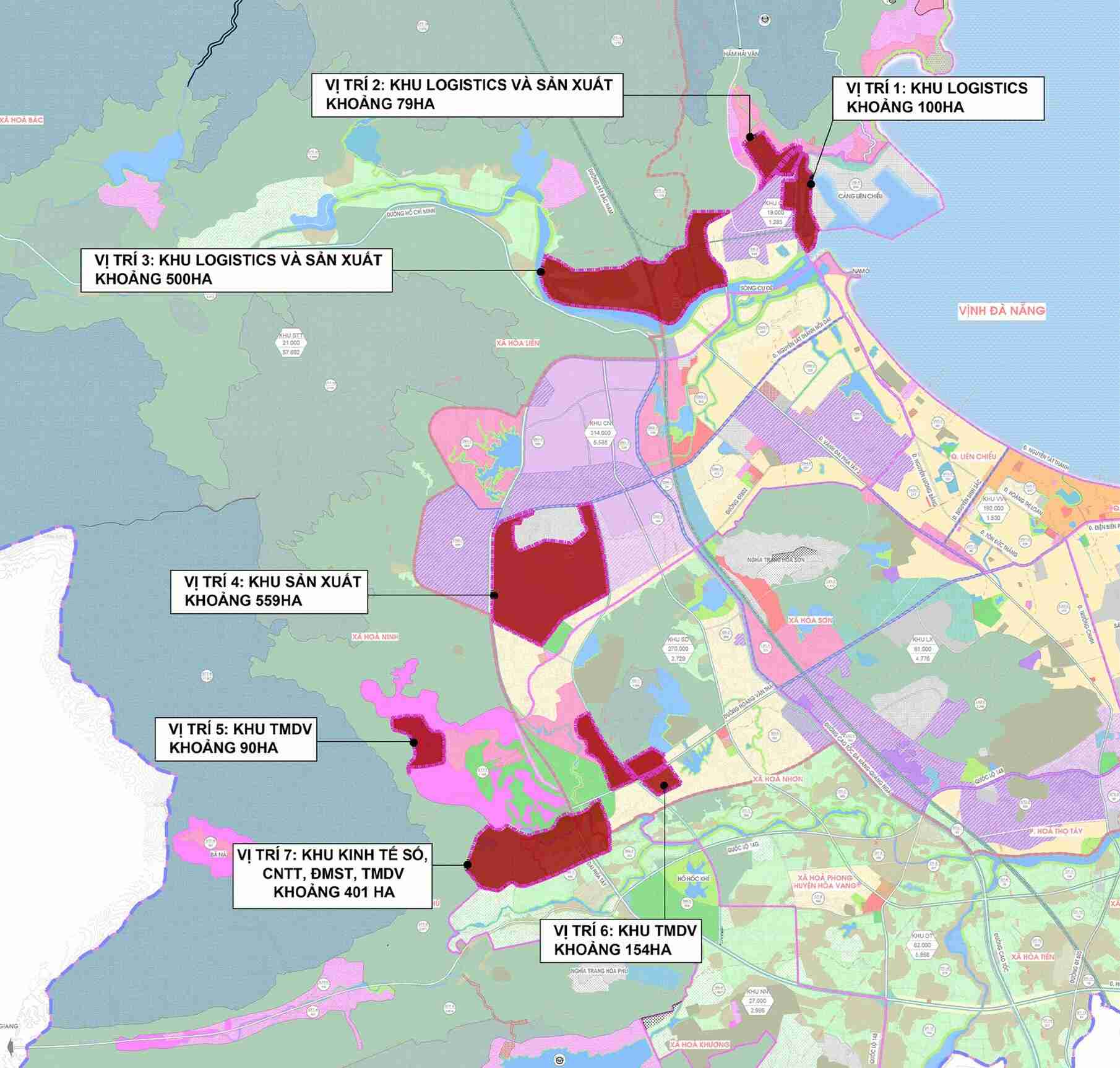
- Location 1: Logistics area (~100 ha)
- Location 2: Logistics and production area (~79 ha)
- Location 3: Logistics and production area (~500 ha)
- Location 4: Production area (~559 ha)
- Location 5: Commercial and service area (~90 ha)
- Location 6: Commercial and service area (~154 ha)
- Location 7: Digital economy, IT, innovation, commercial, and service area (~401 ha)
5. Opportunities and Challenges in Logistics Da Nang
Opportunities
Integrated ecosystem:
Free Trade Zone and Vietnam IFC create a hub for logistics, manufacturing, and finance, with US$5 billion in FDI projected by 2030.
Investor activities:
- Adani Group: Exploring US$1 billion investment in Liên Chiểu Port for container terminals.
- Sun Group: Launched VNĐ800 billion Free Trade Zone project (90 ha) in August 2025.
- MOUs signed: With 10 investors, including Terne Holdings, One Destination, BRG, Thanh Bình Phú Mỹ, Liên Thái Bình Dương, Phương Trang, Newtechco Group, Phytopharco Việt Nam, Sài Gòn–Đà Nẵng, and Sun Group.
- International Financial Center promotion: Targeting funds like Temasek, GIC, KDB, Mubadala, and banks (HSBC, Standard Chartered, JP Morgan, MUFG) in Singapore, Hong Kong, Dubai, Korea, and Europe, with US$500 million in green finance for Logistics Da Nang by 2027.
High-tech sectors:
Free Trade Zone incentives drive FDI in AI, blockchain, and semiconductors, with 10 semiconductor projects planned by 2030. Artificial islands enhance tourism and marine logistics.
Challenges
- Infrastructure transition (2025–2027): Dual operations between Tiên Sa (12 million tonnes/year) and Liên Chiểu (initial 5 million tonnes/year) require planning.
- Regulatory navigation: Evolving Free Trade Zone and Vietnam IFC policies, including anti-money laundering and fintech sandboxes, with 50% of compliance frameworks under development in 2025.
- Environmental concerns: Artificial islands project requires careful environmental assessments to protect Đà Nẵng Bay’s ecosystem.
6. VICO Logistics Services: Trucking and Customs Clearance
Core Services
- Local trucking: Operates 50 trucks (10–40 tonnes) connecting Free Trade Zone, industrial parks, ports, and airports with 99% SLA adherence.
- Customs support: Manages 10,000 declarations/year, handling HS codes, certificates, and preferential duties with Free Trade Zone priority clearance.
- Warehousing: Provides 50,000 m² of bonded and regular warehouses, offering cross-docking, labeling, and repackaging.
- Digital platform: Features real-time tracking, e-POD, e-docs, and dashboards, cutting logistics costs by 15%.
Service Guarantees
- 98%+ on-time delivery: Across 200 km of industrial corridors.
- Customs efficiency: Clears 95% of standard cargo in 24 hours.
- Cost transparency: Dashboards reduce communication time by 30–50%.
7. Investor Checklist: Setting Up in Da Nang FTZ
- Supply chain optimization: Use Free Trade Zone’s 20,000 m² bonded warehouses in Hòa Ninh for cost-efficient flows.
- Financial planning: Leverage Vietnam IFC’s 10% CIT rate and fintech sandboxes, aligning with MOUs from investors like Sun Group and BRG.
- Port strategy: Plan for 70% cargo shift to Liên Chiểu by 2027, managing dual-port operations.
- Compliance: Adhere to Master Plan 2021–2030, Free Trade Zone customs, railway resettlement, and artificial island regulations.
- Location focus: Target the 559-hectare Hòa Ninh zone for large-scale logistics.
8. Roadmap 2025–2027: Growth with FTZ and IFC
- Q4 2025: International Financial Center launches with 10 fintech firms; Free Trade Zone activates 200 hectares with Sun Group’s project.
- 2026: Liên Chiểu Port scales to 10 million tonnes; US$2 billion in container terminal investments confirmed.
- 2027: Free Trade Zone handles 20 million tonnes of cargo; Vietnam IFC drives VNĐ15 trillion in transactions.
9. Conclusion: Partner with VICO for Success
Logistics Da Nang, powered by the Free Trade Zone and Vietnam IFC, with Liên Chiểu Port, high-speed railways, and artificial islands, is a global logistics and finance hub. With US$10 billion in FDI projected by 2030 and 25% GRDP contribution by 2050, early movers gain a competitive edge.
VICO Logistics offers 50 trucks, 50,000 m² of warehousing, and digital tools to streamline operations. Contact us for a tailored SOP and trial trucking lane quotation to thrive in Logistics Da Nang’s dynamic market.
Learn more our other article at List of Major Shipping Ports in Vietnam and How to Choose the Best Port for Your Business
---------------------------
VICO Logistics – Your Indochina Expert
Premium member of Eurocham, JCtrans, VICOFA, VITAS... associations
Owned offices: Hong Kong (headquarters), China (Shenzhen, Shanghai), Vietnam (Ho Chi Minh, Da Nang, Hai Phong).
Youtube - Linkedin - Fanpage
Follow us for more valuable information
Book now: https://vico.com.hk/#quotation
Contact us:
- Email mkt4_hcm@vico.com.hk (For business development)
- Hotline: Zalo/Whatsapp: (+84)901877108
- WeChat China: imschylerla (CN/EN)
- WeChat Vietnam: miauyen1577 (VN/EN)