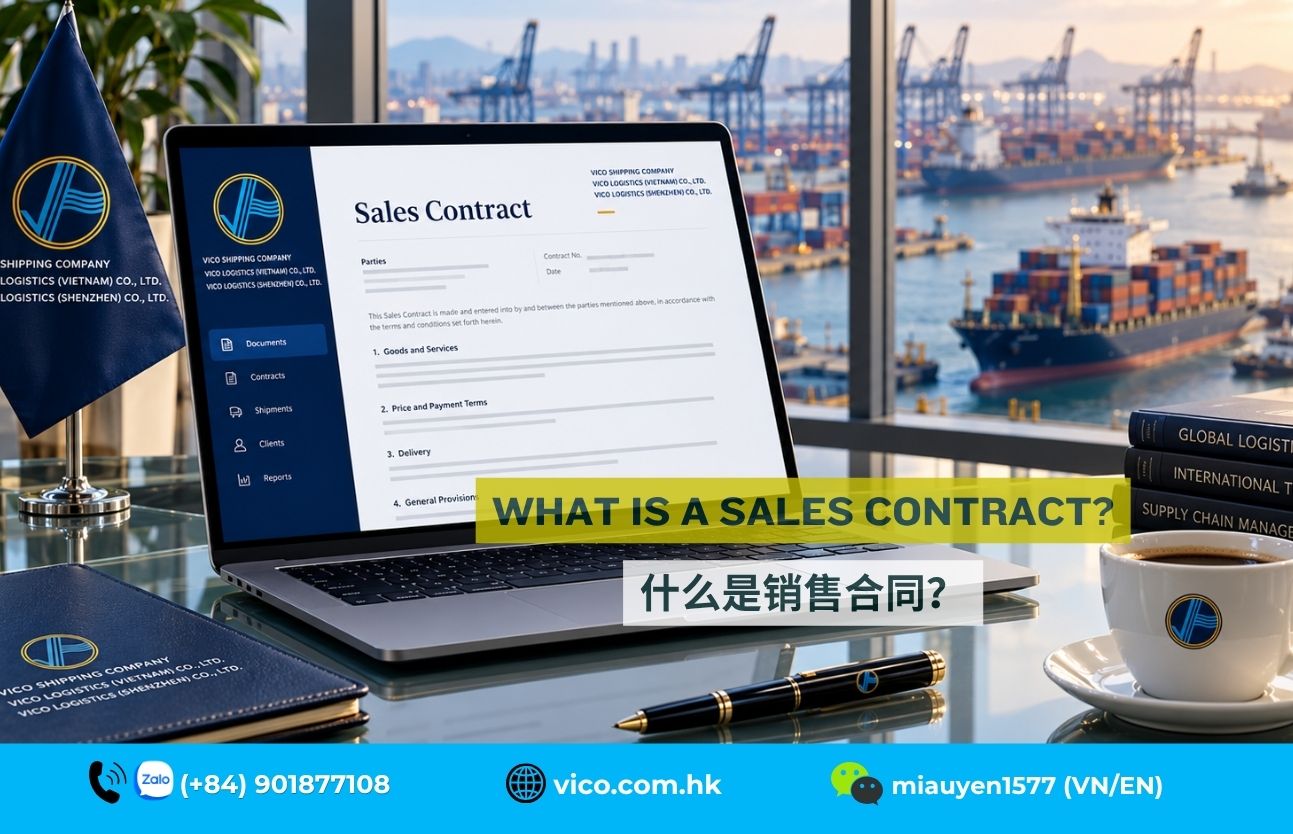
When a business prepares to purchase goods from China, the United States, Europe, or another market, one of the first documents it typically encounters is a Sales Contract.
Many buyers carefully check the product price but sign the contract without paying sufficient attention to:
Delivery terms;
Place of delivery;
Transfer of risk;
Payment deadlines;
Documents the seller must provide;
Certificate of Origin (C/O) requirements;
Delivery time;
Procedures for handling incorrect goods or late delivery.
The problems often emerge only later:
Payment has been made → Goods are ready → Documents are issued → Cargo is shipped → Only then do the parties discover inconsistencies in the information.
Therefore, understanding what a Sales Contract is is not enough.
More importantly, businesses need to know:
What should a Sales Contract include, and what should be checked before signing?
1. What Is a Sales Contract?
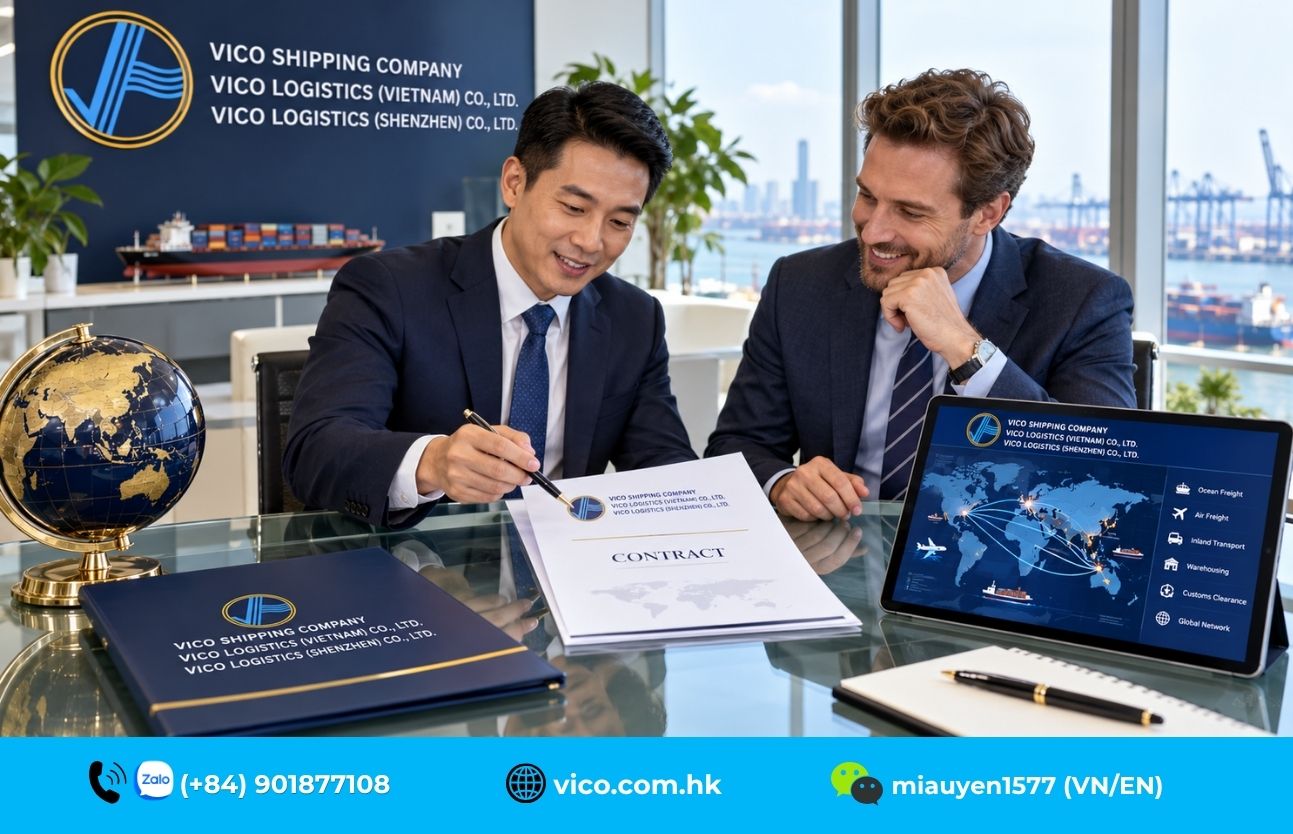
A Sales Contract is an agreement between a buyer and a seller. In international trade, it is commonly referred to as an international sales contract or foreign trade contract.
It establishes the principal rights and obligations of:
Seller – The party selling the goods.
Buyer – The party purchasing the goods.
In an international goods transaction, the contract typically answers fundamental questions such as:
What goods are being sold?
What is the quantity?
What are the quality requirements?
What is the price?
Where will the goods be delivered?
Which party is responsible for which costs?
When must the goods be delivered?
How will payment be made?
Which documents must be provided?
What happens if either party fails to fulfill its obligations?
At the international level, the United Nations Convention on Contracts for the International Sale of Goods (CISG) governs various matters relating to contract formation, the obligations of buyers and sellers, and remedies for contractual breaches. UNCITRAL identifies international sales contracts as a fundamental foundation of international trade.
2. What Is a Sales Contract Used for in Import and Export?
Do not view a Sales Contract as an isolated document.
In practice, its terms can affect the entire process that follows:
Sales Contract
↓
Payment
↓
Cargo Preparation
↓
Transportation
↓
Commercial Invoice
↓
Packing List
↓
Certificate of Origin (C/O)
↓
Bill of Lading
↓
Customs Procedures
↓
Final Delivery
The International Chamber of Commerce (ICC) emphasizes that the description of goods in a contract should be sufficiently clear to ensure consistency with the Commercial Invoice, transport documents, any applicable Letter of Credit, and other documents used to demonstrate contractual performance or satisfy regulatory requirements.
This is why businesses should not treat a Sales Contract merely as:
“A document for both parties to sign.”
In reality, it is the starting point for multiple departments to coordinate the execution of a shipment.
3. When Is a Sales Contract Typically Prepared?
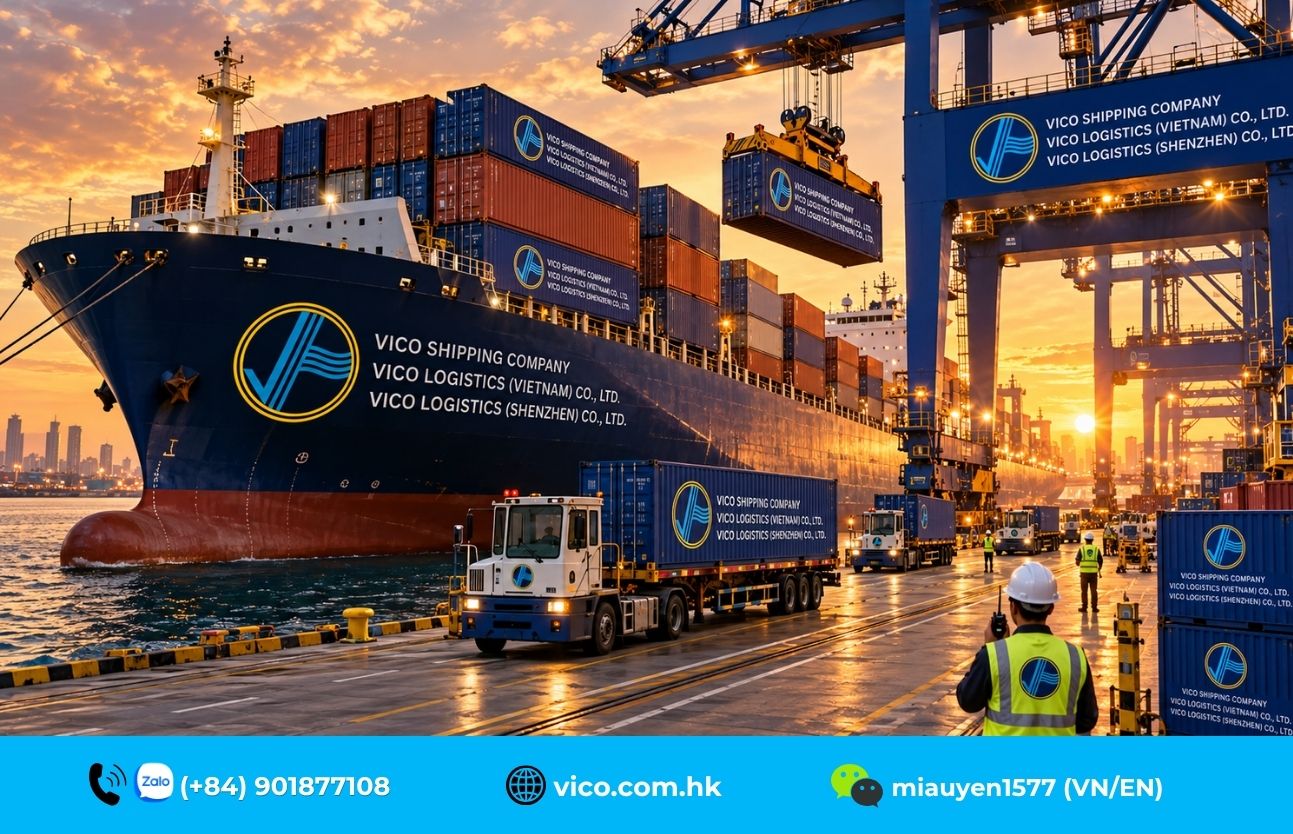
A simple international purchasing process may look like this:
Inquiry
↓
Quotation
↓
Negotiation
↓
Proforma Invoice / Draft Contract
↓
Sales Contract
↓
Payment / Deposit
↓
Production / Cargo Preparation
↓
Shipping
The actual process may vary depending on how the two businesses operate.
The key point is that:
Important commercial terms should be agreed upon before payment is made and before the goods begin moving through the supply chain.
4. What Does a Sales Contract Typically Include?
There is no single structure that applies to every transaction.
However, an international sales contract typically covers at least the following areas:
Details of the contracting parties;
Product names and descriptions;
Quality and specifications;
Quantity;
Price;
Delivery terms;
Delivery schedule;
Payment terms;
Required documents;
Packaging;
Inspection and claims;
Governing law and dispute resolution.
The ICC also provides a Model International Sale Contract, designed to help balance the interests of exporters and importers and serve as a reference when drafting international commercial transactions.
Now, let us examine each section from a practical business perspective.
5. Check the Seller's and Buyer's Information
First, verify the identities of both parties to the contract.
The information typically includes:
Seller
Legal company name;
Registered address;
Country;
Contact details;
Bank details, where applicable.
Buyer
Legal company name;
Registered address;
Country;
Contact details.
Do not rely solely on abbreviated company names.
For example:
A quotation is issued by ABC Shenzhen Ltd., but the Sales Contract identifies XYZ Hong Kong Ltd. as the seller.
In this situation, several questions need to be clarified:
Which company is actually selling the goods?
Which company will receive the payment?
Which company will issue the invoice?
Which company will be identified as the exporter in the shipping documents?
These details should be clarified before transferring any money.
6. Product Name and Description
This is one of the most important sections of the contract.
Avoid using overly general commercial descriptions such as:
Machine Parts
Accessories
Controller
Equipment
A more complete description may include the product name, model, specifications, material, and other relevant characteristics.
For example, instead of simply stating:
Controller
The contract may need to specify the controller type, model, and relevant technical specifications.
A clear product description makes it easier to cross-check the information against:
Commercial Invoice;
Packing List;
Product catalog;
Certificate of Origin (C/O);
Customs declaration;
HS Code.
7. Product Quality and Specifications
For industrial goods, raw materials, or custom-manufactured products, the product name alone may not be sufficient.
The contract may need to specify:
Model;
Dimensions;
Material;
Color;
Applicable standards;
Power rating;
Technical specifications;
Country of origin;
Approved samples.
For example, if the buyer orders a stainless steel valve, the parties may need to clarify:
Steel grade;
Dimensions;
Technical standards;
Pressure rating;
Model.
The objective is to reduce the risk of a situation in which the buyer believes they are purchasing Product A while the seller understands the order to be Product B.
8. Quantity and Tolerances
The Quantity section may seem straightforward, but it still needs to be precise.
For example:
- 1,000 pcs
- is different from:
- 1,000 pcs ±5%
For raw materials, bulk cargo, chemicals, or goods sold by weight, the contract may need to specify acceptable quantity or weight tolerances.
The unit of measurement should also be checked:
PCS – Pieces;
SET – Sets;
KG – Kilograms;
MT – Metric tons;
CBM – Cubic meters.
9. Unit Price and Total Contract Value
The Price section should clearly specify at least:
Unit Price;
Quantity;
Total Amount;
Payment Currency.
For example:
USD 10 per piece × 1,000 pieces = USD 10,000.
However, this information alone is not enough.
The parties must also confirm the applicable delivery terms.
For example:
USD 10,000 FOB Shenzhen
and
USD 10,000 DDP Ho Chi Minh City
represent significantly different cost structures and responsibilities.
10. Incoterms in a Sales Contract
This is a particularly important section of an international sales contract.
Incoterms® are international commercial terms developed by the International Chamber of Commerce (ICC).
They help allocate responsibilities between buyers and sellers regarding matters such as:
Transportation costs;
Risks of loss of or damage to the goods;
Responsibilities for export and import formalities, depending on the applicable rule.
The ICC emphasizes that Incoterms are an important component of international sales contracts because they clarify which delivery-related costs are included in the price and how responsibilities are divided between the buyer and seller.
Commonly used Incoterms® rules include:
EXW;
FCA;
FOB;
CFR;
CIF;
CPT;
CIP;
DAP;
DPU;
DDP.
Do not simply write:
FOB
Instead, specify the named place or port and the applicable version.
For example:
FOB Shenzhen, Incoterms® 2020
or
DAP Ho Chi Minh City, Vietnam, Incoterms® 2020
The specific place named in the contract is extremely important.
11. Delivery Time
A statement such as:
Delivery: ASAP
is difficult to use for practical shipment planning.
The contract should clarify:
Expected delivery date;
Delivery time frame;
Whether delivery will occur in one shipment or multiple shipments;
When the production lead time begins;
Whether the delivery schedule depends on receipt of the deposit.
For example:
“The goods will be ready within 20 days after the seller receives the deposit.”
is much clearer than:
“Delivery soon.”
For businesses managing production schedules or sales commitments, delivery time can directly affect the entire downstream supply chain.
12. Payment Terms
The Sales Contract should clearly specify:
The payment currency;
The percentage payable at each stage;
Payment deadlines;
The payment method;
Any documents required as a condition for payment.
Common payment methods include:
T/T – Telegraphic Transfer
This generally refers to a bank transfer.
For example:
30% deposit + 70% before shipment
means the buyer pays a 30% deposit and settles the remaining 70% before shipment.
L/C – Letter of Credit
A Letter of Credit is a bank payment arrangement subject to specified terms and documentary requirements.
The important question is not simply whether you understand what T/T or L/C means.
You should also ask:
Are the payment deadlines appropriate for the level of risk involved in the transaction?
13. Documents the Seller Must Provide
This is an important section that is often written too vaguely in Sales Contracts.
Depending on the shipment, the required documents may include:
Commercial Invoice – The commercial invoice.
Packing List – The packing list.
Bill of Lading (B/L) – The ocean bill of lading, or the applicable transport document for the shipment.
Certificate of Origin (C/O) – The certificate of origin.
Certificate of Quality – A certificate confirming product quality.
Certificate of Analysis (COA) – An analysis report, where required for the product.
Insurance Certificate – An insurance certificate, depending on the delivery terms.
Not every shipment requires all of these documents.
The key point is:
Identify the documents required by the buyer for importation as early as possible.
14. Pay Special Attention to the Certificate of Origin (C/O)
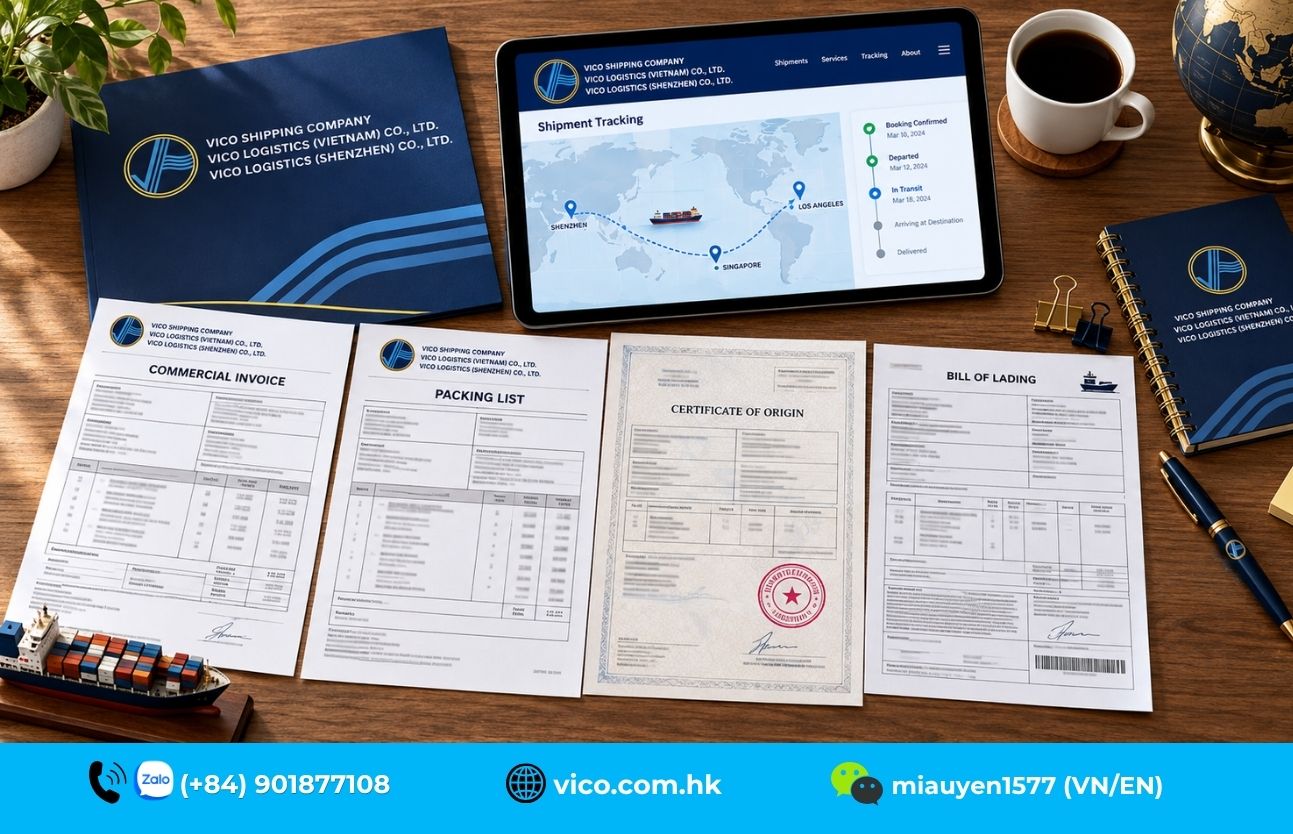
Suppose a business is importing goods from China to Vietnam and intends to explore preferential import duty treatment using an eligible Certificate of Origin.
If the C/O is an important part of the import plan, the buyer should not wait until the cargo is about to ship before asking:
“Can the supplier provide a C/O?”
Clarify the following in advance:
Whether a C/O can be provided;
The expected type of C/O;
The product information to be declared;
The country of origin;
Any relevant eligibility requirements.
This is particularly important because the Sales Contract can affect the documents issued later in the transaction.
15. Packaging and Shipping Marks
Packaging should not be overlooked.
Depending on the goods, the contract may specify:
Cartons;
Pallets;
Wooden cases;
Moisture protection;
Shock protection;
Export packaging;
The quantity of products per package.
Packaging requirements become especially important for:
Fragile goods;
Machinery;
High-value products;
Cargo transported over long distances.
The more sensitive the cargo, the more clearly the packaging standards should be defined.
16. Inspection and Claims
Both parties should understand:
Who is responsible for inspecting the goods;
Where the inspection will take place;
When the inspection will occur;
Whether an independent third-party inspection is required;
How long the buyer has to submit a claim.
A common problem occurs when goods arrive in Vietnam and the buyer discovers after unpacking that they do not meet the agreed specifications.
At that point, the parties must refer back to the Sales Contract to determine:
The agreed product standards;
The inspection conditions;
The claim deadline;
The seller's responsibilities.
These matters should be considered before signing, not after a problem arises.
17. Force Majeure
Force majeure refers to events beyond the parties' reasonable control that may affect their ability to perform the contract.
The contract should clearly specify:
Which events are covered by the clause;
How the affected party must provide notice;
The notification deadline;
The consequences for delivery obligations or contractual performance.
Do not simply copy a lengthy standard clause without checking whether it suits the actual transaction.
18. Governing Law and Dispute Resolution
This is one of the sections small businesses are most likely to overlook.
The parties should consider:
Governing Law
The law governing the contract.
Dispute Resolution
The procedures for resolving disputes.
For example, disputes may be resolved through:
Court proceedings;
Commercial arbitration.
Do not wait until a dispute occurs to ask:
“Which country's law governs this contract?”
For high-value contracts or transactions involving complex legal provisions, consider having an international trade lawyer review the agreement.
19. What Is the CISG, and Why Should Vietnamese Businesses Know About It?
The CISG, or United Nations Convention on Contracts for the International Sale of Goods, is an international convention governing certain aspects of international sales contracts.
It addresses matters such as:
Contract formation;
The seller's obligation to deliver goods;
The buyer's obligation to pay;
Conformity of goods;
Breach of contract;
Damages;
Transfer of risk in circumstances covered by the Convention.
Vietnam acceded to the CISG on December 18, 2015, and the Convention entered into force for Vietnam on January 1, 2017. China is also a party to the CISG.
This makes the CISG particularly relevant to certain goods transactions between Vietnamese and Chinese businesses.
However, it is incorrect to assume that:
“Because Vietnam and China are both parties to the CISG, every contract between them automatically follows the same rules.”
Its applicability depends on the circumstances of the transaction, the parties' agreements, and specific legal considerations.
For high-value contracts, businesses should seek appropriate legal advice.
20. How Does a Sales Contract Relate to Import and Export Documents?
This is an area that businesses should check particularly carefully.
Consider the following example:
The Sales Contract specifies:
- 1,000 units of Model ABC.
- The Commercial Invoice states:
- 1,000 units of Model ABD.
- The Packing List states:
- 950 pcs.
- The C/O uses a different product description.
- Each discrepancy may appear minor when viewed separately.
- However, when several inconsistencies occur within the same shipment, resolving them can become more complicated.
Before shipment, cross-check the following documents:
Sales Contract
↕
Commercial Invoice
↕
Packing List
↕
Certificate of Origin (C/O)
↕
Bill of Lading
↕
Customs Declaration
The objective is not to make every document use exactly the same wording.
The objective is to ensure that the key information relating to the same shipment is consistent and reasonable across all relevant documents.
21. What Is the Difference Between a Sales Contract and a Proforma Invoice?
Sales Contract
An agreement setting out the commercial terms agreed upon by the buyer and seller.
Proforma Invoice (PI)
A preliminary invoice commonly used during the quotation stage or to confirm preliminary transaction details.
A PI may include:
Product details;
Price;
Quantity;
Delivery terms;
Payment information.
However, a Proforma Invoice and a detailed Sales Contract should not automatically be assumed to serve the same function in every situation.
22. What Is the Difference Between a Sales Contract and a Commercial Invoice?
This is a common source of confusion.
Sales Contract
Sets out the agreed terms of the transaction.
Commercial Invoice
A commercial document issued for the goods transaction, containing relevant commercial details of the shipment.
Put simply:
Sales Contract = What the buyer and seller have agreed upon.
Commercial Invoice = The commercial details of the goods sold in a particular transaction.
23. What Is the Difference Between a Sales Contract and a Purchase Order?
A Purchase Order (PO) is generally issued by the buyer to place an order.
A PO may include:
Product codes;
Quantity;
Price;
Delivery schedule;
Purchasing terms.
In some long-term business arrangements, companies use a Master Agreement together with individual Purchase Orders for each shipment or order.
Therefore, do not rely solely on the document's title.
The important question is:
What terms have the parties actually agreed upon, and which of those terms are binding on the transaction?
24. Example: Reviewing a Sales Contract for a Shipment from China to Vietnam
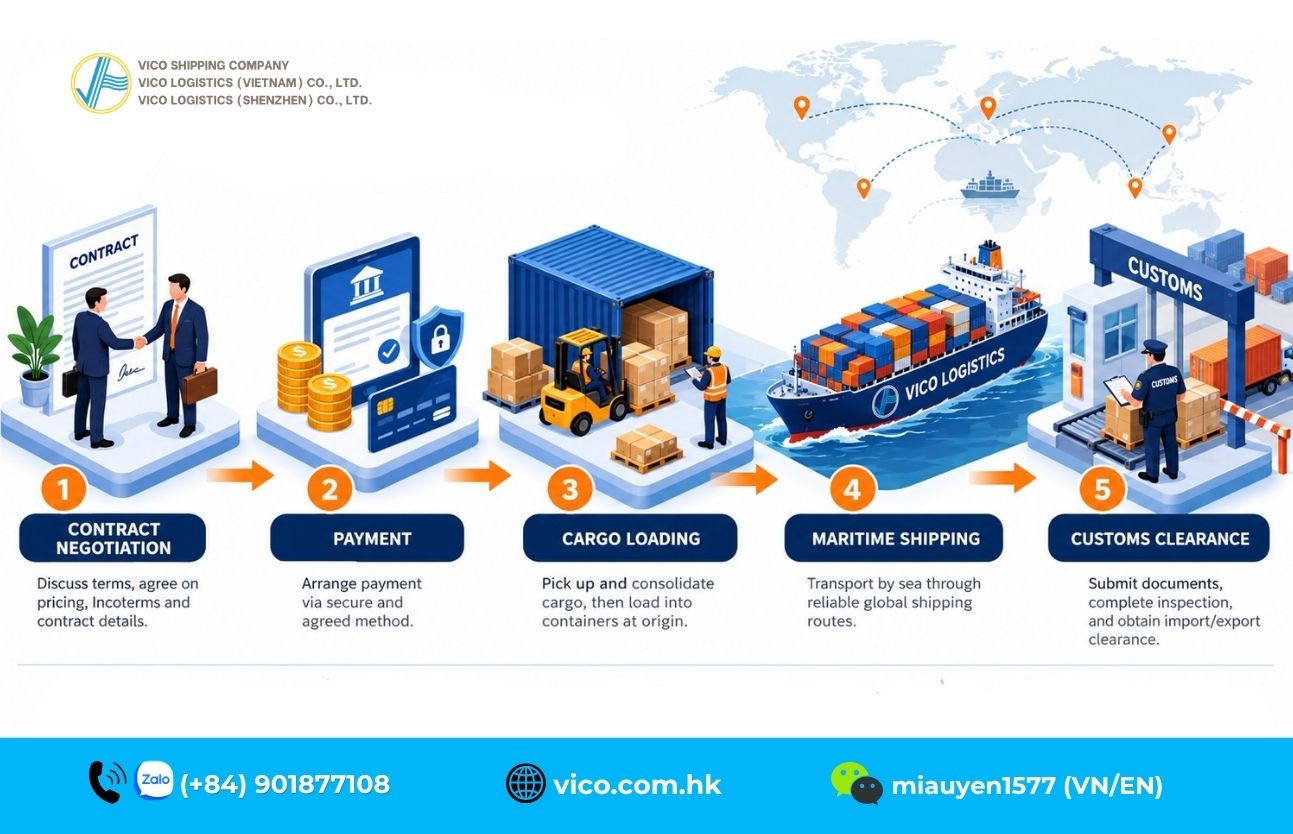
Suppose a Vietnamese business is preparing to import industrial controllers from Shenzhen.
The supplier sends a contract stating:
Quantity: 500 pcs
Price: USD 40/pc
Total: USD 20,000
Incoterm: FOB
Payment: 30/70
Origin: China
Do not sign immediately just because the price is correct.
Review the contract in the following order.
Step 1 – Product
Is the product description sufficiently clear?
Model?
Specifications?
Catalog?
Does it match the product approved by the buyer?
Step 2 – Quantity
Do the 500 pieces match the Purchase Order?
Are any accessories included?
Step 3 – Price
500 × USD 40 = USD 20,000.
Is USD the agreed payment currency?
Step 4 – Incoterms
“FOB” alone is not sufficient.
Check:
Which named place or port applies to FOB?
Which version of Incoterms® is being used?
Step 5 – Delivery Time
Is delivery due 20 days after the deposit is received, or 20 days after the contract is signed?
These two interpretations can result in significantly different delivery schedules.
Step 6 – Payment
A 30% deposit equals:
USD 6,000.
The remaining 70% equals:
USD 14,000.
When must the remaining balance be paid?
Before shipment?
After receiving photos of the packed cargo?
After receiving a copy of the Bill of Lading?
The contract should specify the applicable condition clearly.
Step 7 – Documents
Does the buyer require:
Commercial Invoice;
Packing List;
Bill of Lading;
C/O;
Technical documents?
Can the supplier provide all the required documents?
Step 8 – Import Requirements
Before shipment, continue checking:
HS Code;
Applicable duties and taxes;
Import policies;
Product-specific regulatory requirements, where applicable;
C/O requirements.
This is where the Sales Contract connects directly with logistics and customs procedures.
25. Ten Common Mistakes When Signing a Sales Contract
1. Using an overly general product description
The description is insufficient to identify the exact product.
2. Omitting the model or specifications
This can lead to disputes over the goods actually supplied.
3. Failing to specify the named place or port for Incoterms
For example, stating only “FOB.”
4. Failing to identify the Incoterms version
The parties should specify the version they have agreed to use.
5. Using unclear payment terms
For example: “Balance before delivery.”
When exactly does “delivery” take place?
6. Failing to define the delivery schedule
For example: “ASAP.”
7. Failing to identify the required documents
The buyer may discover only when the goods are about to ship that a C/O is required.
8. Inconsistencies between the contract and invoice
Product descriptions, prices, quantities, or party details do not match.
9. Failing to establish procedures for non-conforming goods
The parties begin negotiating only after discovering a problem.
10. Ignoring governing law and dispute resolution
The applicable legal framework is considered only after a dispute arises.
26. Sales Contract Checklist Before Signing
Use the following checklist to review the contract before signing.
Item | Checked |
Seller's legal name | ✓ |
Buyer's legal name | ✓ |
Product name | ✓ |
Model | ✓ |
Technical specifications | ✓ |
Quality requirements | ✓ |
Quantity | ✓ |
Unit of measurement | ✓ |
Unit price | ✓ |
Total contract value | ✓ |
Payment currency | ✓ |
Incoterms® rule | ✓ |
Named place of delivery | ✓ |
Incoterms® version | ✓ |
Delivery schedule | ✓ |
Payment method | ✓ |
Deposit amount | ✓ |
Deadline for the remaining balance | ✓ |
Commercial Invoice | ✓ |
Packing List | ✓ |
C/O, if required | ✓ |
Transport documents | ✓ |
Packaging requirements | ✓ |
Goods inspection | ✓ |
Claims procedures | ✓ |
Warranty, if applicable | ✓ |
Force majeure | ✓ |
Governing law | ✓ |
Dispute resolution | ✓ |
Authorized signatory | ✓ |
A checklist like this would also work well as a downloadable resource or lead magnet for VICO Logistics.
27. Five Questions to Ask Before Signing a Sales Contract
If you do not have time to review the entire contract immediately, start with these five questions:
Exactly what am I buying?
Which costs are included in the price, and which Incoterms® rule applies?
How much must I pay, and when?
What must the seller deliver, and which documents must be provided?
What happens if the goods are late, incorrect, or incomplete?
If the contract does not clearly answer these five questions, the business should review it further before signing.
28. Why Should a Sales Contract Be Reviewed Together with Logistics Requirements?
A common mistake is to treat purchasing and logistics as two completely separate processes.
First, the purchasing department buys the goods.
Then logistics handles the shipment.
In reality, many contractual decisions directly affect logistics.
For example:
Incoterms® affect:
Who books transportation;
Who pays the freight;
The allocation of responsibilities;
The place of delivery.
C/O requirements may affect import duty planning.
Delivery dates affect:
Booking schedules;
Vessel schedules;
Trucking arrangements;
Inventory planning.
Document requirements affect:
Customs clearance;
Payment;
Cargo release and collection.
Therefore, for important shipments, logistics requirements should be reviewed before the Sales Contract is finalized.
29. How Can VICO Logistics Help?
VICO Logistics does not replace a lawyer in providing legal advice on contracts.
However, from a logistics, transportation, and import-export operations perspective, VICO can help businesses review information relevant to the execution of a shipment, including:
Incoterms®
↓
Transportation Route
↓
Pickup / Delivery
↓
HS Code
↓
C/O
↓
Commercial Invoice
↓
Packing List
↓
Customs Requirements
↓
Customs Clearance
↓
Final Delivery
The objective is to identify potential operational issues before the cargo starts moving.
30. What Should You Do If You Have Already Received a Sales Contract from Your Supplier?
Do not check only whether the price is correct.
Review the entire transaction:
Product
→ Is it the correct product?
Quantity
→ Is the quantity correct?
Incoterms®
→ How are delivery responsibilities allocated?
Payment
→ When must payment be made?
Documents
→ Which documents are required?
C/O
→ Is a Certificate of Origin required?
Shipping
→ Who is responsible for transportation?
Import
→ Can the goods be legally imported?
Customs
→ Is the available documentation sufficient for customs declaration?
Only by reviewing the contract across the entire supply chain can businesses identify potential risks before they become operational problems.
Frequently Asked Questions About Sales Contracts
What is “Sales Contract” in Vietnamese?
“Sales Contract” is generally translated into Vietnamese as “hợp đồng mua bán.” In import-export transactions, it commonly refers to an international sales contract or foreign trade contract.
Is a Sales Contract the same as a Commercial Invoice?
No.
A Sales Contract sets out the agreement between the buyer and seller.
A Commercial Invoice is a commercial document relating to the goods transaction.
Is a Sales Contract the same as a Proforma Invoice?
Not exactly.
A Proforma Invoice is a preliminary invoice commonly used during the quotation stage or to confirm preliminary transaction details. A Sales Contract generally sets out a more comprehensive framework of the parties' rights and obligations.
Does a Sales Contract need to include Incoterms®?
Clearly defining delivery terms is very important in international transactions.
When using Incoterms®, specify the rule, named place, and applicable version rather than simply writing FOB, CIF, or DAP without further details.
The ICC recognizes Incoterms® as an important component of international commercial contracts.
Does a Sales Contract require a C/O?
Not every transaction requires a Certificate of Origin.
However, if the buyer needs a C/O for import purposes or to assess eligibility for preferential duties, this requirement should be clarified with the seller early in the process.
Is a Commercial Invoice still required if there is a Sales Contract?
A Commercial Invoice still serves its own purpose in an import-export shipment.
The two documents do not automatically replace one another.
Who should review a Sales Contract before signing?
Depending on the transaction value and complexity, the review may involve:
Purchasing;
Sales;
Accounting;
Logistics;
Import-export personnel;
Banks;
Freight forwarders;
Lawyers, where significant legal issues are involved.
Conclusion
A Sales Contract does more than answer the question:
“How much have the two parties agreed to pay for the goods?”
A well-prepared contract should clarify:
What is being purchased
↓
How much is being purchased
↓
At what price
↓
How the goods will be delivered
↓
When delivery will take place
↓
How payment will be made
↓
Which documents are required
↓
Who is responsible for each obligation
↓
How problems will be handled
For import-export businesses, the safer approach is not to sign first and deal with logistics later.
Instead, review the terms affecting transportation, documentation, C/O requirements, customs procedures, and final delivery before the contract is finalized.