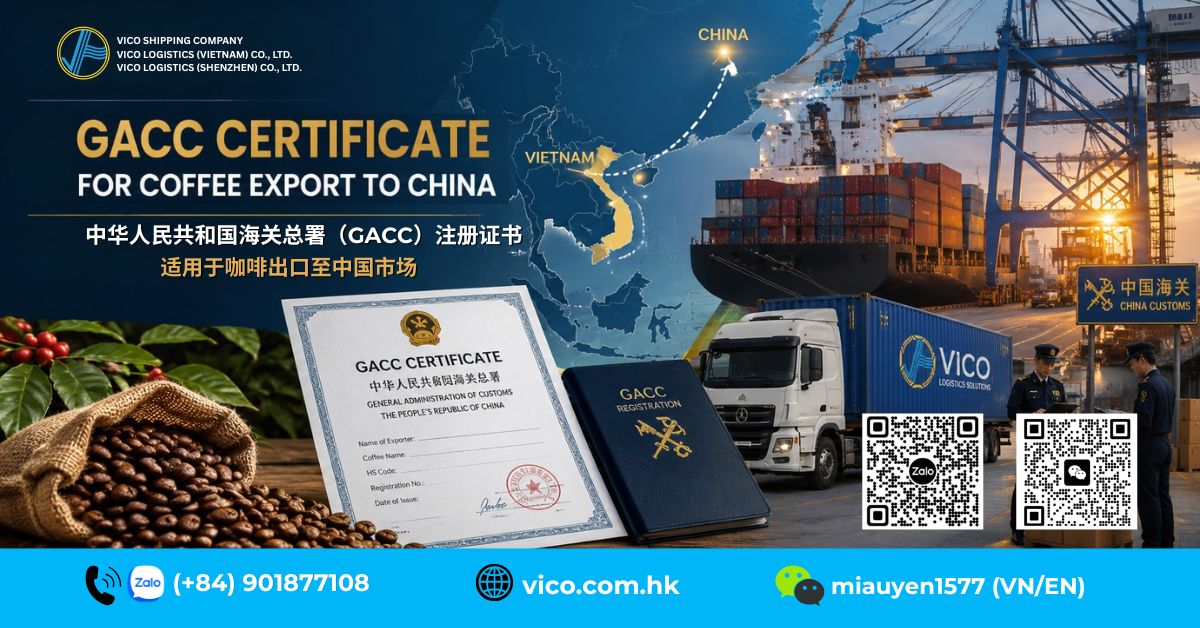
In the 2023-2024 coffee export crop, Vietnam is honored to achieve the highest export turnover ever with a value of nearly 5.43 billion USD. Although there is a decrease in export quantity (12.7%) compared to the 2022-2023 crop, the export value increased by 33% (Data provided by VICOFA).
| Coffee types | Volume | Turnover (USD) | Unit (USD/tons) | |
| 1. Greens coffee | 1,325,109 | 4,455,253,333 | 3.362 | |
| Includes | Robusta | 1,230,918 | 4,060,058,143 | 3.298 |
| Arabica | 53.095 | 212,594,332 | 4.004 | |
| Decaffeinated | 36.661 | 172,138,936 | 4.695 | |
| Others | 4.434 | 10,461,923 | 2.359 | |
| 2. Processed Coffee | 127.543 | 971,332,478 | 7.616 | |
| Total Exported Coffee Beans | 1,452,652 | 5,426,585,812 | 3.736 | |
Vietnamese coffee in the 2023-2024 crop year has been exported to more than 80 countries and territories, of which: Europe accounts for about 48% market share, EU 41%, Asia 21%, America 6%,... and China is in the top 10 largest export volumes in the world (General Department of Customs data from VICOFA)
No. | Target markets | Volume (ton) | Value (USD) | Unit (USD/ton) |
1 | Germany | 179,006 | 607,108,728 | 3,392 |
2 | Italy | 127,724 | 416,586,671 | 3,262 |
3 | Japan | 106,900 | 413,317,855 | 3,866 |
4 | Spain | 105,386 | 412,607,165 | 3,915 |
5 | USA | 90,887 | 308,572,846 | 3,395 |
6 | Russia | 77,952 | 297,462,485 | 3,816 |
7 | Philippines | 61,133 | 270,442,408 | 4,424 |
8 | China | 53,977 | 224,850,889 | 4,166 |
9 | Indonesia | 52,825 | 221,710,300 | 4,197 |
10 | Netherlands | 48,690 | 184,804,567 | 3,796 |
11 | Algeria | 45,990 | 142,231,443 | 3,093 |
12 | Thailand | 44,995 | 171,739,009 | 3,817 |
13 | Korea | 44,045 | 144,850,742 | 3,289 |
14 | Belgium | 43,275 | 150,508,248 | 3,478 |
15 | Malaysia | 34,227 | 141,859,897 | 4,145 |
16 | England | 29,046 | 123,915,861 | 4,266 |
17 | France | 18,501 | 64,490,968 | 3,486 |
18 | India | 18,338 | 51,820,504 | 2,826 |
19 | Egypt | 16,332 | 53,739,792 | 3,290 |
20 | Australia | 15,023 | 59,006,623 | 3,928 |
21 | Portugal | 14,045 | 50,379,715 | 3,587 |
22 | Poland | 12,589 | 71,743,642 | 5,699 |
23 | Greece | 8,561 | 31,606,052 | 3,692 |
24 | Canada | 6,551 | 22,986,710 | 3,509 |
25 | Israel | 5,670 | 34,363,370 | 6,061 |
26 | Myanmar | 3,013 | 14,501,997 | 4,813 |
27 | Mexico | 2,789 | 11,667,640 | 4,183 |
28 | Rumani | 2,234 | 9,092,528 | 4,070 |
29 | Campuchia | 2,130 | 7,307,731 | 3,431 |
30 | Chile | 1,749 | 7,336,283 | 4,195 |
31 | Singapore | 1,687 | 8,400,710 | 4,980 |
32 | South Africa | 1,507 | 4,723,956 | 3,135 |
33 | Denmark | 1,495 | 4,533,426 | 3,032 |
34 | New Zealand | 966 | 4,015,860 | 4,157 |
35 | Hungary | 829 | 6,537,542 | 7,886 |
36 | Finland | 281 | 961,398 | 3,421 |
37 | Laos | 216 | 1,113,485 | 5,155 |
Total | 1,280,564 | 4,752,899,046 | 3,712 | |
* Data for reference only Source: Vietnam General Department of Customs | ||||
The above data shows that China is still a very potential exporting country for coffee producers and traders. But how to successfully export to the Chinese market officially for the first time. We invite coffee exporting businesses to read the article below.
Why China Is a Growing Market for Vietnamese Coffee
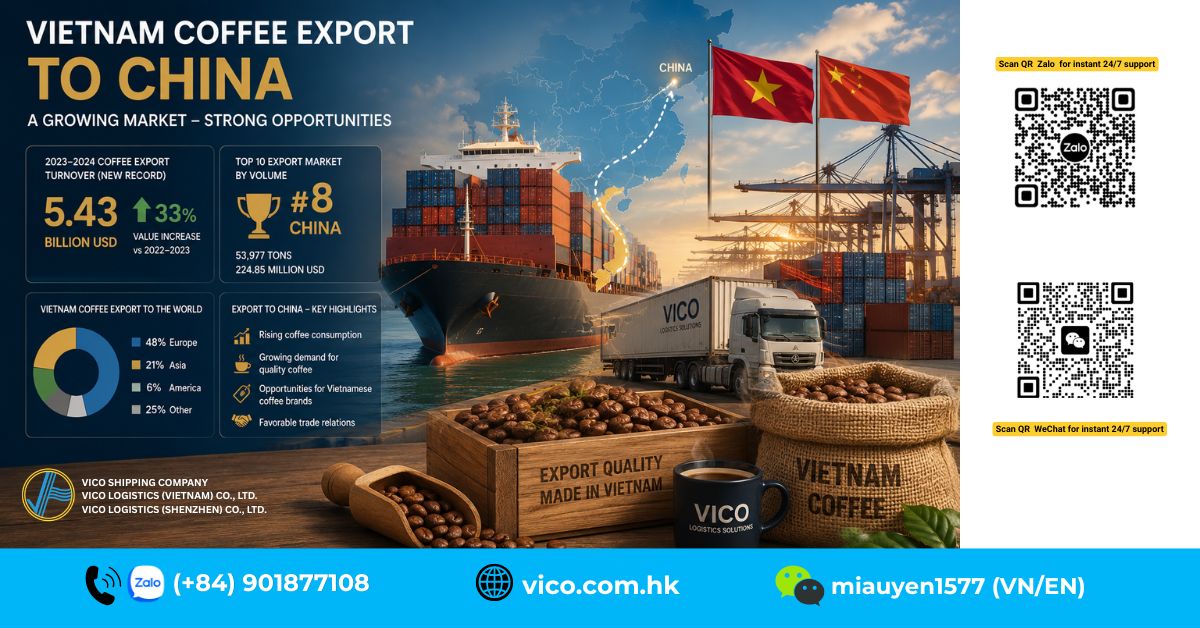
China's coffee consumption has increased rapidly over the past decade, driven by urbanization, rising incomes, and changing consumer preferences.
As coffee culture expands beyond major cities, demand for imported coffee continues to grow, creating new opportunities for Vietnamese coffee exporters and coffee brands entering the Chinese market.
Book now: https://vico.com.hk/#quotation
1. What is GACC – the important certificate for the coffee ship to China.
The General Administration of Customs China (GACC) plays a critical role in regulating the coffee ship to and from China. It ensures compliance with China's trade policies, monitors food safety and biosecurity, as well as facilitating legitimate trade while safeguarding the economy and public health.
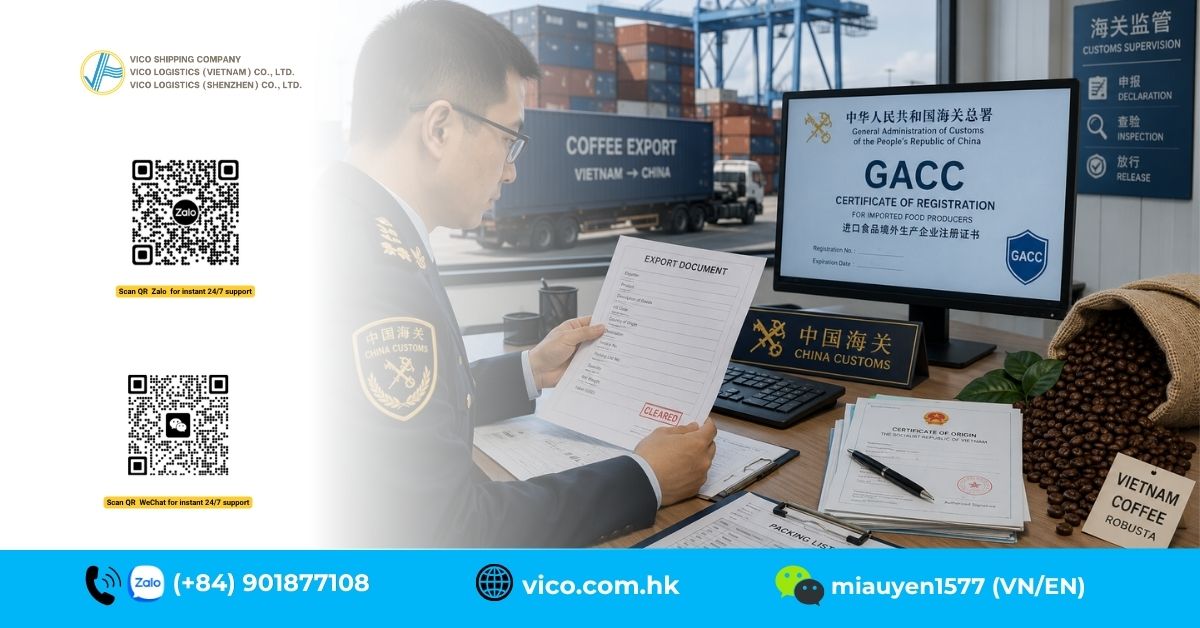
1.1 Is GACC Mandatory for Coffee Export to China?
China requires imported food products, including coffee, to comply with GACC registration requirements before entering the market. Depending on the business model, exporters may need a GACC registration, an IRE registration, or both.
Without the required registration, coffee shipments may face customs delays, additional inspections, or even import rejection by Chinese authorities.
2. Required Documents for GACC Registration
Document | Manufacturer | Trader |
Business Registration | ✓ | ✓ |
HACCP Certificate | ✓ | - |
ISO 22000 | ✓ | - |
Factory Photos | ✓ | - |
Product Labels | ✓ | - |
Production Process | ✓ | - |
GACC Supplier Information | - | ✓ |
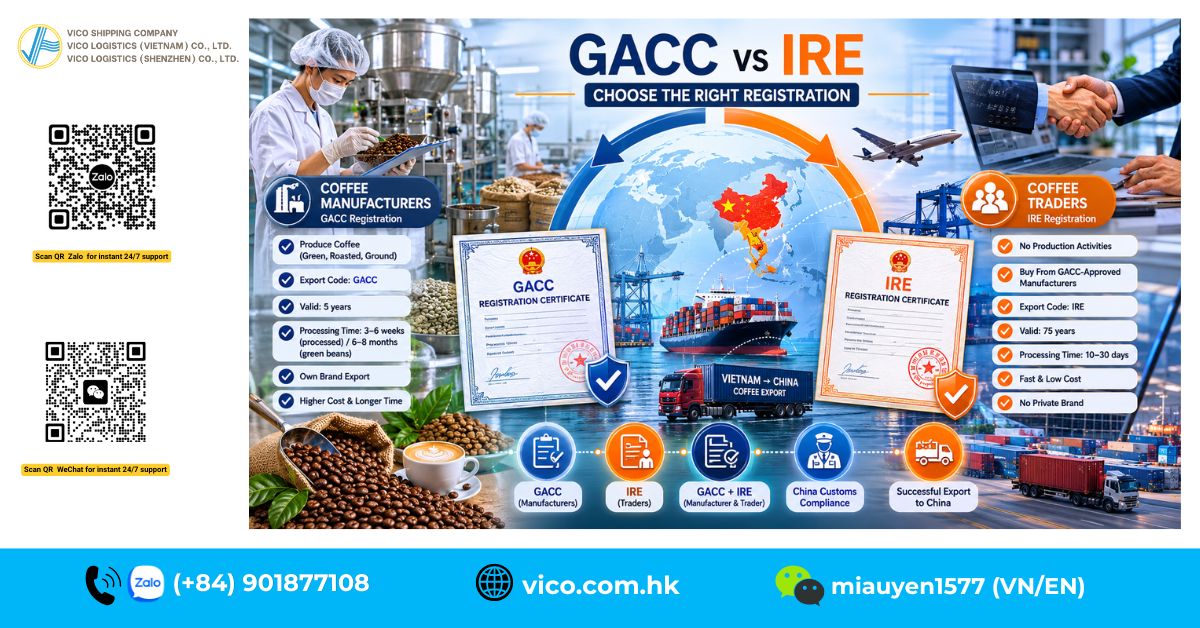
2.1 To Coffee Manufacturers – the coffee ship to China
Coffee Manufacturers who responsibility coffee produce (green coffee beans, roasted coffee) and they have no trading activities.
- Export type: GACC
- Advantages: Coffee Manufacturers focus on their coffee produce activities and distribution their coffee products.
- Disadvantages: High cost, build factory as standard
- Expiry date: 5 years
- Code issuance time: 3 weeks – 6 weeks (Processed coffee beans: roasted, coffee powder) and 6 months – 8 months (green coffee beans)
2.2 To coffee Traders – the coffee ship to China
Coffee exporters who have no production activities, need IRE export code
The condition for this enterprise is to purchase products from a manufacturing enterprise that has a GACC code
- Type of export code required: IRE
- Advantages: Fast and low cost
- Disadvantages: No private brand
- Expiry date: 75 years
- Code issuance time: 10-30 days
2.3 To those coffee business involved in both coffee trading and production: Prepare the coffee ship to China
Coffee businesses that both produce coffee and export their products under their own brand.
- Type of export code required: GACC + IRE
- Advantages: Exporting your own brand
- Disadvantages: High cost and long time
- Expiry date: 5 years for GACC and 75 years for IRE
- Code issuance time: 3 weeks - 6 weeks (Processed coffee beans: roasted, ground) and 6 months - 8 months (green coffee beans)
How Long Does GACC Registration Take?
Registration timelines vary depending on the coffee category and business type.
• Processed coffee (roasted, ground, instant): 3–6 weeks
• Green coffee beans: 6–8 months
• IRE registration: 10–30 days
Businesses should plan registration well in advance to avoid delays in export schedules.
3. The coffee ship to China needs to have a “GACC” registration
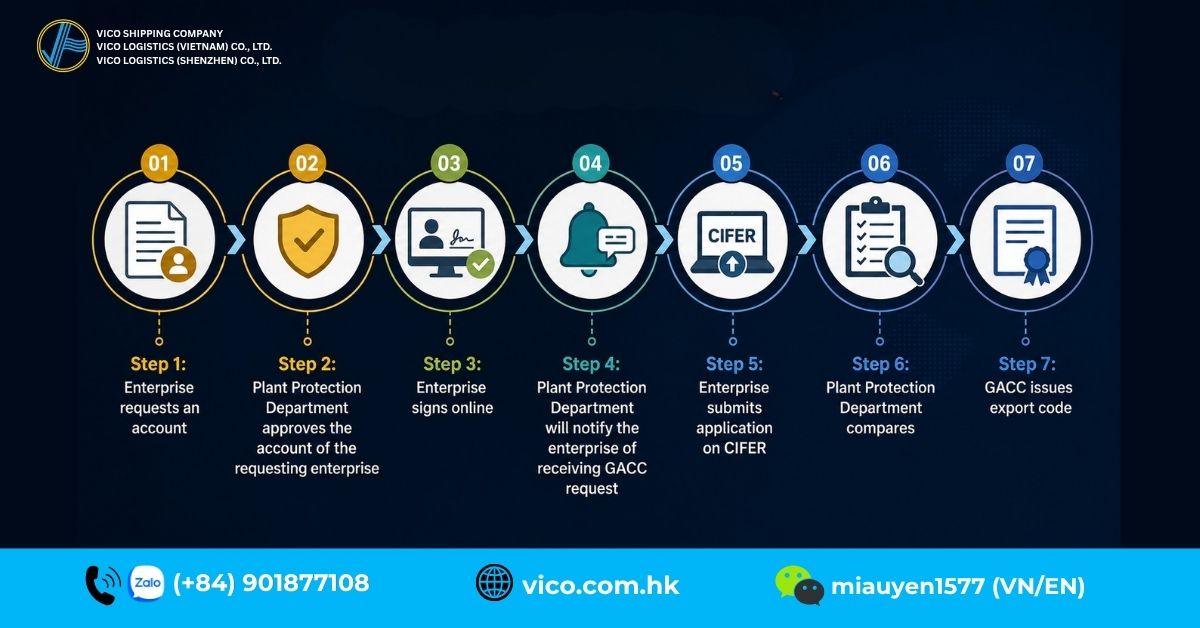
There are 7 main steps:
- Step 1: Enterprise requests an account
- Step 2: Plant Protection Department approves the account of the requesting enterprise
- Step 3: Enterprise signs online
- Step 4: Plant Protection Department will notify the enterprise of receiving GACC request
- Step 5: Enterprise submits application on CIFER
- Step 6: Plant Protection Department compares
- Step 7: GACC issues export code
3.1 Common Reasons for GACC Application Rejection
Common reasons for GACC registration rejection include:
• Incomplete application documents
• Inconsistent product labels and packaging
• Missing HACCP or food safety certifications
• Incorrect production facility information
• Failure to meet Chinese quarantine requirements
Preparing documents carefully before submission can significantly reduce approval delays.
To coffee traders
- Application for code issuance
- Business registration certificate
To coffee manufacturers
Classify as coffee types:
Processed coffee (roasted, coffee powder, instant coffee) | Green Coffee Beans |
| 1. Electronic copy of one of the following three documents: food safety, HACCP, or ISO 2. Product Disclosure Result 3. Proof of compliance with health and safety regulations 4. Coffee label: image, packaging, brand 5. Packing facility code 6. Annual production volume (in tons) 7. Production process of the coffee factory. |
4. Logistics Procedure the coffee ship from Vietnam to China
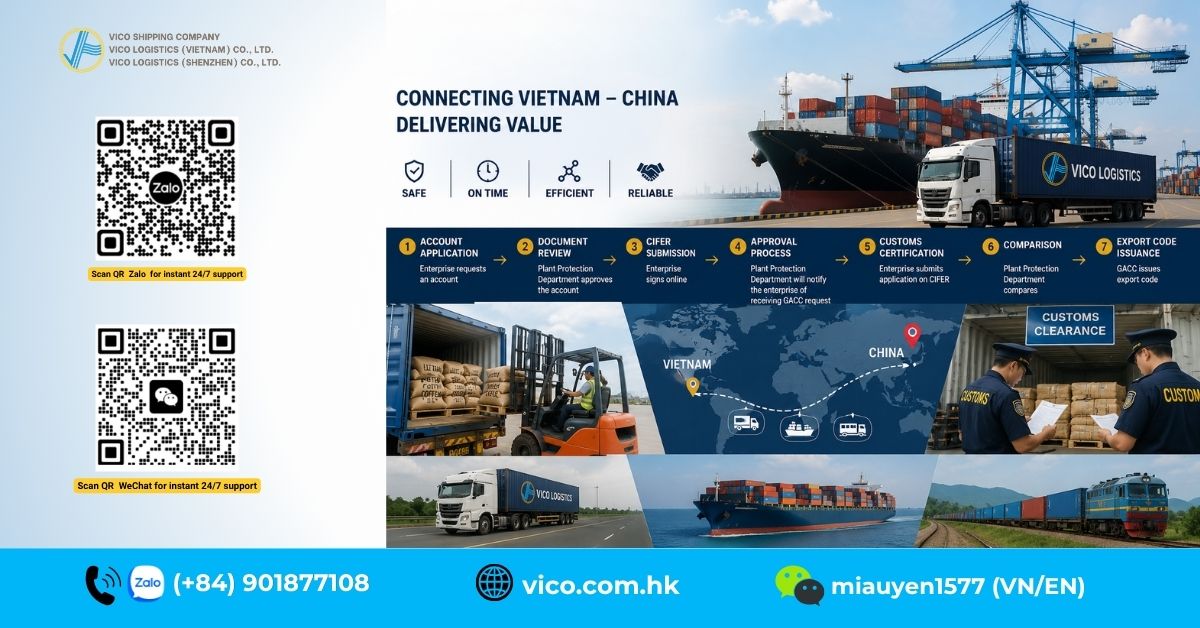
After you have learned about what GACC is, the registration steps, and the required documentation, here is an overview of the coffee shipping process from Vietnam to China.
Regarding the import-export procedures, we divide the responsibilities among three parties: the Vietnamese exporter (either a manufacturer or a trading company), VICO Logistics, and the Chinese importer. Let’s explore what each party does in the overall process.
Vietnamese Exporter
- If you are a trading company:
- Purchase coffee from a manufacturer that has been assigned a GACC code.
- Submit a request to register for the IRE code (processing takes 10–30 days). Once the goods are ready for export, send a booking request to VICO Logistics.
- Once the goods are loaded into containers and before they leave the export port in Vietnam, the exporter must prepare the export declaration form.
- When the goods arrive at the Chinese import port, prepare the necessary documents for the Chinese importer to process the shipment.
- Complete the process.
VICO Logistics
- Upon receiving the booking request from the Vietnamese exporter:
- Prepare shipping documents.
- Arrange for the goods to be loaded into containers at the port. At the same time, receive the export declaration from the exporter. The goods will then be transported to China according to the shipping schedule.
- Once the goods arrive at the Chinese port:
- Receive the import documents from the exporter and proceed with customs clearance within 3 days.
- Conduct a goods inspection, which takes 1 day.
- Complete the inspection process and issue a certificate allowing the goods to be imported into China.
- Finalize the process.
Chinese Importer
- After registering with GACC (a 2-week process):
- Wait for the goods inspection to be completed by VICO Logistics.
- Pay the import duties.
- Have the coffee unloaded at the warehouse.
- Once VICO issues the quarantine certification allowing the goods into China, the coffee can officially be distributed in the Chinese market.
- Finalize the process.
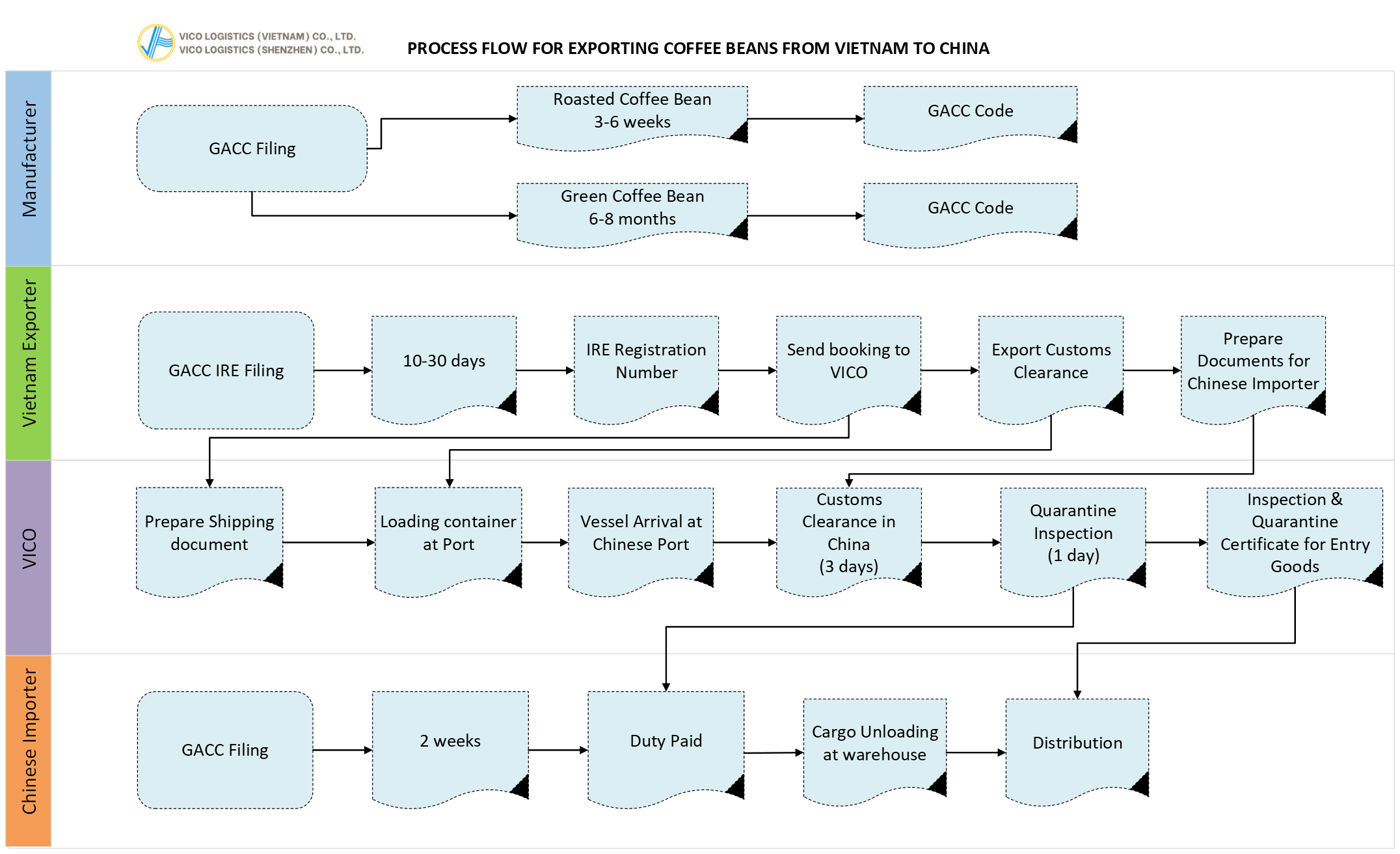
The GACC oversees the inspection and quarantine of imported goods to ensure compliance with Chinese standards. This includes checking for pests, diseases, or contaminants in agricultural and food products. Within this process can also include:
1. Customs Clearance:
GACC manages customs clearance procedures for imported goods. Exporters need to ensure accurate documentation, such as invoices, packing lists, and certificates of origin, to avoid delays.
2. Enforcement of Standards:
GACC enforces Chinese national standards (GB standards) and may conduct random checks on imported goods. Non-compliant products can be rejected or subject to penalties.
Frequently Asked Questions (FAQ)
Q: Is GACC registration mandatory for coffee exports to China?
A: Yes. Coffee exporters must comply with GACC requirements before products can legally enter China.
Q: How long does GACC registration take?
A: Depending on the product category, the process can take from 3 weeks to 8 months.
Q: What is the difference between GACC and IRE registration?
A: GACC is generally required for manufacturers, while IRE is commonly used by traders sourcing from GACC-approved factories.
Q: How long is a GACC registration valid?
A: GACC registrations are generally valid for five years.
Q: Can a Vietnamese coffee brand sell directly in China?
A: Yes, provided all registration, labeling, customs, and food safety requirements are met.
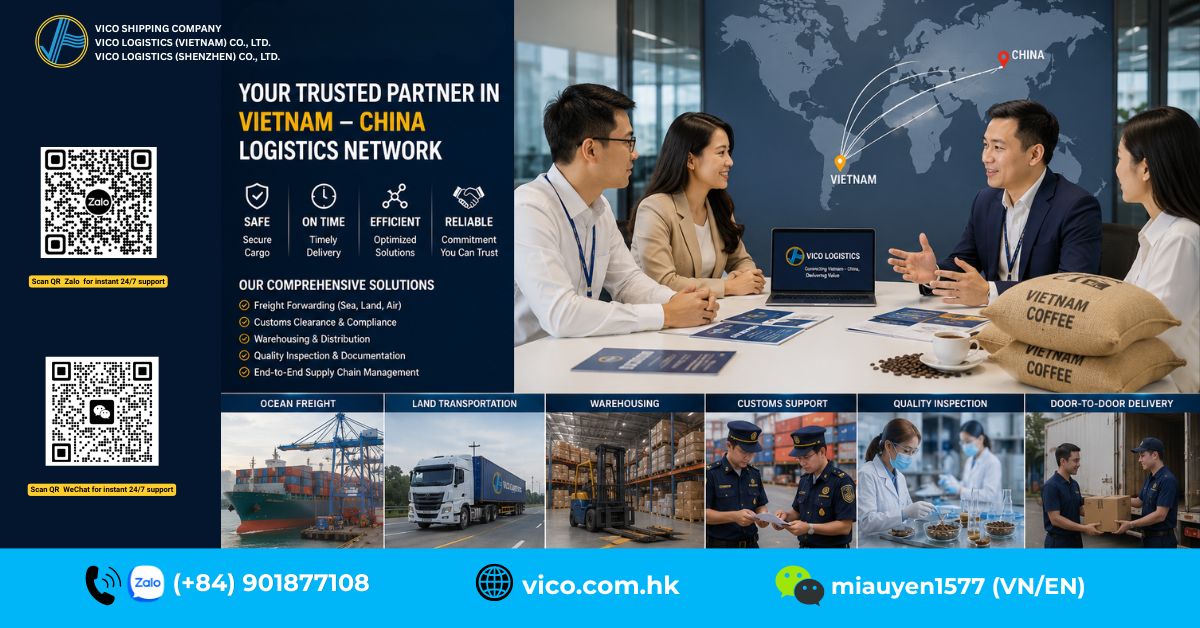
5. VICO Logistics supports the coffee ship from Vietnam to China and Important Documentation
VICO Logistics can help to support Vietnamese exporters in entering the Chinese market. With our strong presence in both Vietnam and China, VICO can offer seamless assistance in completing export documentation, assisting in obtaining export registration codes, meeting regulatory requirements, as well as facilitating partnerships between Vietnamese exporters and Chinese importers.
VICO can also assist in warehousing solutions in both countries as well as freight services to help ease the exporting process. Contact VICO today.
Book now: https://vico.com.hk/#quotation
LEARN MORE |
|---|
VICO LOGISTICS – YOUR INDOCHINA EXPERT
Youtube - Linkedin - Fanpage
Premium member of Eurocham, JCtrans, VICOFA, VITAS... associations
Owned offices:
Hong Kong (Causeway Bay),
China (Luohu-Shenzhen, Hongkou-Shanghai),
Vietnam (Bay Hien - Ho Chi Minh, Hai Chau- Da Nang, Gia Vien- Hai Phong).
Follow us for more valuable information
Book now: https://vico.com.hk/#quotation
HOTLINE : (+84) 901 877 108
📞 CONTACT US | |
|---|---|
📧 Email mkt4_hcm@vico.com.hk | 📧 China Email enquiry_cn@vico.com.hk |
📱 Hotline (Zalo / WhatsApp) (+84) 901 877 108 | 📲 Hotline/ China WhatsApp (+852) 6732 1147 |
💬 WeChat Vietnam (VN/EN) miauyen1577 | 💬 WeChat (EN/CN) Schyler_skylar |