Content of table |
Vietnam China Shipping Strategies: Incoterm Choices for Exporters and Importers
1. Introduction
When shipping goods between Vietnam and China, getting the logistics right is not only about trucks, ports, or customs clearance. It starts with something more foundational — the Incoterm you choose.
Incoterms define who is responsible for what during the shipping process. This includes who arranges transport, who clears customs, who pays duties, and where risk is transferred. While that may sound technical, the wrong Incoterm can expose your business to unnecessary costs, delays, or disputes. The right one, however, can streamline operations and give you control where it matters most.
This article breaks down how to choose the right Incoterm for Vietnam–China shipments, based on practical realities and common trade patterns. We also explain how VICO can support your strategy, no matter which Incoterm you use.
>> Logistics 101: The Complete Guide to Import Goods to Vietnam
2. What Are Incoterms and Why They Matter
Think of Incoterms as shared rules between buyers and sellers. They define the division of tasks in a shipment — who books transport, who pays insurance, who clears the goods, and at what point the risk moves from one party to another.
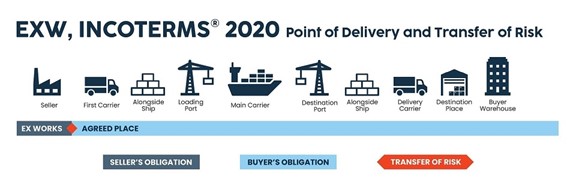
There is no one-size-fits-all answer. A trade term that works well for one shipment might be inefficient or risky for another. That’s why understanding the logic behind Incoterms helps you make better decisions — especially when working across the Vietnam–China border, where customs rules, transport modes, and communication styles can vary.
3. Key Factors That Influence Incoterm Selection
When choosing an Incoterm for Vietnam–China shipments, consider the following:
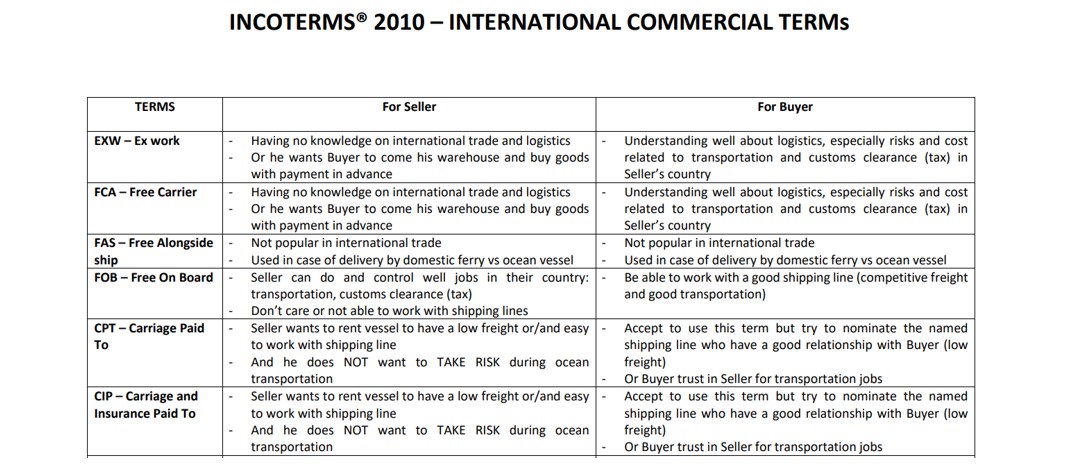
Control Over Costs and Freight: If your business wants to manage freight costs, consolidate shipments, or use preferred carriers, it may be better to retain control of transport by choosing an Incoterm where you arrange the freight (e.g., FCA, FOB, CPT). On the other hand, if the buyer or supplier has stronger local networks or more favourable rates, handing over control may work better.
Customs Clearance Capability: Cross-border trade between Vietnam and China requires precise coordination for export and import declarations. If your business is not equipped to manage customs in the destination country, it is often safer to limit your responsibility to the origin country (e.g., FOB for exporters, DAP for importers).
Risk Management and Liability: Incoterms define when risk transfers. If you are exporting high value or sensitive goods, having visibility and insurance coverage during key transport stages is important. Choosing a term where you manage the freight also gives you more control over how goods are handled.
Transport Mode and Route: Some Incoterms are better suited for sea freight (like FOB and CIF), while others work well for multimodal or land-based transport (like FCA and CPT). For Vietnam–China trade, which often involves cross-border trucking, rail, or sea-land combinations, flexibility is key.
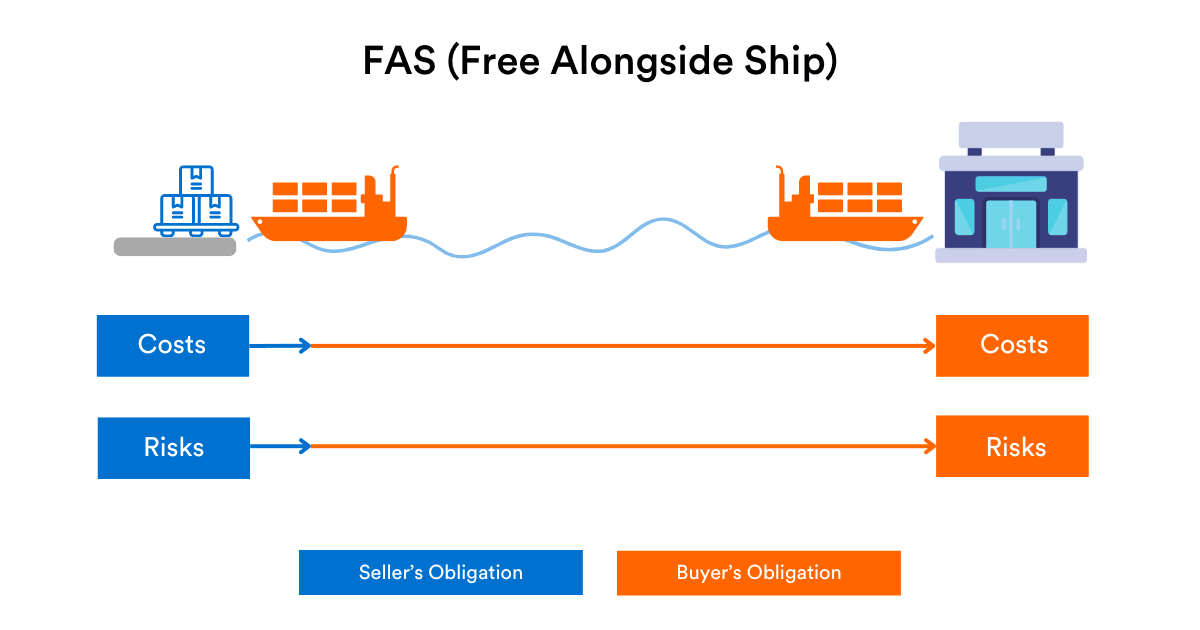
3.1 Common Incoterms in Vietnam–China Trade and When to Use Them
3.1.1 Incoterm guidance for exporters shipping from Vietnam to China:
| Incoterm | Use When | Key Considerations |
| EXW | Buyer has strong control over China-side logistics | Limited exporter visibility; risky for customs support |
| FCA | Cross-border trucking or rail to nominated place | Better control; clear loading responsibility |
| FOB | Sea freight shipments via Vietnamese ports | Exporter handles loading; avoid for road freight |
| CIF | Buyer prefers convenience for sea freight | Exporter bears cost and risk until port of arrival |
| CPT | Multimodal shipments needing delivery to China | Freight arranged by exporter; earlier risk transfer |
3.1.2 Incoterm guidance for importers shipping from China to Vietnam:
| Incoterm | Use When | Key Considerations |
| DAP | Your team handles customs, but wants delivery convenience | You manage import duties; supplier handles freight |
| DDP | Full delivery desired, including customs and duties | Common compliance issues; risk of hidden costs |
3.2 For Exporters in Vietnam:
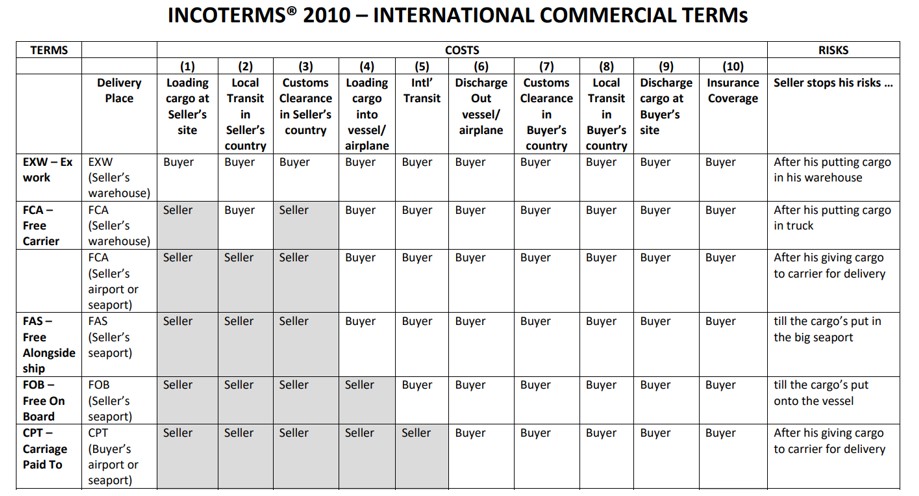
EXW (Ex Works): Suitable when the buyer takes full control from the seller’s warehouse. Useful for buyers with strong China-side logistics, but risky if the exporter wants visibility over transport or needs to support customs processes.
FCA (Free Carrier): Recommended for cross-border trucking or rail shipments. The exporter delivers to a nominated place (like a freight yard or port), then hands over responsibility. This offers better control and reduces confusion about loading points.
FOB (Free on Board): Best used for sea shipments. The exporter clears goods for export and loads them onto the vessel. Control transfers at the port of departure. Avoid using FOB for cross-border road freight.
CIF (Cost, Insurance, Freight):The exporter covers sea freight and insurance up to the port in China. Useful when the buyer wants convenience, but the seller still carries cost and risk until goods arrive.
CPT (Carriage Paid To): Similar to CIF but for any transport mode. The exporter arranges freight up to a named destination. Risk transfers earlier, giving exporters some protection.
3.3 For Importers in Vietnam:
DAP (Delivered at Place): The supplier arranges everything up to your warehouse or import terminal, but you handle customs and taxes. Works well when your team manages import compliance but wants convenience in freight.
DDP (Delivered Duty Paid): The supplier handles everything — freight, customs, taxes. While this sounds ideal, it often leads to inflated pricing or hidden costs. Many suppliers lack licensing to handle Vietnamese import clearance properly, which can trigger delays or legal issues.
4. Practical Scenarios in Vietnam–China Trade
Garment Factory in Dong Nai Exporting to Guangzhou:
Shipment type: Small volume, high frequency via truck → Use FCA or CPT.
Machinery Importer in Binh Duong Buying from Shenzhen:
Supplier offers DDP pricing → Negotiate to DAP instead.
Furniture Manufacturer in Quang Nam Shipping to Shanghai by Sea:
Shipment type: FCL container → FOB or CIF are suitable.
4.1 Common Mistakes to Avoid
Overusing DDP: Many importers accept DDP because it sounds simple. But if the foreign supplier lacks proper licenses to declare goods in Vietnam, you can face clearance issues, penalties, or container delays.
Applying FOB to Trucking Routes: FOB is a sea-only term and should not be used for land transport between Vietnam and China. Use FCA instead.
Assuming More Control Means More Risk: In some cases, controlling the freight leg gives your business more predictability and better cost management. Don’t avoid control just to reduce workload. Use Incoterms that align with your operational strengths.
5. How We Support Different Incoterms
We work across all common Incoterms in Vietnam–China trade, offering tailored support based on your role in the transaction.
For FCA, CPT, FOB, or CIF: We manage export documentation, cross-border trucking, sea freight bookings, and cargo handling — with clear handover points and tracking.
For DAP or DDP: We provide import handling, customs clearance, last mile delivery, and compliance checks to reduce exposure to risk.
For EXW shipments: We step in at origin, arrange pick-up, and help ensure your supplier meets shipping deadlines and documentation standards.
Whether you need full service logistics or just help with specific stages, our team ensures your Incoterm works for your business.
6. Final Thoughts
Incoterms are more than legal labels, they shape your entire logistics flow. In Vietnam–China trade, choosing the right Incoterm means balancing control, visibility, and efficiency. It also means avoiding costly misunderstandings.
By understanding your options and working with a partner who can adapt to your Incoterm of choice, you reduce risk and increase reliability. We’re here to make that possible.
If you're planning shipments to or from China and want to discuss the right Incoterm for your cargo, our team is ready to advise and support every step of the way.
Learn more the next article at
- Common Types of Warehouses in Vietnam and How to Choose the Right One
- Logistics 101: The Complete Guide to Import Goods to Vietnam
- Optimizing Logistics in Cambodia with VICO’s Vietnam-Cambodia Cross-Border Service
VICO Logistics – Your Indochina Expert
Premium member of Eurocham, JCtrans, VICOFA, VITAS... associations
Owned offices:
- Hong Kong (Causeway Bay),
- China (Luohu-Shenzhen, Hongkou-Shanghai),
- Vietnam (Bay Hien - Ho Chi Minh, Hai Chau- Da Nang, Gia Vien- Hai Phong).
Follow us for more valuable information
Book now: https://vico.com.hk/#quotation
| Contact us:
|