

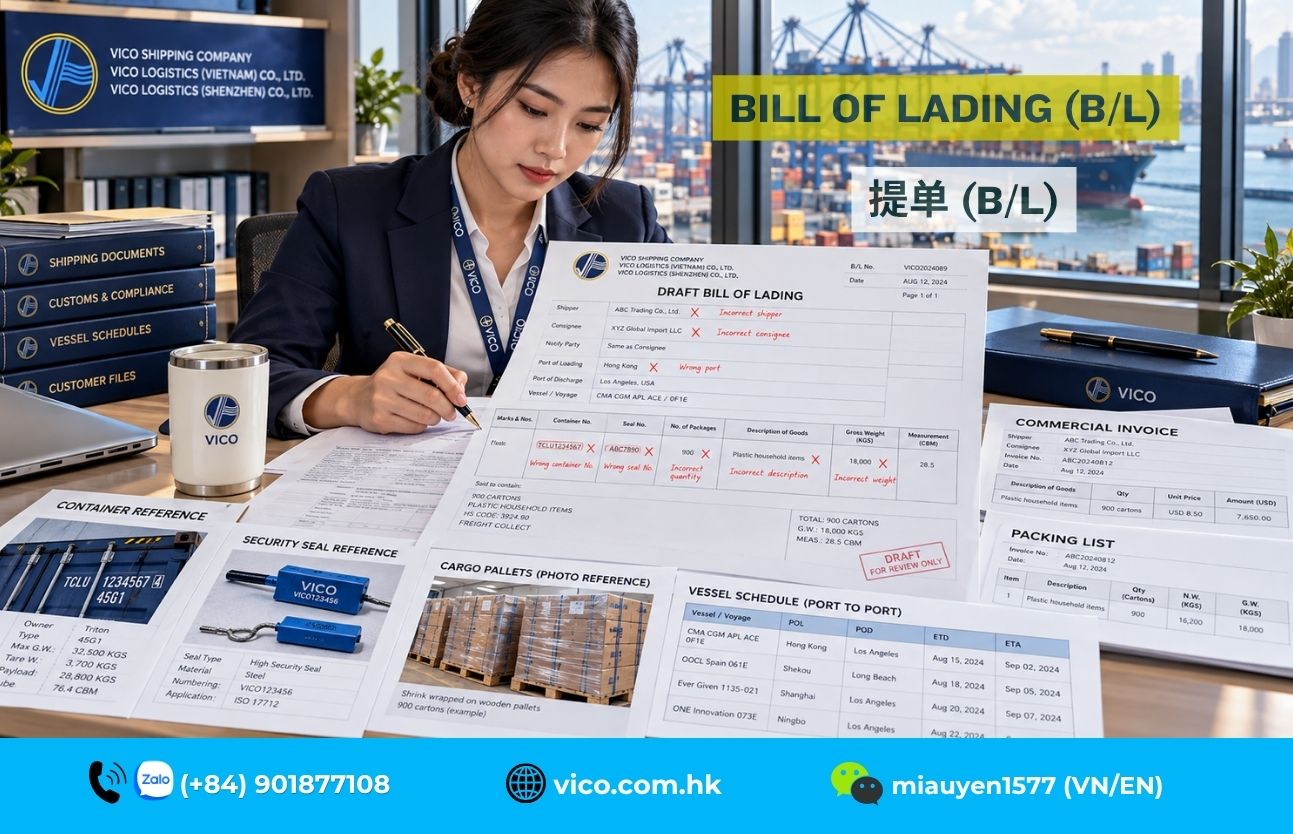
In international sea freight, a Bill of Lading (B/L) is one of the most important documents that importers and exporters need to check carefully.
A small error on a Bill of Lading, such as an incorrect consignee name, destination port, container number, or cargo description, can affect the entire shipment process, including cargo delivery, payment, and document handling.
So, what is a Bill of Lading? What are the main functions of a B/L? What types of Bills of Lading are commonly used, and how can you read one correctly?
This article will help you understand the Bill of Lading from basic concepts to practical applications.
What Is a Bill of Lading (B/L)?
A Bill of Lading, commonly abbreviated as B/L or BL, is a transport document widely used in sea freight.
It is issued by the carrier or shipping line, or by a party authorized by the carrier, after the cargo has been received for transportation.
In simple terms:
A B/L is a document confirming that the carrier has received the shipment. It also records important information and terms relating to the transportation, delivery, and receipt of the cargo.
A typical ocean Bill of Lading usually contains information such as:
-
Shipper
-
Consignee
-
Notify Party
-
Port of Loading (POL)
-
Port of Discharge (POD)
-
Vessel name and voyage number
-
Container number
-
Seal number
-
Number of packages
-
Description of goods
-
Weight
-
Freight payment terms
-
Place and date of issue
Under Article 148 of the 2015 Vietnam Maritime Code, a Bill of Lading serves as evidence that the carrier has received the goods as described on the document, evidence relating to the right to dispose of and receive the goods, and evidence of the contract of carriage by sea.
This is why the Bill of Lading plays such an important role in international trade.
3 Important Functions of a Bill of Lading
To understand the nature of a B/L, it is important to remember its three main functions.
1. Receipt of Goods
First, a B/L serves as evidence that the carrier has received the cargo.
When the Bill of Lading is issued, it records information such as:
-
quantity;
-
number of packages;
-
type of goods;
-
weight;
-
Marks & Numbers;
-
container number;
-
apparent condition of the goods or packaging, where applicable.
Example
A Vietnamese company exports one container of coffee to Singapore.
After the carrier receives the container, the B/L may show:
1 x 40'HC Container – Coffee Beans – 20 Pallets – Gross Weight: 18,500 KGS
This means:
One 40-foot high-cube container – coffee beans – 20 pallets – gross weight of 18,500 kg.
The Bill of Lading then becomes one of the documents showing that the carrier has received the cargo according to the information stated on the document.
What Is a Clean Bill of Lading?
A Clean Bill of Lading is a B/L that does not contain adverse remarks about the apparent condition of the cargo or its packaging when the carrier receives or loads the goods.
If the carrier records visible issues such as damaged packaging or other irregularities, the document may become a Claused Bill of Lading.
This distinction is particularly important in transactions using a Letter of Credit (L/C).
2. Evidence of the Contract of Carriage
A Bill of Lading also records or serves as evidence of the terms of the contract of carriage between the relevant parties.
The B/L and its accompanying terms usually contain information relating to:
-
the carrier;
-
the shipper;
-
the transportation route;
-
port of loading;
-
port of discharge;
-
cargo description;
-
responsibilities of the parties;
-
delivery conditions;
-
applicable terms of carriage.
One important point should be understood clearly:
The contract of carriage does not necessarily begin only when the Bill of Lading is issued.
In practice, a booking and other transport arrangements may already have been agreed earlier. The B/L then becomes an important document recording or evidencing that transport relationship.
3. Document Relating to the Right to Dispose of and Receive the Goods
This is one of the functions that makes a Bill of Lading different from many other logistics documents.
For certain negotiable types of B/L, possession and transfer of the document may be connected with the right to dispose of or claim delivery of the goods.
For example, with a:
To Order Bill of Lading
the Consignee field may state:
TO ORDER OF ABC BANK
In an L/C transaction, the bank may control the document set before the documents are transferred to the party entitled to receive the goods.
However, one important point should be noted:
Not all Bills of Lading are negotiable in the same way.
For example:
-
Straight B/L
-
To Order B/L
-
Sea Waybill
have different legal and operational characteristics.
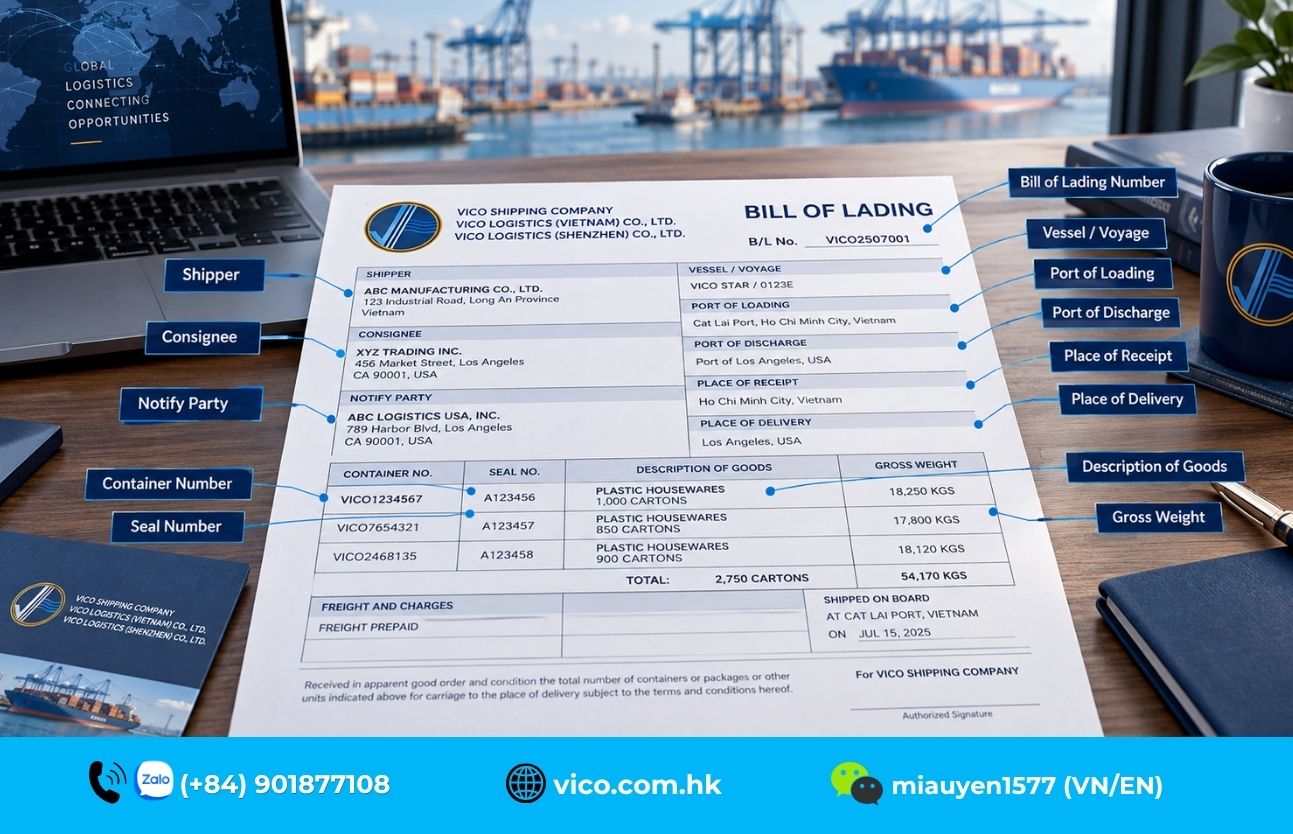
What Information Is Included in a Bill of Lading?
The format of a B/L may differ between shipping lines and freight forwarders, but most ocean Bills of Lading contain the following information.
1. Shipper
The Shipper is the person or company that sends or delivers the goods to the carrier under the shipment arrangement.
The information usually includes:
-
company name;
-
address;
-
country;
-
contact details where required.
The shipper's name should be checked carefully to ensure that it is consistent with the transaction and supporting documents.
2. Consignee
The Consignee is the person or company designated to receive the goods and is one of the most important fields on the B/L.
Depending on how the B/L is issued, this field may show the direct name of the consignee.
Or it may state:
To Order
or:
To Order of [Bank]
The way the Consignee field is written directly affects document handling and cargo delivery procedures.
3. Notify Party
The Notify Party is the party that the shipping line or its agent may notify when the shipment is approaching or has arrived at the destination.
The Notify Party may be:
-
Importer
-
Consignee
-
Forwarder
-
Customs Broker
-
another designated party
The Consignee and Notify Party may be the same company, but they are not necessarily the same.
4. Bill of Lading Number
This is the unique reference number used to identify a Bill of Lading or shipment.
Example:
VICOHCM26090123
The B/L number is commonly used for:
-
communication with the shipping line or forwarder;
-
shipment tracking;
-
customs and document reconciliation;
-
checking the Arrival Notice;
-
cargo release procedures.
5. Vessel/Voyage
Example:
EVER ACE / 068E
Where:
-
EVER ACE is the vessel name;
-
068E is the voyage number.
This information is used to cross-check the shipment against the vessel schedule.
6. Port of Loading (POL)
The Port of Loading is the port where the cargo is loaded onto the vessel.
Example:
CAT LAI PORT, HO CHI MINH CITY, VIETNAM
The common abbreviation is:
POL
7. Port of Discharge (POD)
The Port of Discharge is the port where the cargo is discharged from the vessel.
Example:
SINGAPORE
The common abbreviation is:
POD
The POL and POD should be checked carefully because an incorrect port can significantly affect the shipment.
8. Place of Receipt
The Place of Receipt is the location where the carrier receives the cargo under the transport arrangement.
The Place of Receipt is not always the same as the Port of Loading.
Example:
Place of Receipt: Binh Duong, Vietnam
Port of Loading: Cat Lai, Ho Chi Minh City
In this case, the carrier may receive the container in Binh Duong before transporting it to Cat Lai Port for vessel loading.
9. Place of Delivery
The Place of Delivery is the final location where the carrier is required to deliver the goods under the transportation arrangement shown on the document.
Example:
Port of Discharge: Los Angeles
Place of Delivery: Dallas, Texas
This means the cargo is discharged from the vessel in Los Angeles and then continues inland to Dallas.
What Are Marks & Numbers?
Marks & Numbers are cargo identification marks used to identify a shipment.
Example:
ABC COFFEE
PO NO. 2026-0928
MADE IN VIETNAM
CARTON 1–500
This information should be consistent with the actual cargo markings and related documents.
What Is Description of Goods?
The Description of Goods section shows the name or description of the cargo being transported.
Example:
Vietnamese Roasted Coffee Beans
or:
500 CARTONS OF ROASTED COFFEE BEANS
The cargo description should be checked against documents such as:
-
Commercial Invoice
-
Packing List
-
Shipping Instruction
-
Letter of Credit (L/C), if applicable
-
other import-export documents.
What Are Gross Weight and Measurement?
Gross Weight is the total weight of the goods including packaging, according to the declaration on the transport document.
Example:
18,500 KGS
Measurement normally refers to the volume of the cargo.
Example:
28.50 CBM
Container Number and Seal Number
For containerized cargo, two particularly important pieces of information are:
Container Number
Example:
MSCU1234567
and:
Seal Number
Example:
VICO889922
Before confirming the Draft B/L, the company should cross-check both numbers against the actual cargo loading records.
What Are Freight Prepaid and Freight Collect?
A B/L usually indicates how freight charges are paid.
Freight Prepaid
The freight is paid at the origin according to the arrangement with the carrier.
Freight Collect
The freight is collected at the destination according to the agreed arrangement.
However:
Freight Prepaid or Freight Collect should not be used alone to determine all cost responsibilities under Incoterms.
Incoterms and freight payment terms are related concepts, but they are not the same thing.
How to Read a Bill of Lading Correctly
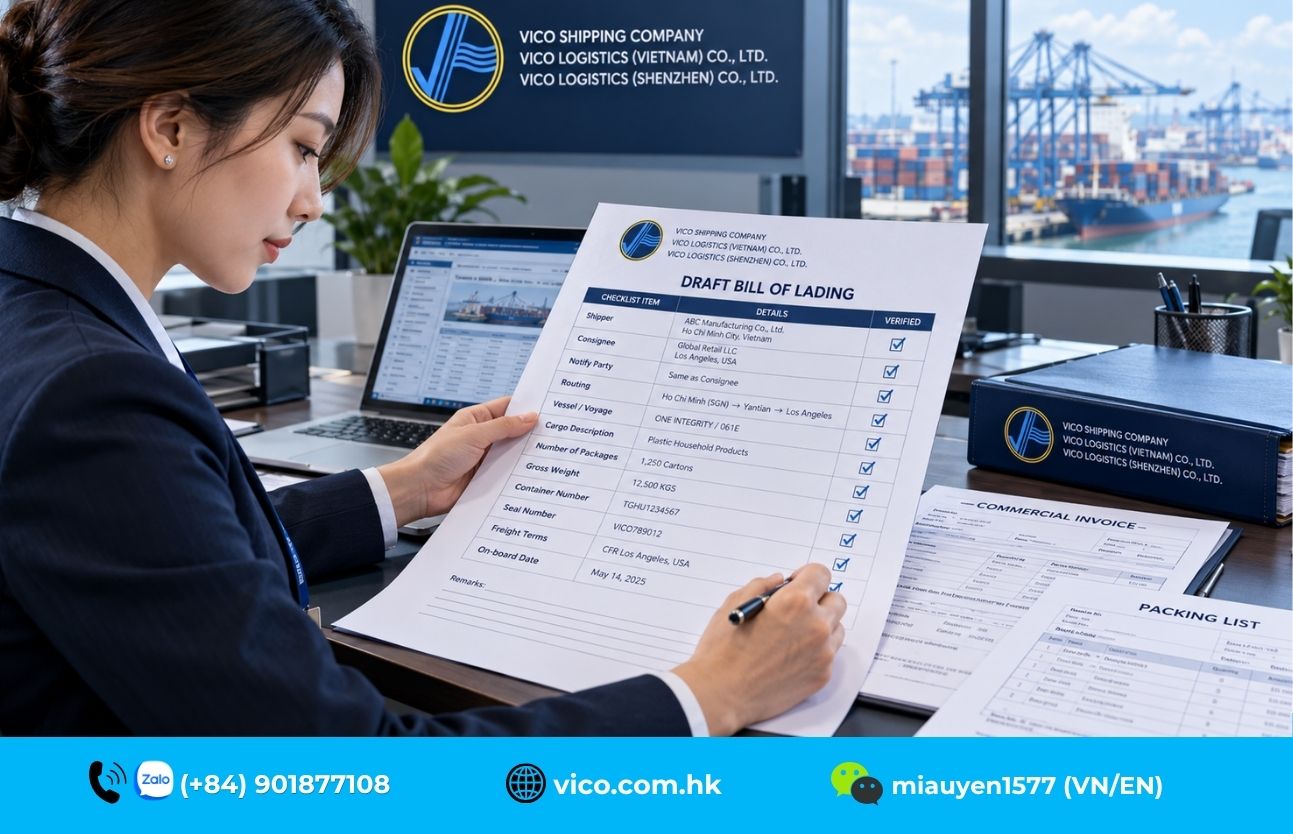
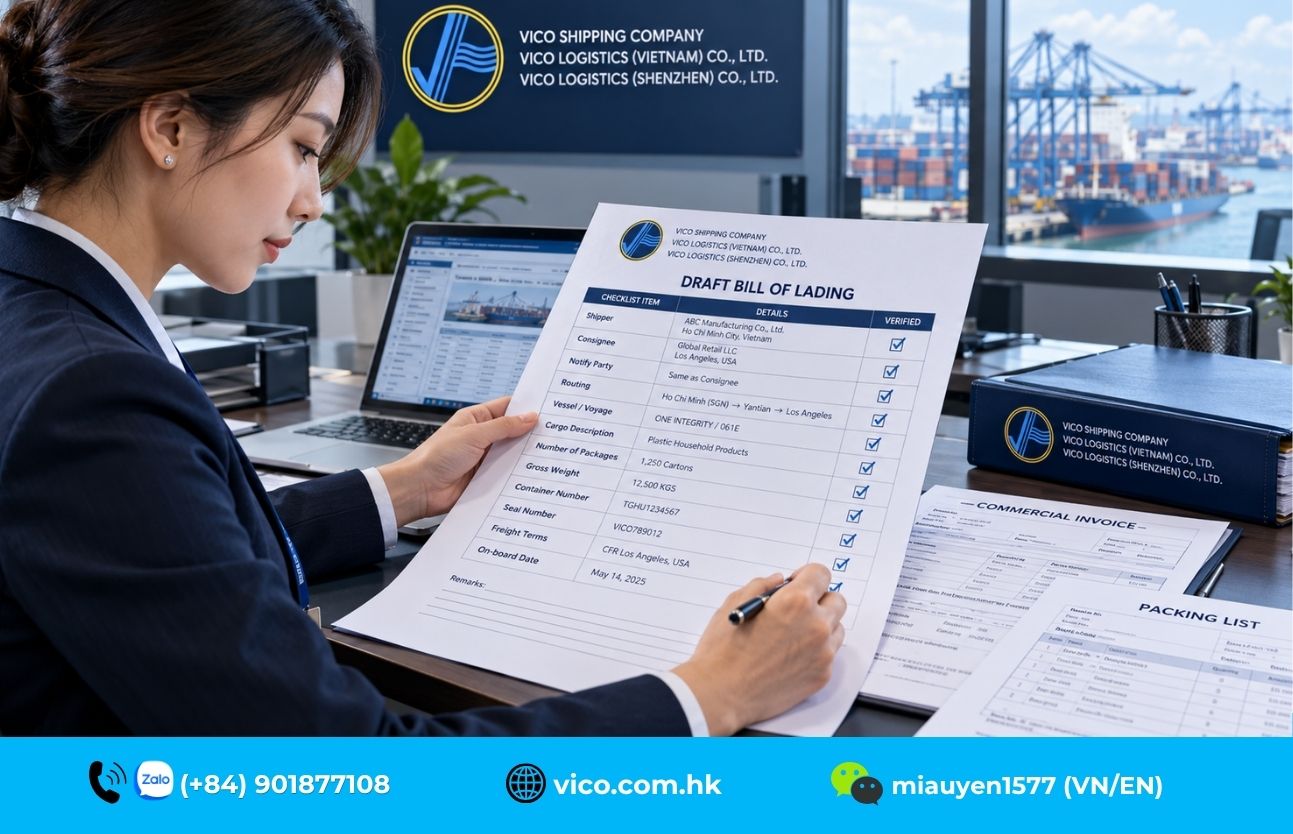
When receiving a Draft B/L, a company should not simply check the Shipper and Consignee names and then approve it.
At least seven groups of information should be reviewed.
Step 1: Check the Parties
Cross-check:
Shipper → Consignee → Notify Party
Review:
-
spelling;
-
legal company name;
-
address;
-
country;
-
L/C requirements, if applicable.
Step 2: Check the Routing
Cross-check:
Place of Receipt
→ Port of Loading
→ Port of Discharge
→ Place of Delivery
This is one of the fastest ways to identify an incorrect origin or destination.
Step 3: Check the Vessel and Voyage
Review:
Vessel / Voyage
and compare them with the booking confirmation and actual vessel schedule.
Step 4: Check the Container and Seal
Cross-check:
Container Number + Seal Number
against the cargo loading records.
Even one incorrect character may create a discrepancy in the documentation.
Step 5: Check the Cargo Information
Review:
-
number of packages;
-
package type;
-
cargo description;
-
gross weight;
-
measurement;
-
marks and numbers.
The B/L should also be cross-checked against:
Shipping Instruction, Commercial Invoice, and Packing List.
Step 6: Check the Freight Terms
Review whether the B/L states:
Freight Prepaid
or:
Freight Collect
Step 7: Check the B/L Type and Release Status
The company should determine whether it is using:
-
Original B/L
-
Surrendered B/L
-
Sea Waybill
-
another cargo release arrangement.
This affects how the consignee can obtain the cargo at the destination.
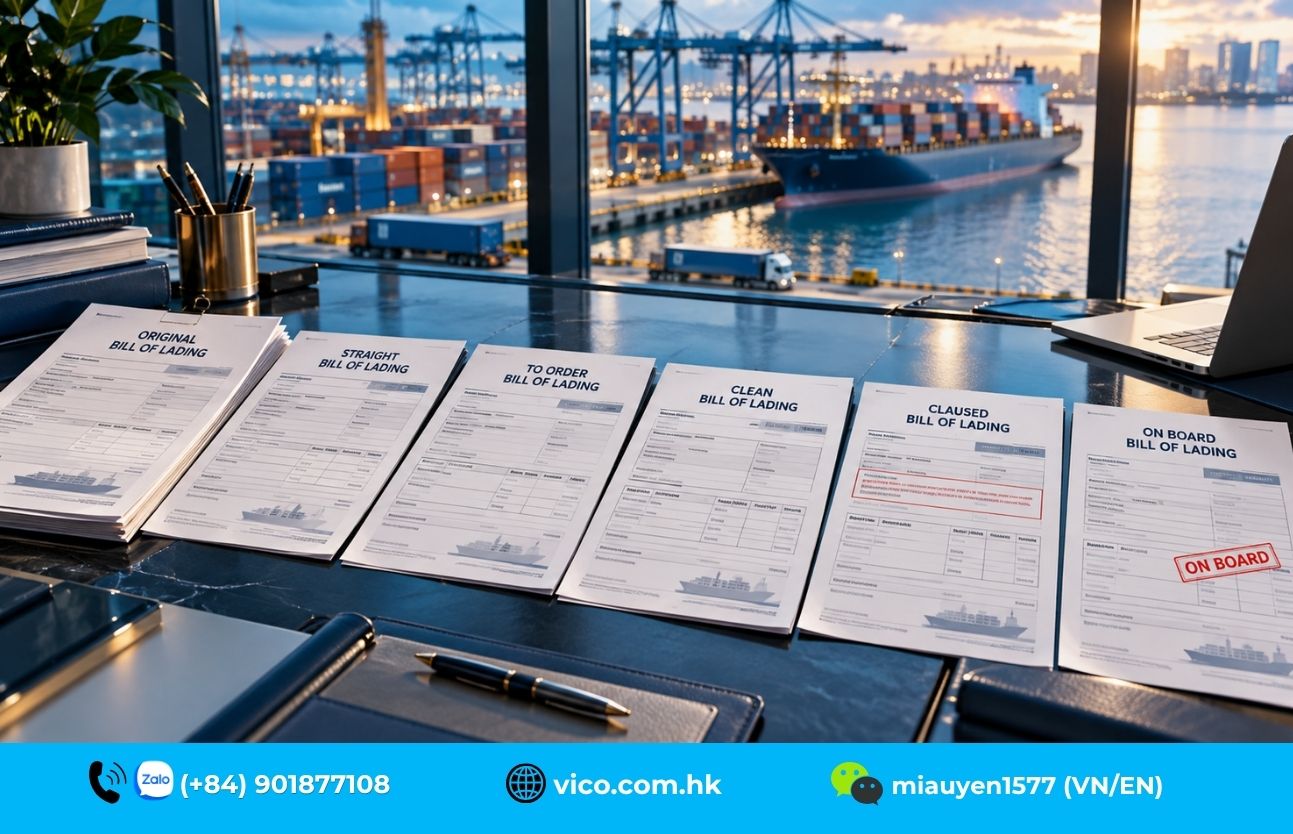
Common Types of Bill of Lading
A single Bill of Lading may fall into several categories at the same time.
For example:
Original B/L + Clean B/L + On Board B/L + To Order B/L
This means the same document can simultaneously be:
an original B/L + clean B/L + on-board B/L + order B/L.
Each term describes a different characteristic of the document.
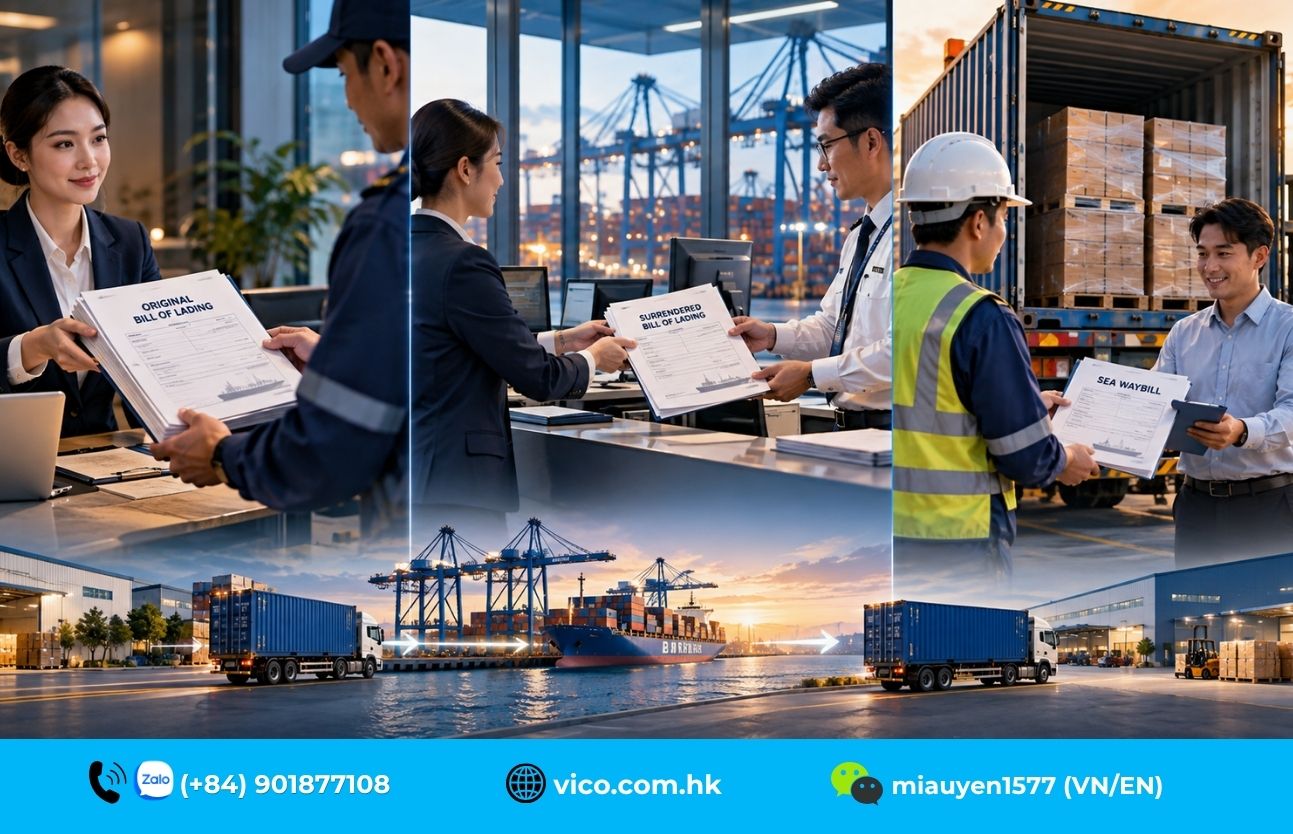
Original Bill of Lading
An Original B/L is a Bill of Lading issued as an original document.
For negotiable original Bills of Lading, control of the original document set may be connected with the right to receive or dispose of the goods.
For example, the B/L may state:
THREE (3) ORIGINALS
This means three original Bills of Lading have been issued.
The Original B/L set must therefore be managed very carefully.
What Is a Surrendered Bill of Lading?
A Surrendered B/L generally refers to a situation where the shipper returns the original Bill of Lading set to the carrier at the origin and requests cargo release at the destination without requiring the consignee to present the original paper B/L in the traditional way.
After the carrier confirms the surrender and sends a release instruction to the destination agent, the consignee may proceed with the cargo release procedure according to the carrier's rules.
This arrangement is commonly used when:
-
the buyer has already paid;
-
the buyer and seller have a trusted business relationship;
-
transit time is short;
-
there is a risk that the cargo will arrive before the original B/L.
What Is Telex Release?
Telex Release generally refers to a cargo release instruction or confirmation transmitted from the origin to the destination after the required conditions have been satisfied.
Therefore:
Telex Release should not simply be understood as a completely separate type of Bill of Lading.
The term “Telex” is still widely used in logistics even though the instruction is now mainly transmitted electronically.
Straight Bill of Lading
A Straight B/L is a Bill of Lading that names a specific consignee.
Example:
Consignee: ABC IMPORT PTE LTD
Unlike a To Order B/L, a Straight B/L is not transferred through endorsement in the same manner as a negotiable order B/L.
To Order Bill of Lading
A To Order B/L is commonly used where rights under the document may be transferred through the mechanism applicable to an order Bill of Lading.
The Consignee field may state:
TO ORDER
or:
TO ORDER OF XYZ BANK
This type of B/L is commonly seen in certain transactions involving Letters of Credit.
Bearer Bill of Lading
A Bearer B/L is a Bill of Lading where rights associated with the document may be linked to the lawful holder of the document, subject to the applicable rules.
Because of the risks associated with document control, companies should handle this type of B/L with particular care.
Clean B/L vs. Claused B/L
Clean B/L
The carrier does not make any adverse notation regarding the apparent external condition of the cargo or packaging within the scope of its observation.
Claused B/L
The carrier records an observed issue relating to the cargo or packaging.
Example:
PACKAGING DAMAGED
In an L/C transaction, such a notation may create a document discrepancy during the bank's document examination.
On Board Bill of Lading
An On Board B/L confirms that the cargo has been loaded onto the vessel as stated on the transport document.
The On Board Date is particularly important in L/C transactions because the documents may need to prove that the goods were shipped within the required shipment period.
Received for Shipment B/L
A Received for Shipment B/L confirms that the carrier has received the goods for transportation.
However, at the time the document is issued:
the goods may not yet have been loaded onto the vessel.
This is an important distinction from an On Board B/L.
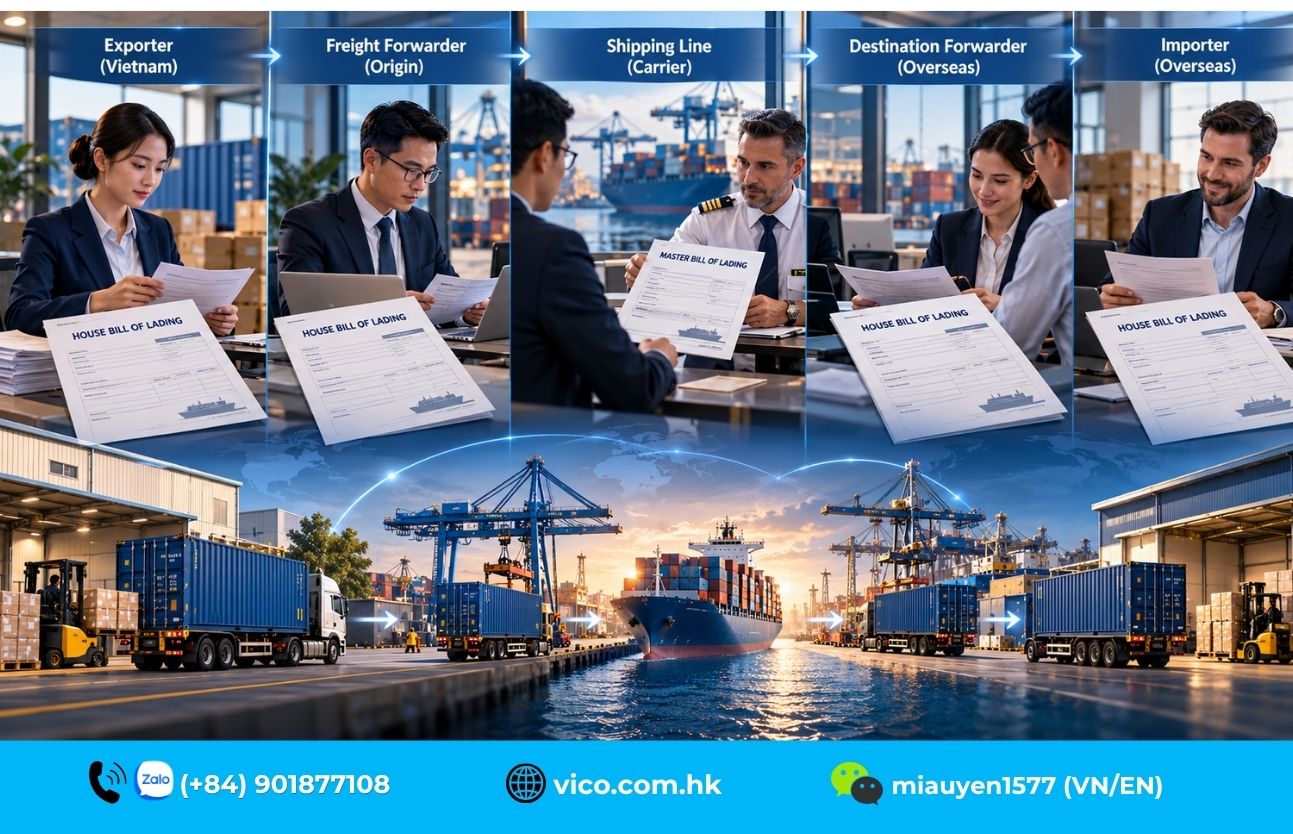
What Is the Difference Between a Master Bill and a House Bill?

This is one of the most common questions when companies use freight forwarding services.
Master Bill of Lading (MBL)
A Master B/L is generally issued by the carrier or shipping line within the relevant transportation relationship.
In a forwarding arrangement, the MBL may show:
Shipper: Origin forwarder
Consignee: Destination agent or forwarder
House Bill of Lading (HBL)
A House B/L is generally issued by a freight forwarder or NVOCC to its customer.
Example:
Shipper: Vietnamese Exporter
Consignee: Singapore Importer
A shipment arranged through a freight forwarder may therefore have:
1 Master B/L + one or more House B/Ls
depending on the shipment structure.
What Is the Difference Between a B/L and a Sea Waybill?
A Sea Waybill should not simply be understood as an “electronic B/L.”
It is a different transport document.
A Sea Waybill records:
-
receipt of the goods;
-
the transportation relationship;
-
the named consignee.
However, a Sea Waybill does not function as a negotiable document in the same way as a To Order B/L.
A Sea Waybill is often suitable when:
-
the seller and buyer have an established business relationship;
-
there is no need to hold an Original B/L to control the cargo;
-
fast cargo release is required;
-
there is no need to transfer the document during transit.
Bill of Lading Issuance Process
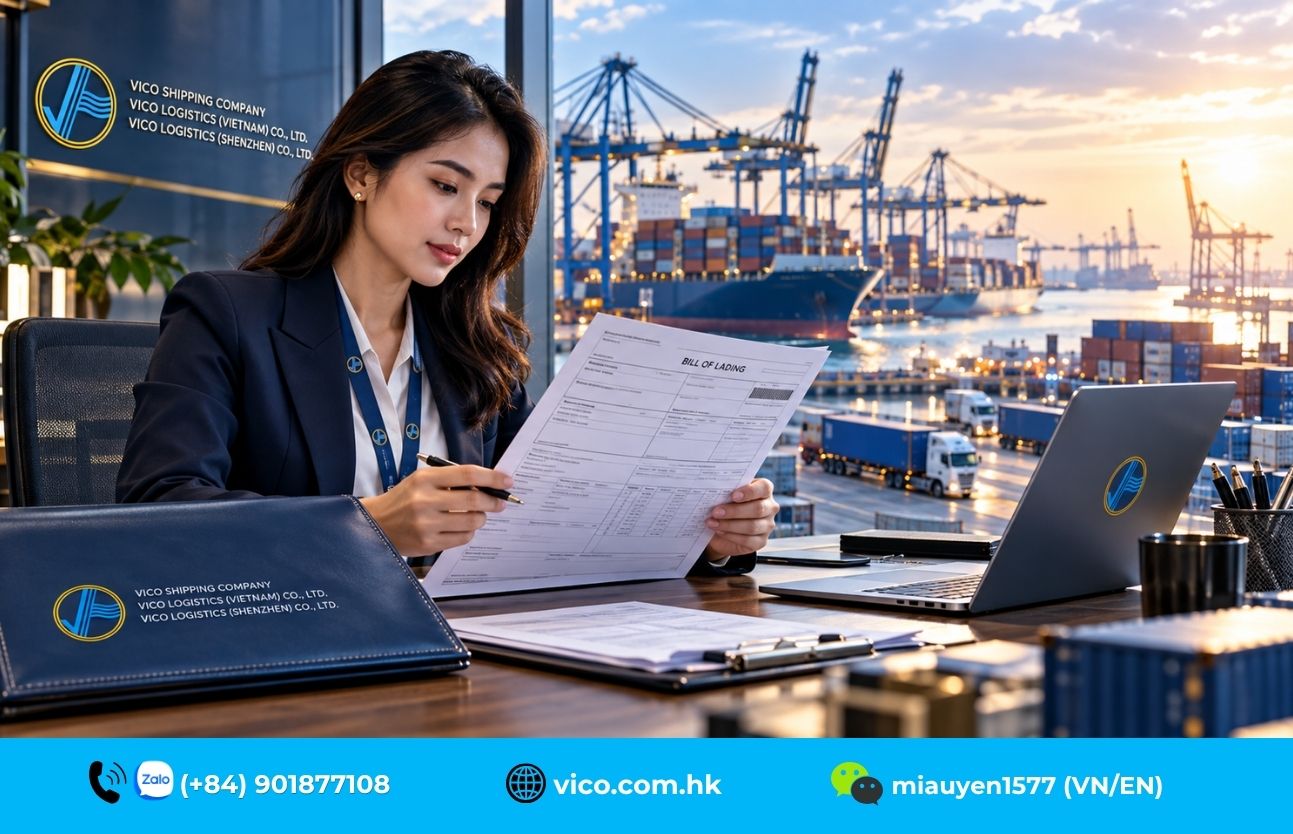
A typical container shipment may follow this process:
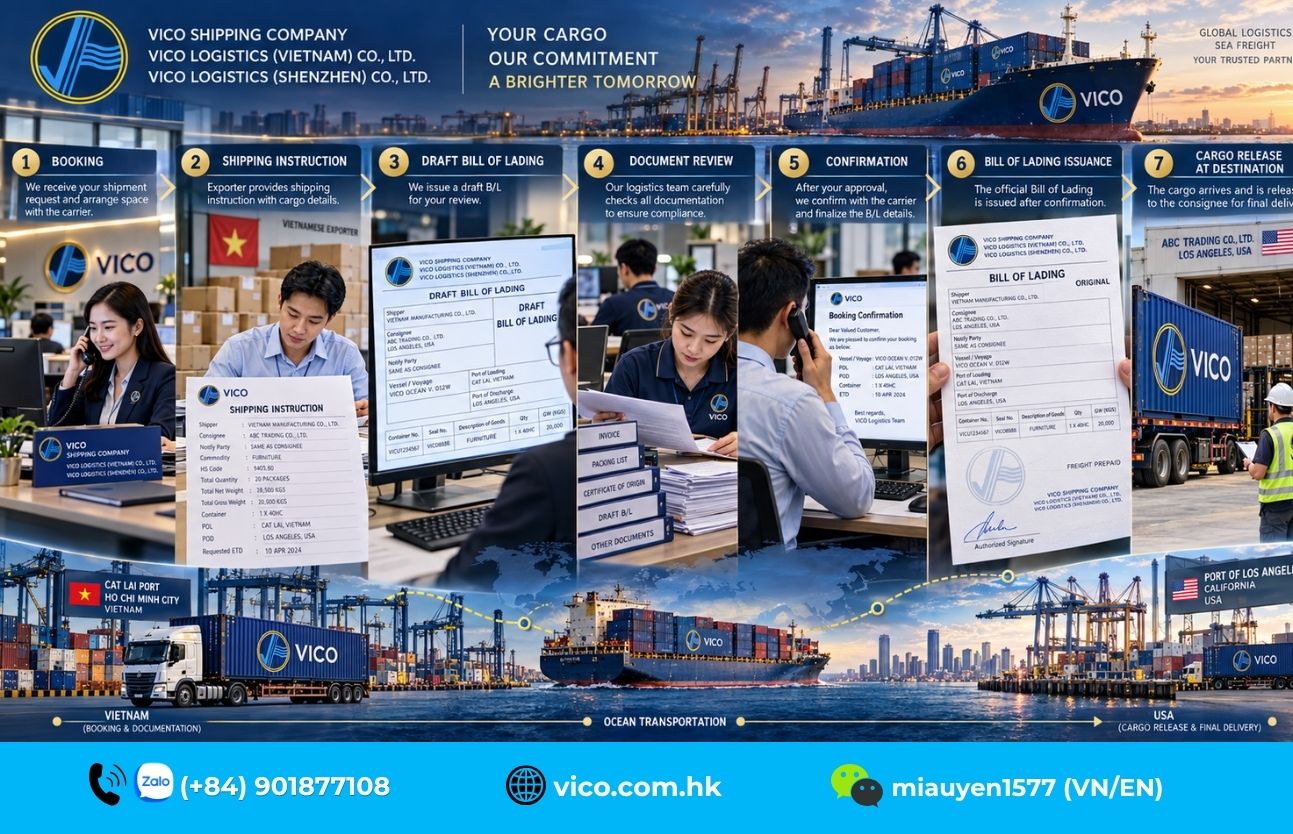
Booking → Shipping Instruction → Draft B/L → B/L Review → Confirmation → B/L Issuance → Cargo Release
1. Booking
The shipper or freight forwarder books space with the shipping line.
2. Shipping Instruction
The shipper or forwarder provides the information required for preparation of the Bill of Lading.
3. Draft B/L
The shipping line or forwarder sends a draft Bill of Lading for review.
4. Review the Draft B/L
If any incorrect information is identified, a correction should be requested as early as possible.
5. Confirmation
After the information has been checked and confirmed, the shipper approves the draft.
6. Issue the B/L
The shipping line or forwarder issues the official Bill of Lading.
7. Cargo Release at Destination
The cargo is released to the consignee according to the type of Bill of Lading and the applicable release procedure.
How Is a Bill of Lading Related to International Payment?
The role of the Bill of Lading becomes particularly important when the transaction uses a:
Letter of Credit (L/C).
For example, a Vietnamese exporter sells goods to a German buyer.
The buyer opens an L/C requiring:
Full set of clean on board ocean bills of lading made out to order of issuing bank.
After shipment, the seller must present documents that comply with the L/C requirements.
If a discrepancy is identified, the payment process may be affected.
The Bill of Lading should therefore be checked against:
L/C + Commercial Invoice + Packing List + other required documents.
10 Common Bill of Lading Errors
1. Incorrect Shipper Name
The company name may be incorrect or inconsistent with other supporting documents.
2. Incorrect Consignee
This may be a serious error because the Consignee information directly affects cargo delivery.
3. Incorrect Notify Party
The Arrival Notice may not be sent to the correct party.
4. Incorrect Port of Loading
This may create inconsistencies between the shipment information and supporting documents.
5. Incorrect Port of Discharge
This error should be identified and corrected as early as possible.
6. Incorrect Container Number
Even one incorrect character can cause document mismatches.
7. Incorrect Seal Number
This is particularly important for containerized cargo.
8. Incorrect Quantity or Weight
The information on the B/L may not match the Packing List or Shipping Instruction.
9. Incorrect Description of Goods
This may affect document reconciliation, payment, customs handling, or cargo processing at destination.
10. Original B/L Arrives After the Cargo
If the shipment requires presentation of an Original B/L, the consignee may not be able to take delivery of the cargo immediately.
While waiting for the document, additional charges may continue to arise at the port or destination, depending on the shipment conditions.
Draft B/L Checklist Before Confirmation
Before confirming a Draft B/L, a company should review at least the following:
Parties
-
Shipper
-
Consignee
-
Notify Party
Routing
-
Place of Receipt
-
Port of Loading
-
Port of Discharge
-
Place of Delivery
Vessel/Voyage
-
Vessel Name
-
Voyage Number
Cargo
-
Marks & Numbers
-
Number of Packages
-
Description
-
Gross Weight
-
Measurement
Container
-
Container Number
-
Seal Number
-
Container Type
Freight
-
Freight Prepaid
-
Freight Collect
Document Information
-
B/L Number
-
Number of Originals
-
Place of Issue
-
Date of Issue
-
On Board Date
-
Carrier/Issuer
What Is the Difference Between a Bill of Lading and a Delivery Order?
A Bill of Lading is a transport document relating to cargo receipt, the contract of carriage, and, for certain types, rights connected with the goods.
A Delivery Order (D/O) is a document or instruction used in the cargo delivery process at the destination.
In simple terms:
The B/L is a key transport document for the shipment.
Whereas:
The D/O is a document or instruction used to facilitate cargo delivery at destination.
What Is the Difference Between a Bill of Lading and an Air Waybill?
An Air Waybill (AWB) is used in air freight.
An AWB serves to:
-
confirm receipt of the cargo;
-
record transportation terms;
-
provide shipment information.
However, an AWB does not function as a negotiable document in the same way as certain ocean Bills of Lading.
Frequently Asked Questions About Bill of Lading
What Does B/L Stand For?
B/L stands for Bill of Lading.
It is one of the most important transport documents used in sea freight.
Who Issues a Bill of Lading?
Depending on the shipment structure:
-
a Shipping Line/Carrier may issue a Master B/L;
-
a Freight Forwarder/NVOCC may issue a House B/L.
Can One Shipment Have Both a Master Bill and a House Bill?
Yes.
This is common when a company uses a freight forwarder.
Can an Original B/L Be Negotiated or Transferred?
It depends on the type of B/L.
A To Order B/L may be transferable through the applicable mechanism, including endorsement and delivery of the document.
A Straight B/L does not operate in the same way.
Does a Sea Waybill Require an Original Document?
Generally, a Sea Waybill does not require presentation of an Original B/L set in the same way as an Original negotiable B/L.
This is one reason why Sea Waybills are convenient when the buyer and seller have an established relationship.
Is Telex Release a Type of Bill of Lading?
It should not be understood that way.
Telex Release generally refers to a cargo release instruction or confirmation sent from origin to destination after the necessary conditions have been satisfied.
Can a Bill of Lading Be Amended?
An amendment may be requested in certain situations.
However, whether an amendment is possible, the cost involved, and the applicable cut-off time depend on:
-
the shipping line;
-
shipment status;
-
timing of the request;
-
type of B/L;
-
information to be changed;
-
origin and destination regulations.
Companies should therefore review the Draft B/L carefully before confirmation.
What Should You Do If an Original Bill of Lading Is Lost?
This is a complex situation.
The company should immediately contact:
the shipping line or freight forwarder + the relevant transaction parties + the bank, if applicable
to determine the appropriate handling procedure.
Depending on the carrier and applicable law, additional legal documentation and security measures may be required.
Conclusion
A Bill of Lading (B/L) is much more than a document containing container information.
It is one of the most important documents in international sea freight because it is connected with:
cargo → contract of carriage → delivery → rights relating to the goods → payment → import-export documentation.
If you only remember three things about a Bill of Lading, remember these:
1. A B/L confirms that the carrier has received the goods according to the information stated on the document.
2. A B/L is important evidence of the contract of carriage.
3. For certain types of B/L, the document is also related to the right to dispose of and receive the goods.
For importers and exporters, it is not enough to simply know “What is a Bill of Lading?”
They should also know how to:
read the B/L → check the B/L → choose the appropriate release method → identify errors before the Bill of Lading is officially issued.
- Factory Coffee: The Global Coffee Harvest Calendar
- What's So Good About Vietnam Manufacturers
- Electronics Shipping: Mastering The Logistics Of High-Value Technology
- Door To Door Cambodia Shipping: The Ultimate Logistics Solution For 2026
- Trucking Cambodia - Vietnam: Fast & Reliable Cross-Border Solutions 2026
- Commercial Invoice: What It Is and How to Prepare It
- What Is a Packing List? How to Prepare a Proper Packing List for Import and Export Shipments
Get a Logistics Quote in just 5 minutes
Professional international transportation and supply chain solutions tailored for your business.
Get a quote now ↗Quick Contact
🇻🇳 Ms Uyen
Hotline / Zalo
(+84) 901 877 108WeChat (VN/EN)
miauyen1577Scan to Contact
Zalo
🇨🇳 Ms Schyler
Office Hotline
(+852) 3759 9300WeChat ID
Schyler_skylarScan to Contact
VICO International Logistics — Your Trusted Logistics Partner in Indochina
Senior member of international logistics and trade associations: Eurocham, JCtrans, VICOFA, VITAS, and more.