| Table of Contents 1. Introduction: Vietnam Trade Fairs 2026 Overview 2. Why Vietnam Trade Fairs Matter in 2026 2.1. Major Vietnam Trade Fairs 2026 2.2. Vietnam Industrial & Manufacturing Trade Fairs 2026 2.3. Smart City & Technology Exhibitions 3. Sector-Specific Vietnam Trade Fairs Worth Monitoring 4. Vietnam Trade Fairs as Market Intelligence Platforms 5. Using Vietnam Trade Fairs Strategically 6. Think Beyond Exhibitions: Logistics & Execution 7. Conclusion: Turning Trade Fair Insights into Long-Term Growth |
1. Introduction: Vietnam Trade Fairs 2026 Overview
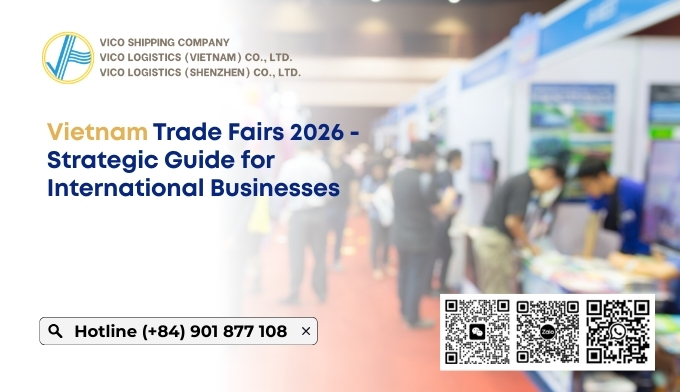
Vietnam has emerged as a vital destination on the Asian exhibition circuit. By 2026, its trade fair schedule demonstrates Vietnam’s growing importance as a hub for manufacturing, sourcing, and market entry for international businesses diversifying beyond China. The 2026 trade fairs will convene exporters, buyers, investors, and distributors from diverse sectors including manufacturing, technology, food, textiles, furniture, and industrial services.
For businesses considering Vietnam as more than just a place to source goods—but also as a consumer and distribution market—Vietnam’s trade fairs offer a unique chance to meet suppliers in person, gauge their capabilities, and understand how they operate. These events can save months of research by letting decision makers see things firsthand and test their ideas on the spot.
2. Why Vietnam Trade Fairs Matter in 2026
Vietnam’s role in Southeast Asia’s economy keeps growing. As factories and exporters move to Vietnam and the country becomes more tied into global supply chains, foreign companies are working with Vietnam in new ways. Trade fairs now go beyond showing off export products—they’re places to build partnerships, share technology, and strengthen brands.
Compared to crowded exhibition markets elsewhere, Vietnam’s trade fairs make real conversations possible. Meetings feel more genuine, suppliers are easier to approach, and government and industry groups are active in helping foreign companies get involved. Whether you’re new to Vietnam or already have experience there, the 2026 trade fairs offer both scale and openness.
2.1 Vietnam Expo 2026 in Hanoi
- Date: 3-5 December, 2026
Vietnam Expo is still the country’s biggest and most important general trade fair. It covers a wide range of sectors—machinery, electronics, food, consumer goods, and more—and draws both foreign exhibitors and major local buyers.
What sets Vietnam Expo apart is the strong support from government ministries and industry groups. This makes it especially useful for businesses looking to enter the market for the long term, not just quick deals. Few other trade fairs in Vietnam combine this level of official involvement with real business opportunities.
For companies looking to expand into Vietnam, Vietnam Expo is a great place to check out suppliers in many categories and see how rules and standards actually work in practice.
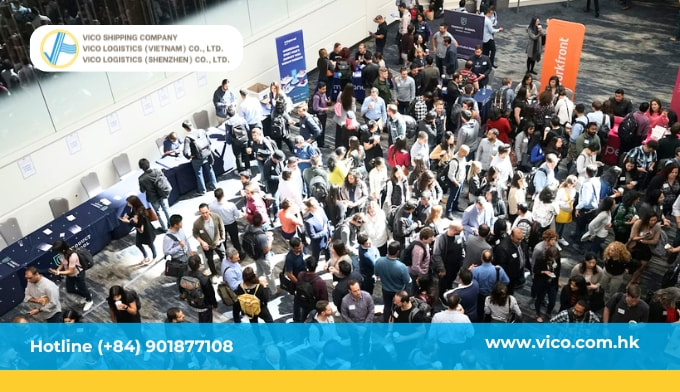
2.2 VIATT and VIFA Expo in Ho Chi Minh City
VIATT: 26-28 February, 2026
VIFA: 8-11 February, 2026
Vietnam’s top export sectors still include textiles, apparel, furniture, and home goods. Trade fairs for these industries bring in buyers who care about quality, compliance, and building long-term relationships with suppliers.
>> ESG and Sustainability Requirements for Vietnam Textile Exports to EU and US Markets
VIATT puts the spotlight on fabrics, materials, and apparel, while VIFA Expo is all about furniture and wood products. These events show how Vietnam is moving from low-cost production to higher-value manufacturing.
International buyers at these fairs get to connect directly with manufacturers who know global standards and can meet changing demands.
2.3. Vietnam Industrial and Manufacturing Fairs 2026
Industrial trade shows in Hanoi and the northern regions feature automation, machinery, tools, and the latest manufacturing tech. Fairs like VHHE 2026, VINAMAC EXPO HANOI, and Hanoi Plas 2026 are especially useful for businesses looking to upgrade or find new industrial partners in Vietnam.
Instead of just helping buyers source goods, these fairs show what Vietnamese industry is capable of today. Visitors can see where the country’s technical skills are growing fastest.
For companies already in Vietnam, these fairs help improve supply chains and support long-term planning and not just for a short-term gain.
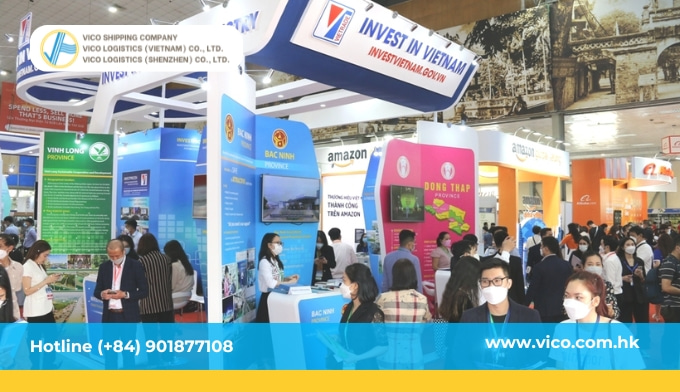
2.4. Smart City and Technology Exhibitions
Tech-focused trade fairs such as VIMF Hai Phong 2026 - Vietnam Industry & Manufacturing Exhibition and Vietnam ICTComm 2026 – International Exhibition of Telecommunications, Information Technology & Communications — which has a strong focus on smart cities, cyber security, and digital infrastructure — mirror the country’s rapid urban growth and tech adoption. These events attract tech providers, system integrators, and public sector leaders.
For international tech and service companies, these fairs aren’t just about immediate sales. They provide insights into the development of the industry and what to look forward to, and perhaps how to advantageously position your business in the future.

3. Sector-Specific Vietnam Trade Fairs Worth Monitoring
Along with major events, Vietnam’s 2026 trade fair calendar includes specialized shows—like Vietfood & Beverage, InterPetFest Ho Chi Minh 2026, which has a focus on pet food and services related to grooming and wellness, these smaller events give companies direct access to decision makers in focused industries.
For businesses in specific sectors, these focused trade fairs often lead to better, more relevant conversations than the big, general exhibitions as they cater towards a specific focus.
4. Vietnam Trade Fairs as Market Intelligence Platforms
Vietnam’s 2026 trade fairs are more than just places to make deals—they offer live market intelligence. You can compare prices, packaging, sustainability efforts, and branding from dozens of companies in one place.
For companies weighing Vietnam against other markets, this hands-on information is often more useful than a formal report. Trade fairs let you quickly test your ideas and adjust your plans with confidence.
5. Using Vietnam Trade Fairs Strategically
To make the most of Vietnam’s trade fairs, treat them as more than just networking events. Start by researching which fairs best match your industry and business goals, then register early to secure your spot and gain access to exhibitor lists. Prepare a clear agenda: decide if you want to discover new suppliers, compare technologies, meet potential distributors, or simply gain a feel for the market.
Before attending, reach out to exhibitors of interest and try to pre-arrange meetings—this helps ensure your time on the ground is productive. Bring marketing materials and business cards, and be ready with questions about quality control, production capabilities, and pricing structures. When you attend, take notes on supplier presentations, observe how competitors are positioning themselves, and look for trends in product offerings or booth activity.
Effective use of trade fairs also means following up promptly after the event. Review business cards and contacts while the conversations are still fresh. Send thank-you notes, request samples, and start discussions about next steps. This post-event engagement is often where real partnerships begin.
Finally, use the fairs as a learning opportunity. Attend seminars, panel discussions, or technical demonstrations to gain insights into the latest industry developments. By combining preparation, active engagement, and thoughtful follow-up, you can turn Vietnam’s trade fairs into a powerful tool for business growth.
6. Think Beyond Exhibitions
For many businesses, attending Vietnam trade fairs is just the starting point. The true test comes once you leave the exhibition hall and must turn new connections into real-world business. After the event, samples, trial orders, and even first shipments often need to move quickly between factories, warehouses, border crossings, and distribution centers. Timely logistics are crucial to maintaining the momentum you’ve built at the fair.
This is where seamless transportation solutions, such as our cross-border trucking service, become essential. With dependable routes connecting Vietnam to Cambodia, China, and major industrial zones, services like these ensure that your goods flow smoothly and reliably across borders. Fast, reliable trucking isn’t just about delivery—it’s about building trust with new partners, controlling costs, and meeting tight lead times that can make or break early business relationships.
In effect, trade fairs create the intent and initial alignment between buyers and suppliers. But it is the execution—getting samples delivered, fulfilling pilot orders on time, and managing logistics efficiently—that transforms that intent into lasting business. Companies that invest as much effort in their post-fair logistics as they do in their trade fair preparations are the ones most likely to turn promising connections into sustainable, repeat business.
7. Conclusion
Vietnam’s 2026 trade fairs will be a key resource for international businesses making decisions about sourcing, expanding, or building partnerships in Southeast Asia. Major events like Vietnam Expo, the Vietnam Making Tour, VIATT, VIFA Expo, and industry-specific fairs connect you with manufacturers, distributors, and important institutions in a fast-changing economy.
The real value of Vietnam’s trade fairs is in the insights they provide. You’ll see which suppliers are ready for long-term partnerships, which industries are growing, and how your business can set up for lasting success in Vietnam. If you approach them with a plan, trade fairs in 2026 are more than just exhibitions—they’re high-impact decision-making environments.
Learn more our next article at
1. Hanoi’s New Truck Restrictions Are Redefining Vietnam Urban Logistics Strategy
2. Choosing the Right Incoterm for Vietnam–China Trade
3. Logistics 101: The Complete Guide to Import Goods to Vietnam
VICO Logistics – Your Indochina Expert
Premium member of Eurocham, JCtrans, VICOFA, VITAS... associations
Owned offices:
- Hong Kong (Causeway Bay),
- China (Luohu-Shenzhen, Hongkou-Shanghai),
- Vietnam (Bay Hien - Ho Chi Minh, Hai Chau- Da Nang, Gia Vien- Hai Phong).
Follow us for more valuable information
Book now: https://vico.com.hk/#quotation
| Contact us:
|