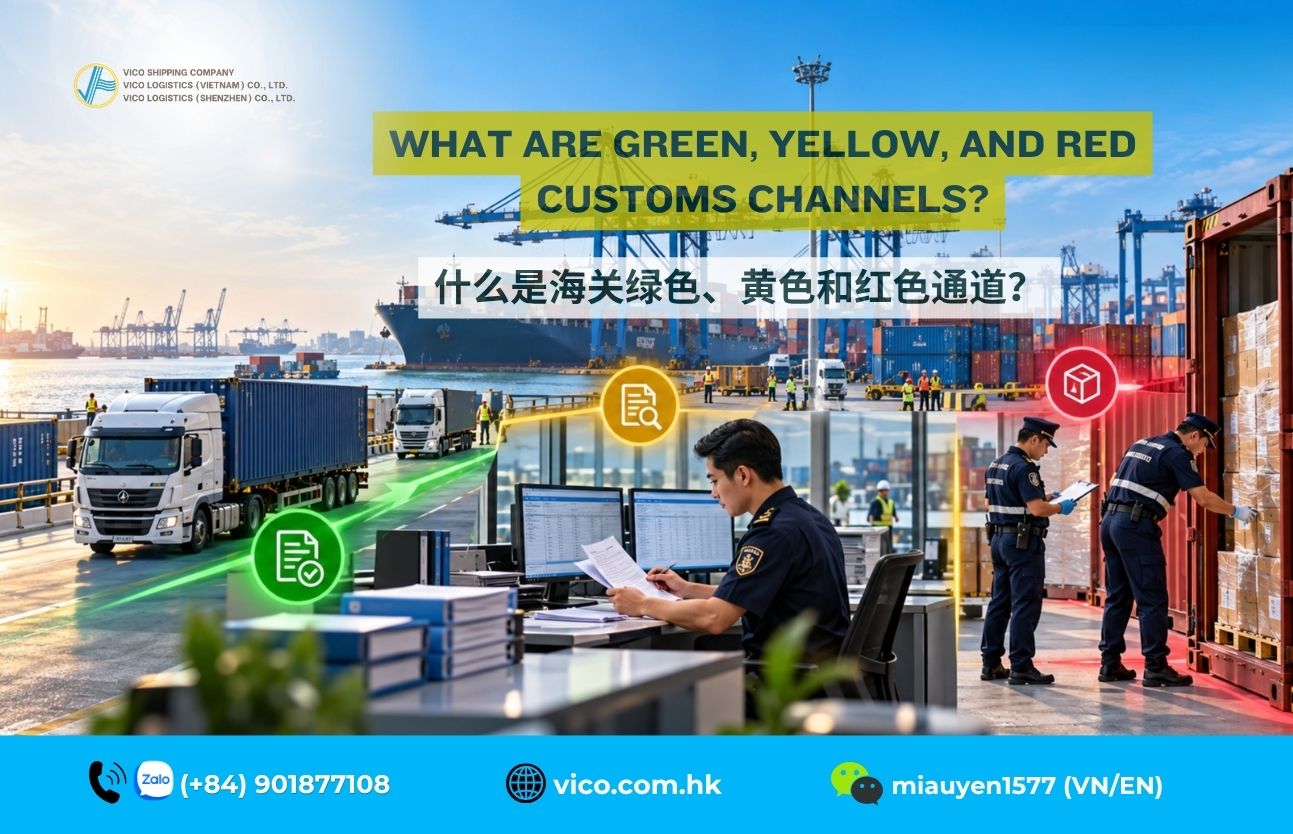
In import and export operations, after a business registers a customs declaration, the customs system may return a green, yellow, or red channel result. Each channel corresponds to a different level of inspection and can directly affect customs clearance time, delivery schedules, and logistics costs.
So, what are Green, Yellow, and Red Customs Channels? Why can businesses importing the same type of goods receive different channel results? And what should businesses do when their customs declarations are assigned to the yellow or red channel?
In this article, VICO Logistics explains how customs channel assignment works in Vietnam, the procedures for handling each channel, and the key considerations that help businesses minimize risks during customs clearance.
1. What Is Customs Channel Assignment?
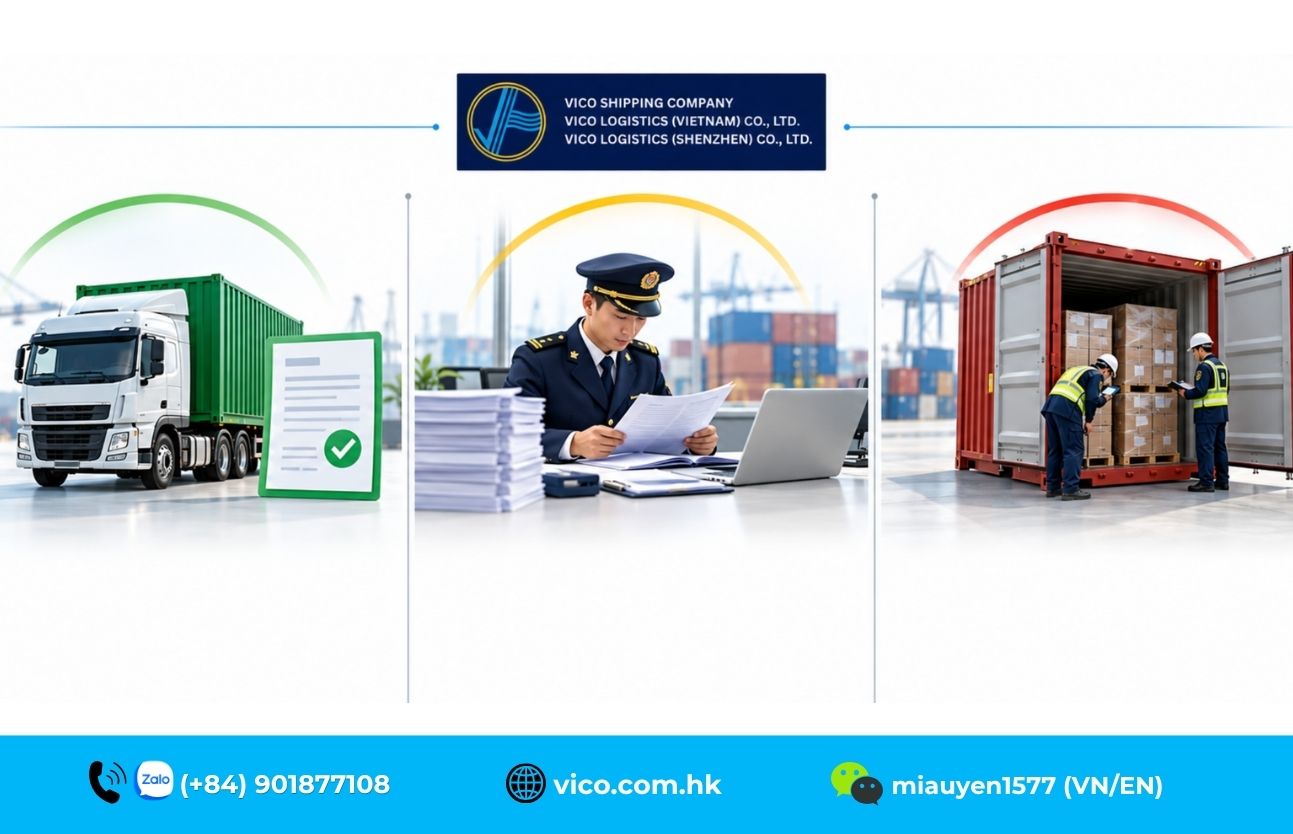
Customs channel assignment is the process of determining the level of inspection required for export and import customs declarations based on the customs authority's risk management mechanism.
- Under normal procedures, customs declarations are assigned to one of three channels:
- Green Channel: Goods are generally exempt from detailed document inspection and physical inspection.
- Yellow Channel: Customs authorities inspect the documents and supporting records related to the shipment.
- Red Channel: Customs authorities inspect both the documents and the physical goods.
- Channel assignment helps customs authorities allocate inspection resources to shipments according to their risk levels while facilitating legitimate trade.
Under Articles 31, 32, and 33 of Vietnam's 2014 Law on Customs, decisions on document and goods inspections are based on risk analysis, risk assessment, and relevant information.
When Does Customs Channel Assignment Take Place?
Under the standard electronic customs declaration process, businesses prepare the required data and supporting documents, then transmit the declaration through customs declaration software connected to the customs system.
Once the declaration is registered and processed, the system returns a response containing the channel assignment result.
Businesses use this result to determine the next steps required before the goods are eligible for customs clearance and delivery.
It is important to understand that a channel assignment result does not mean that all customs procedures have been completed.
2. Differences Between Green, Yellow, and Red Customs Channels
The main difference between the three channels lies in the level of document inspection and physical goods inspection required before customs clearance.
|
Criteria |
Green Channel |
Yellow Channel |
Red Channel |
|
Detailed document inspection |
Generally exempt |
Required |
Required |
|
Physical goods inspection |
Generally exempt |
Generally exempt |
Required |
|
Processing time |
Usually shorter |
Depends on document inspection results |
Depends on document and physical inspection results |
|
Risk of additional logistics costs |
Generally lower |
Additional costs may arise |
Potentially higher |
|
Required business actions |
Complete customs clearance requirements |
Prepare and submit supporting documents |
Prepare documents and coordinate physical inspection |
This table describes the standard procedures. Customs authorities may still apply appropriate inspection measures when risk indicators are identified or when inspections are required by applicable regulations.
For a simpler explanation:
- Green Channel: A simplified inspection process.
- Yellow Channel: Customs authorities need to review additional documents.
- Red Channel: Customs authorities need to examine both the documents and the actual goods.
- A red-channel result should not be interpreted as definitive evidence of a violation. It primarily indicates the level of inspection required under the applicable regulations.
3. What Is the Green Customs Channel?
The Green Channel is a customs channel assignment under which, under normal circumstances, a shipment is exempt from detailed document inspection and physical goods inspection during the clearance process.
It generally involves a simpler procedure than the yellow and red channels.
However, a green-channel declaration does not mean that businesses are exempt from all declaration obligations, tax payments, or other applicable regulatory requirements.
3.1. Can Goods Be Cleared Immediately Under the Green Channel?
Not always.
A green-channel result only indicates the normal level of inspection required. Customs clearance still depends on whether the business has fulfilled all applicable requirements.
For example, an imported shipment may be assigned to the green channel but remain uncleared because outstanding tax obligations have not been fulfilled or a specialized regulatory requirement is still being processed.
Businesses should check the declaration status in the customs system rather than relying solely on the channel color.
3.2. What Should Businesses Do When a Declaration Is Assigned to the Green Channel?
After receiving a green-channel result, businesses should:
- Check the system response and customs declaration status.
- Confirm that applicable taxes, fees, and other requirements have been fulfilled.
- Verify the customs supervision status of the goods.
- Coordinate with the carrier or freight forwarder to arrange cargo collection and delivery according to schedule.
- Retain records and supporting documents in accordance with applicable regulations.
Example:
A company in Ho Chi Minh City imports electronic components from China. After registering its customs declaration, the system returns a green-channel result.
If the company has fulfilled all customs clearance and customs supervision requirements, the shipment can proceed to the delivery stage without undergoing routine detailed document inspection or physical inspection.
Nevertheless, the company remains responsible for the accuracy of the declared information and may still be subject to post-clearance audit.
4. What Is the Yellow Customs Channel?

The Yellow Channel is a customs channel assignment that requires customs authorities to conduct a detailed review of the declaration and its supporting documents before determining the next processing steps.
Under normal procedures, yellow-channel goods are not subject to immediate physical inspection at the outset.
The purpose of document inspection is to verify the accuracy, completeness, and consistency of the declared information against supporting documents and relevant goods management policies.
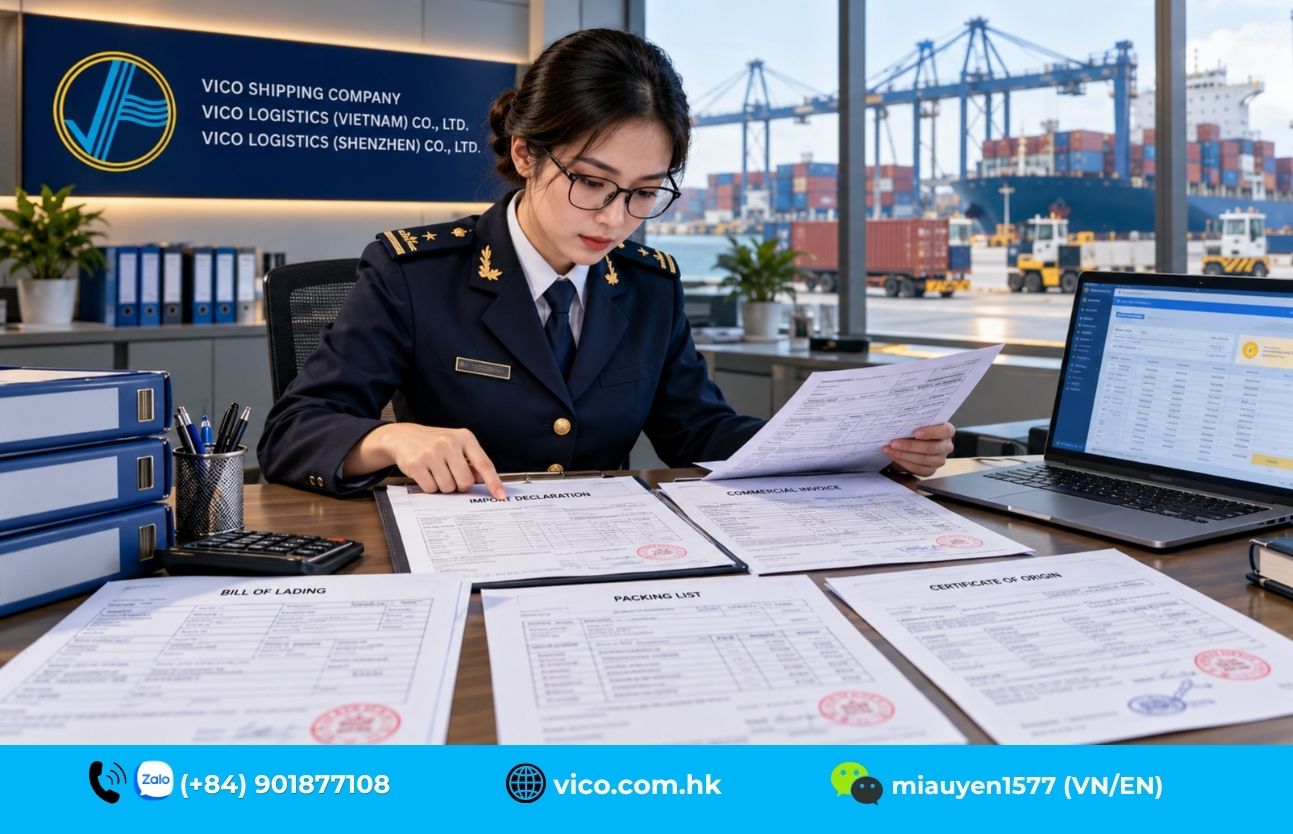
4.1. What Documents and Information Do Customs Authorities Check Under the Yellow Channel?
Depending on the type of goods and the import or export procedure, customs authorities may inspect:
- Product names, HS codes, and goods descriptions.
- Declared quantities, weights, and customs values.
- Exporter and importer information.
- Country of origin and eligibility for preferential tariff treatment.
- Delivery terms under Incoterms.
- Licenses, specialized inspection results, and other applicable regulatory requirements.
Under Article 32 of Vietnam's 2014 Law on Customs, document inspection includes checking the accuracy, completeness, and consistency of the declaration against supporting documents, goods management policies, and relevant tax policies.
Source: Mylaw.
4.2. Documents to Prepare for a Yellow-Channel Customs Declaration
|
Document |
Key Information to Check |
|
Commercial Invoice |
Product descriptions, declared value, seller, and buyer |
|
Packing List |
Number of packages, weight, and packing specifications |
|
Bill of Lading (B/L) / Air Waybill (AWB) |
Shipping details, shipper, and consignee |
|
Certificate of Origin (C/O) |
Country of origin and eligibility for preferential tariffs, if applicable |
|
Commercial Contract |
Transaction terms, when verification is required |
|
Licenses and Specialized Documents |
Requirements applicable to the specific goods |
|
Technical Documents and Product Catalogues |
Supporting information for identifying product characteristics and HS codes |
Not every document listed above is mandatory for every shipment. Businesses should prepare documents according to the applicable procedure, type of goods, and specific requirements.
4.3. Procedures for Handling a Yellow-Channel Customs Declaration
When a declaration is assigned to the yellow channel, businesses should follow these steps.
Step 1: Check the Requirements from Customs Authorities
Identify the documents that must be submitted or presented and any information that needs clarification.
Step 2: Review Document Consistency
Cross-check the information in the customs declaration against the Commercial Invoice, Packing List, bill of lading, and other relevant documents.
Pay particular attention to product descriptions, quantities, weights, HS codes, customs values, and country of origin.
Step 3: Submit or Present the Required Documents
Submit the documents through the electronic system or follow the applicable submission procedures.
Step 4: Provide Explanations or Additional Information if Necessary
If customs authorities request clarification, businesses should review the original data and explain the actual nature of the transaction accurately.
If errors are identified, any supplementary declarations or amendments must comply with applicable regulations.
Step 5: Monitor the Document Inspection Results
If the documents meet the requirements and all other applicable conditions have been fulfilled, the declaration may proceed to customs clearance.
If there are grounds for further inspection, customs authorities may decide to conduct a physical inspection of the goods.
4.4. Example of an Imported Shipment Assigned to the Yellow Channel
A Vietnamese business imports production materials from China.
After the customs declaration is submitted, it is assigned to the yellow channel. During the document review, the business discovers that the product description on the Commercial Invoice does not provide sufficient detail to verify the declared HS code.
To address the issue, the business prepares additional catalogues, technical documents, and material specifications to support its explanation.
If customs authorities accept the documents and all other applicable requirements are met, the shipment may proceed to customs clearance without necessarily undergoing physical inspection.
Key takeaway: Clear, consistent documentation and accurate product descriptions help businesses respond more effectively when customs authorities request document inspection.
5. What Is the Red Customs Channel?
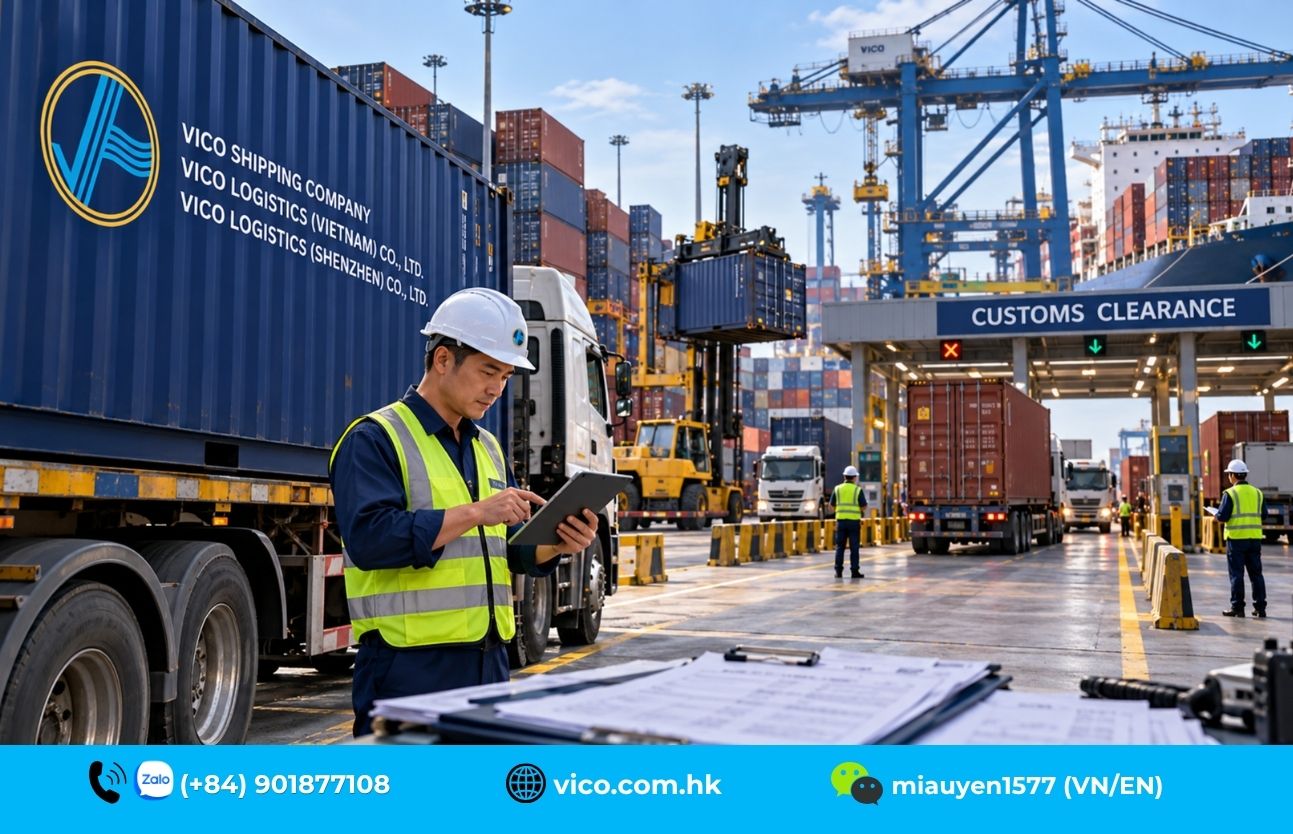
The Red Channel is a customs channel assignment that requires detailed document inspection and physical goods inspection before the relevant customs clearance procedures can be completed.
Compared with the green and yellow channels, the red channel generally requires more coordination, particularly when arranging the goods for physical inspection.
Physical inspection may be conducted directly, using scanning machines or technical equipment, or through other authorized inspection methods in accordance with applicable regulations.
5.1. Does the Red Channel Require Inspection of 100% of the Goods?
Not necessarily.
A red-channel declaration means the goods are subject to physical inspection, but the specific scope and method of inspection depend on the customs authority's decision.
Depending on the circumstances, the inspection may cover part of the shipment or the entire shipment in accordance with applicable regulations.
For example, customs authorities may scan the goods using inspection equipment or physically examine some packages. If the results indicate that a broader inspection is necessary, the scope may be expanded through a subsequent decision by the competent authority.
5.2. What Is Physical Customs Inspection?
In the import-export industry, physical customs inspection, commonly referred to as cargo examination or customs examination, means the physical inspection of goods by customs authorities.
Its purpose is to compare the actual goods with the declared information and supporting documents.
The inspection may cover product names, types, quantities, technical characteristics, country of origin, and other information that requires verification.
For example, a business declares the import of industrial machinery. During physical inspection, customs authorities may examine the machine's labels, model, technical specifications, and actual condition to verify the declaration.
5.3. Procedures for Handling a Red-Channel Customs Declaration
Step 1: Receive the Channel Assignment Result
Check the notification and identify the requirements for document inspection and physical goods inspection.
Step 2: Prepare the Supporting Documents
Review the customs declaration, Commercial Invoice, Packing List, bill of lading, technical documents, and other relevant records.
Step 3: Coordinate the Physical Inspection Arrangement
Work with the freight forwarder, port, warehouse, or designated inspection location to prepare the goods as required.
Step 4: Undergo Physical Goods Inspection
Customs authorities inspect the goods according to the approved scope and method.
Step 5: Address the Inspection Results
Provide explanations, submit additional documents, or complete procedures to resolve any discrepancies if necessary.
Step 6: Fulfill Customs Clearance Requirements
Monitor the processing status and arrange cargo collection and delivery once the goods are eligible for release.
5.4. What Should Businesses Prepare Before Physical Inspection?
In addition to the standard import-export documents, businesses should prepare information that helps identify and verify the goods:
- A cargo list organized by package or container.
- Product catalogues, photographs, and technical specifications.
- Container numbers, seal numbers, and cargo location details.
- A representative or designated staff member to coordinate the inspection.
- Arrangements for vehicles, personnel, and package opening if required.
- All preparations must comply with the instructions of customs authorities and the management requirements of the inspection location.
5.5. Example of an Imported Shipment Assigned to the Red Channel
- A business imports machinery from China for its manufacturing operations in Vietnam.
- After registering the customs declaration, the system returns a red-channel result.
- The business coordinates with its customs declaration service provider to review the machine's model, capacity, intended use, and HS code while preparing the product catalogue and technical documentation.
- When customs authorities conduct the physical inspection, these documents help verify the consistency between the actual machinery and the declared information.
- If the inspection results are satisfactory and the business fulfills all relevant obligations, the shipment may proceed to customs clearance.
- This is an illustrative scenario, not an actual VICO Logistics customer case.
Important note: A red-channel result does not automatically mean that the goods have been detained or that the business has violated the law. The outcome depends on the inspection results and the applicable regulations.
6. Why Are Customs Declarations Assigned to the Yellow or Red Channel?
One common question among businesses is: "Why can two shipments of the same type of goods receive different customs channel assignments, with one assigned to the green channel and another to the yellow or red channel?"
Channel assignment does not depend solely on the product name. It also relates to risk assessment and the information associated with each shipment and transaction.
The following factors are important for businesses to understand.
6.1. The Business's Customs Compliance History
A customs declarant's compliance history is one of the factors relevant to risk management.
For example, previous issues involving customs declarations, tax obligations, or the handling of violations may be considered during risk assessment.
However, it cannot be concluded that a newly established business or a business that has made mistakes in the past will automatically be assigned to the red channel.
6.2. The Characteristics and Nature of the Goods
Certain categories of goods are subject to specialized regulatory requirements or have characteristics that may require closer examination by customs authorities.
Examples include:
- Machinery and equipment requiring accurate identification of product types and technical specifications.
- Goods requiring import licenses or compliance with specialized management requirements.
- Goods whose country of origin requires verification.
- Goods presenting potential risks related to HS classification or customs valuation.
- The fact that goods fall into one of these categories does not mean they will automatically be assigned to the yellow or red channel.
6.3. Inconsistent or Conflicting Declaration Information
The following issues should be reviewed before a customs declaration is submitted:
- The product description in the customs declaration does not match the Commercial Invoice.
- Quantities or weights differ between the Invoice and Packing List.
- The product description does not provide a sufficient basis for determining the HS code.
- The declared country of origin is not adequately supported by documentation.
- The declared customs value lacks sufficient supporting evidence when clarification is requested.
- These issues may lead to requests for additional documents, explanations, amendments, or further inspection.
Businesses should not assume that every documentation error automatically results in a red-channel assignment. Although the issues may be related, they are not the same thing.
6.4. Risk Analysis and Assessment Results
Customs authorities apply risk management to determine the appropriate parties, scope, and level of inspection.
Businesses cannot independently determine their channel assignment, nor can they access all the operational criteria used by the risk assessment system.
In addition to specific risk factors, inspections may also involve random selection under the applicable risk management mechanism.
Therefore, businesses should focus on accurate declarations and complete documentation rather than attempting to guarantee a green-channel result.
7. How Long Does Customs Clearance Take for Green, Yellow, and Red Channels?
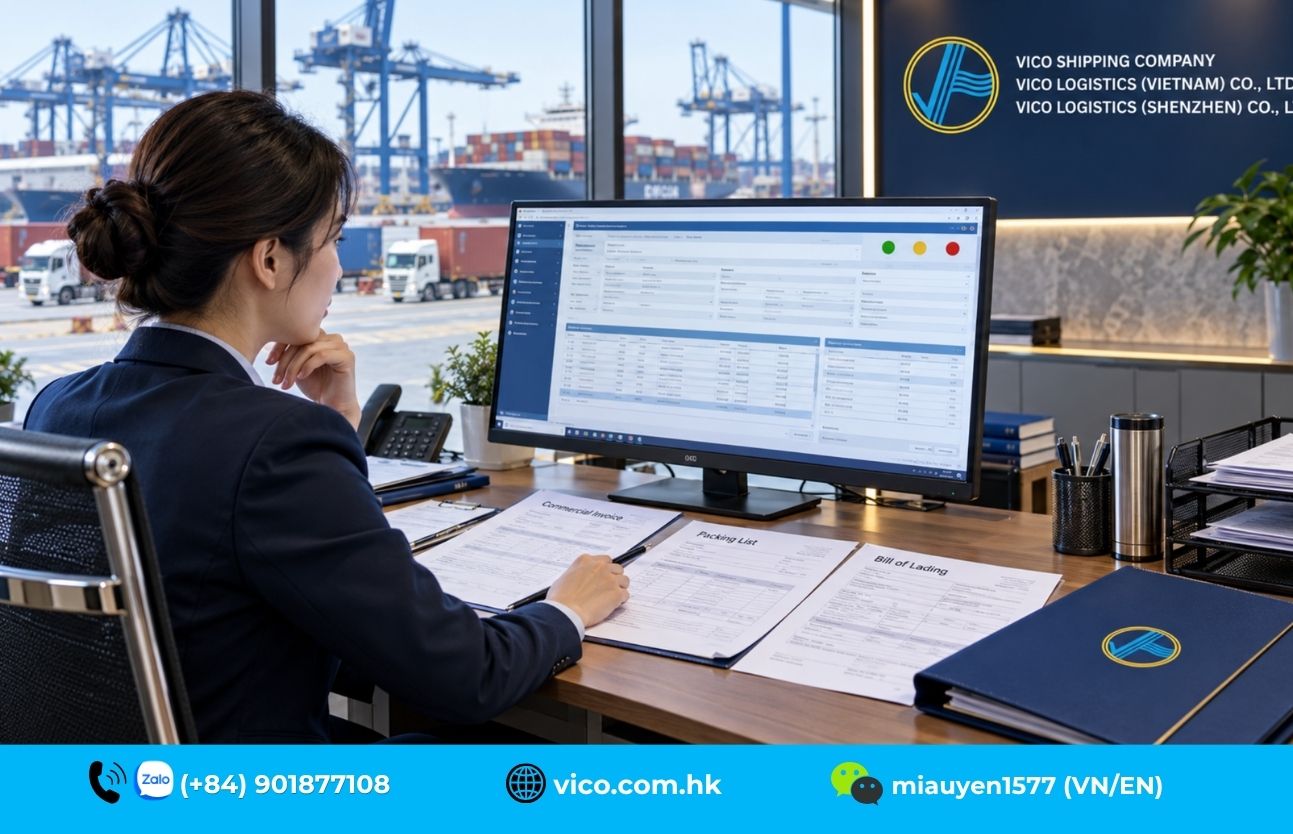
Customs clearance time is an important consideration for businesses, particularly when shipments require urgent delivery, contain production materials, or are subject to strict transportation schedules.
In general, the green channel involves a simpler process than the yellow and red channels. However, there is no single fixed clearance time that applies to every shipment assigned to the same channel.
7.1. Statutory Inspection Time Limits
Under Article 23 of Vietnam's 2014 Law on Customs, the following customs inspection time limits apply under specified conditions:
- Document inspection: No later than 2 working hours from the time customs authorities receive the complete customs dossier as prescribed.
- Physical goods inspection: No later than 8 working hours from the time the customs declarant presents the complete goods for inspection.
- Complex physical inspections: For shipments involving large quantities, multiple product types, or complicated inspection requirements, the inspection period may be extended in accordance with the regulations, up to a maximum of 2 days.
- Goods subject to specialized inspection: Separate rules may apply to the calculation of the physical inspection time limit.
- These are statutory inspection time limits applicable under specific legal conditions. They are not a guarantee of the total time from a vessel's arrival at the port to the delivery of goods to the warehouse.
7.2. Factors That May Delay Customs Clearance
- Actual processing time may also depend on the following factors.
- Document completeness
- If documents are inconsistent or additional information is required, processing may take longer.
- Specialized regulatory procedures
- Goods requiring quarantine, quality inspection, food safety inspection, or specialized licenses may need to satisfy additional requirements.
- Physical inspection scheduling
- For red-channel shipments, businesses may need to coordinate with ports, warehouses, transport providers, and customs authorities to arrange the goods for inspection.
- Tax obligations and other requirements
- Outstanding taxes or incomplete procedures may affect the delivery schedule.
- Cargo characteristics and quantity
- Shipments involving multiple product types, several containers, or complex technical verification may require more preparation time.
7.3. How Can Businesses Minimize Customs Clearance Delays?
Businesses should prepare documents before the goods arrive, verify declaration information, and coordinate with relevant parties in advance.
For shipments that may require physical inspection, businesses should allow sufficient time in their delivery schedules.
This is particularly important when importing production materials for manufacturing lines or delivering goods according to contractual deadlines.
8. Do Yellow- and Red-Channel Customs Declarations Incur Additional Costs?
Being assigned to the yellow or red channel does not automatically mean that a fixed customs fee will apply. However, document inspection or physical inspection may extend cargo storage time and result in additional logistics costs.
Potential costs include:
|
Cost Item |
When It May Arise |
|
Container detention or demurrage-related charges |
Containers are not returned within the applicable free-time period, depending on the charging arrangement |
|
Storage charges |
Goods or containers remain at the port or storage facility beyond the free-storage period |
|
Container lifting and handling charges |
Containers must be moved or repositioned for inspection |
|
Unpacking and repacking charges |
Goods must be opened or repacked for physical inspection |
|
Labor and equipment costs |
Additional personnel or equipment are required to handle the goods |
|
Truck waiting time and rescheduling costs |
Cargo availability changes and transportation arrangements must be adjusted |
Not every shipment incurs all of these costs. Actual charges depend on the service provider's tariff, the contractual terms, and the specific circumstances.
Illustrative Example of Additional Costs
A business imports a container of production materials.
Under the original plan, the business expects to complete customs procedures and move the goods to its warehouse before the free container period expires.
However, the declaration is assigned to the red channel, requiring coordination for physical inspection. If the business has not prepared the necessary documents or the inspection schedule is affected by operational factors, delivery may be delayed.
As a result, the business may face additional container-related charges, storage fees, or transportation rescheduling costs.
To manage costs more effectively, businesses should check the shipping line's free-time allowance, coordinate the schedules of all relevant parties, and prepare contingency arrangements in case physical inspection is required.
9. How Can Businesses Minimize Risks During Customs Channel Assignment?
Businesses cannot guarantee that every customs declaration will be assigned to the green channel. However, complying with regulations and preparing complete documentation can reduce errors, prevent repeated document processing, and help businesses respond more effectively to inspection requests.
9.1. Determine the Correct HS Code
An HS code is a product classification code used in international trade to determine applicable tariff rates, regulatory policies, and related requirements.
Businesses should determine the appropriate HS code based on the actual characteristics, composition, function, construction, and applicable classification rules of the goods.
They should not select an HS code solely because it offers a lower tariff rate or matches the product's commercial name.
For goods that are difficult to classify, businesses may consider applying for an advance ruling on classification in accordance with applicable regulations.
9.2. Check Consistency Across All Supporting Documents
Before transmitting a customs declaration, the import-export team should cross-check key information across all relevant documents.
For example:
- Product names and descriptions on the Invoice and customs declaration.
- Package counts and weights on the Packing List and transport documents.
- Shipper and consignee information on the bill of lading.
- Declared origin and supporting proof of origin.
- Customs value and delivery terms used as the basis for customs valuation.
- This review helps identify errors before the documents are used in the customs declaration process.
9.3. Verify Licenses and Specialized Regulatory Requirements
- Businesses should determine whether their goods are subject to specialized regulatory management.
- Depending on the type of goods, an import license, quality inspection, quarantine, or compliance with other legal requirements may be necessary.
- Delays in preparing these documents can affect customs clearance time, even when the customs declaration itself is complete.
9.4. Prepare Technical Documentation for the Goods
For machinery, equipment, raw materials, or products with complex technical specifications, businesses should prepare catalogues, photographs, technical specifications, and manufacturer documentation.
These materials can support explanations when customs authorities require clarification of the product name, characteristics, or HS code.
9.5. Work with an Experienced Customs Clearance Service Provider
For businesses that are new to import-export operations or frequently handle goods subject to specialized requirements, working with an experienced logistics provider can improve document preparation and coordination.
Depending on the agreed scope of services, the provider may assist with document reviews, procedural guidance, physical inspection coordination, and transportation and delivery arrangements.
The purpose of this cooperation is not to change the customs channel assignment, but to reduce errors and avoid preventable delays.
10. Frequently Asked Questions About Green, Yellow, and Red Customs Channels (FAQ)

10.1. Can Goods Be Collected Immediately Under the Green Channel?
Not always. Green-channel declarations are generally exempt from detailed document inspection and physical goods inspection. However, businesses must still fulfill relevant obligations, verify the customs clearance status, and ensure that the goods are eligible to leave the customs supervision area before arranging collection and delivery.
10.2. Does the Yellow Channel Require Physical Goods Inspection?
Under normal procedures, the yellow channel requires document inspection rather than immediate physical goods inspection. However, if the document review indicates that further verification is necessary or there are legal grounds for additional inspection, customs authorities may decide to conduct a physical inspection.
10.3. Does the Red Channel Mean That a Business Has Violated the Law?
No. The red channel indicates that both documents and the actual goods are subject to inspection. A red-channel assignment does not automatically establish that a business has violated the law. Any potential legal issue must be determined based on inspection results and the verification process under applicable regulations.
10.4. Can a Customs Declaration Be Changed from the Red Channel to the Green Channel?
Businesses cannot unilaterally change their customs channel assignment. Any adjustment to the inspection method or level of inspection falls within the authority and procedures of customs authorities in cases where such adjustments are permitted.
If a business believes there is an issue with the processing of its customs declaration, it should contact the customs office handling the procedure for guidance in accordance with the regulations.
10.5. Does the Red Channel Require Inspection of the Entire Container?
Not necessarily. The red channel requires physical goods inspection, but it does not automatically mean that every package or the entire container must be opened and inspected in full.
The scope, inspection ratio, and method are determined by customs authorities in accordance with the applicable regulations and the circumstances of each case.
10.6. Are Newly Established Importers More Likely to Be Assigned to the Red Channel?
It cannot be concluded that newly established importers will automatically be assigned to the red channel.
Channel assignment depends on multiple factors within the risk management system. New importers should focus on preparing complete documentation, accurately declaring their goods, and complying with customs requirements from their first shipments.
10.7. How Can Businesses Check Their Customs Channel Assignment?
Businesses can check the response returned by the electronic customs declaration software or obtain the result from the personnel or service provider responsible for filing the declaration.
After receiving the result, businesses should continue monitoring the declaration status and operational notifications to determine the next required steps.
11. VICO Logistics Supports Businesses with Customs Procedures
Green, yellow, and red channel assignments are part of the import-export customs clearance process. Regardless of the channel assigned, accurate documentation and effective coordination between relevant parties remain essential.
For businesses that regularly import raw materials, machinery, or goods used in manufacturing, issues arising during document inspection or physical inspection can affect delivery schedules and operational plans.
VICO Logistics provides logistics solutions and customs clearance support to help businesses prepare their documentation and organize cargo transportation more effectively.
Depending on specific requirements, VICO can assist with:
- Guidance on import and export customs declaration procedures.
- Reviewing shipment information and supporting documents before customs procedures begin.
- Coordinating responses to document inspection and physical goods inspection requirements.
- Arranging transportation, cargo delivery, and related logistics services.
- Advising on logistics solutions suitable for the shipping route, type of goods, and delivery schedule.
Has your customs declaration been assigned to the yellow or red channel?
Contact VICO Logistics to discuss your documentation, shipment status, and suitable handling options in accordance with applicable regulations.
Contact VICO Logistics for consultation on customs procedures and import-export transportation services.
Conclusion
Understanding what Green, Yellow, and Red Customs Channels mean helps businesses prepare more effectively for customs clearance and minimize unnecessary risks.
The green channel generally exempts goods from detailed document inspection and physical inspection. The yellow channel requires document inspection, while the red channel requires inspection of both documents and the actual goods.
However, channel assignment is not the only factor determining customs clearance time. Document quality, legal compliance, tax obligations, and specialized regulatory requirements can all affect processing progress.
Therefore, rather than focusing solely on how to obtain a green-channel result, businesses should prioritize accurate declarations, complete documentation, and timely coordination whenever inspection requirements arise.
- Factory Coffee: The Global Coffee Harvest Calendar
- What's So Good About Vietnam Manufacturers
- Electronics Shipping: Mastering The Logistics Of High-Value Technology
- Door To Door Cambodia Shipping: The Ultimate Logistics Solution For 2026
- Trucking Cambodia - Vietnam: Fast & Reliable Cross-Border Solutions 2026
- What Is a Certificate of Origin (C/O)? Types and Verification Guide
- What Is a Bill of Lading (B/L)? Functions, Types, and How to Read It from A to Z
- Commercial Invoice: What It Is and How to Prepare It
- What Is a Packing List? How to Prepare a Proper Packing List for Import and Export Shipments
- What Are Green, Yellow, and Red Customs Channels? Differences & Handling Guide
- What Is an Air Waybill (AWB)? How to Read & Track an AWB
- What Is MSDS/SDS? 16 Sections and Its Role in Import and Export
Get a Logistics Quote in just 5 minutes
Professional international transportation and supply chain solutions tailored for your business.
Get a quote now ↗Quick Contact
🇻🇳 Ms Uyen
Hotline / Zalo
(+84) 901 877 108WeChat (VN/EN)
miauyen1577Scan to Contact
Zalo
🇨🇳 Ms Schyler
Office Hotline
(+852) 3759 9300WeChat ID
Schyler_skylarScan to Contact
VICO International Logistics — Your Trusted Logistics Partner in Indochina
Senior member of international logistics and trade associations: Eurocham, JCtrans, VICOFA, VITAS, and more.