

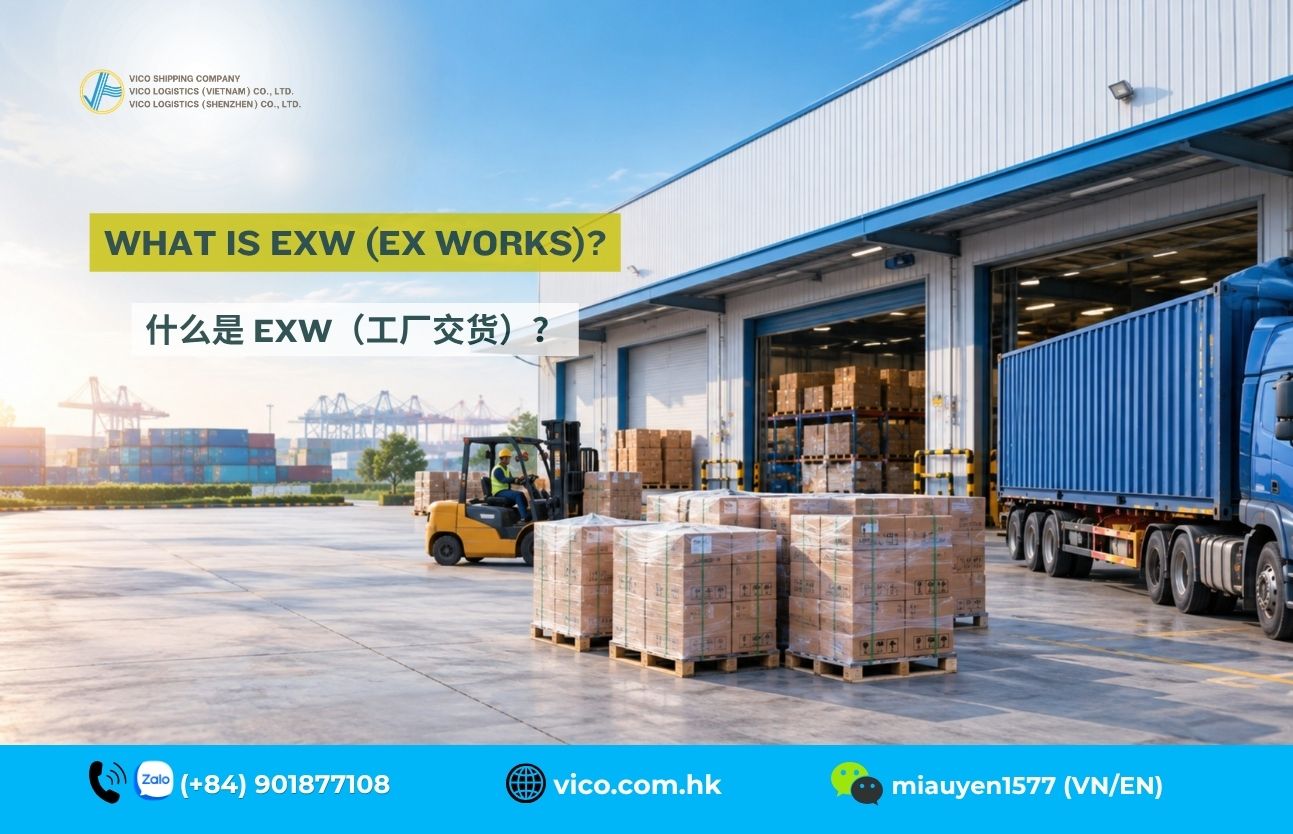
"EXW (Ex Works), or Ex Works delivery, is one of the 11 trade terms under Incoterms 2020 issued by the International Chamber of Commerce (ICC). Under EXW, the seller fulfills their obligation to deliver when they place the goods at the disposal of the buyer at the named place, such as a factory or warehouse. By default, the seller is not responsible for loading the goods onto the collecting vehicle or completing export customs clearance.
With the EXW term, the buyer assumes most of the transportation work as well as the costs and risks arising from the time of delivery under the rule. Therefore, even though the initial EXW product price may seem attractive, businesses still need to calculate the total logistics costs before deciding to make a purchase.
In this article, VICO Logistics will help you clearly understand what EXW is, how responsibilities are divided between the buyer and the seller, the costs that need to be estimated, the differences between EXW and FCA, as well as important considerations when importing goods internationally.
1. What is EXW?
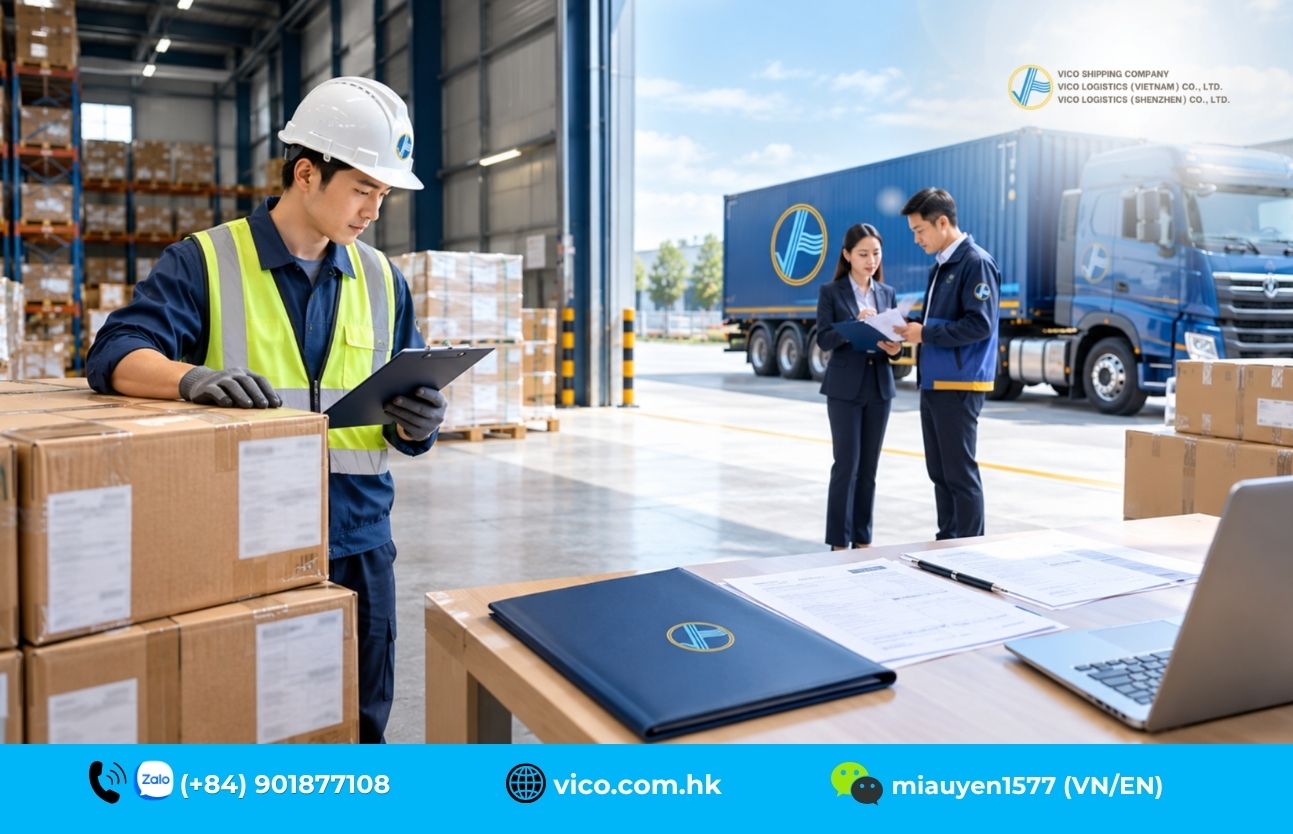
EXW stands for Ex Works, meaning delivery at the workshop/factory. This is a rule applicable to any mode of transport under Incoterms 2020, including road, sea, air, or multimodal transport.
Under EXW, the seller delivers the goods by placing them at the disposal of the buyer at the agreed-upon location. This location is typically the seller's factory, production plant, or warehouse, but it can also be another location designated by both parties.
For example, a business in Vietnam purchases machinery from a supplier in China under EXW terms at a factory in Guangzhou. The seller prepares the goods and notifies that the goods are ready for pickup. The buyer must organize the pickup, coordinate transportation, handle export and import procedures according to the allocated obligations, and arrange transport to the final destination.
The crucial point to remember is that EXW defines delivery obligations in the sales contract, rather than simply being a term for an ex-factory price.
Which category does EXW belong to in Incoterms 2020?
EXW belongs to Group E, which is the group with the minimum delivery obligations for the seller. Within the Incoterms 2020 rulebook, EXW can be applied to various modes of transport.
However, EXW is not always the most convenient choice for international transactions. When goods must cross borders, the buyer may encounter difficulties if they are not qualified to directly carry out export procedures in the seller's country. The ICC recommends that parties consider FCA in such cases.
2. Responsibilities of the Buyer and Seller under EXW
The EXW term places the vast majority of transport organization obligations on the buyer. To avoid misunderstandings, businesses should distinguish between delivery responsibility, cost responsibility, and the timing of risk transfer.
2.1. Seller's Responsibilities
Under EXW, the seller has the following main obligations:
-
Prepare goods in conformity with the sales contract.
-
Package and mark the goods as required.
-
Place the goods at the disposal of the buyer at the agreed-upon location and within the specified timeframe.
-
Provide a commercial invoice and any other documents required under the rule and the contract.
-
Assist the buyer in obtaining information or necessary support regarding export procedures when requested, subject to the conditions and cost/risk allocation of EXW.
Under the EXW rule, the seller has no default obligation to load the goods onto the vehicle arranged by the buyer or to perform export customs clearance.
2.2. Buyer's Responsibilities
The buyer assumes most of the work required to move the goods from the delivery point to the destination. Common tasks include:
-
Arranging a vehicle for pickup and organizing loading as agreed.
-
Contracting domestic and international freight forwarders.
-
Organizing export, transit, and import procedures in accordance with allocated obligations.
-
Paying freight charges, cargo handling fees, and related costs falling under their responsibility.
-
Considering cargo insurance if needed.
-
Organizing final-mile transport and delivery to the warehouse or receiving point.
In practice, the ability to execute export procedures depends on the regulations of the exporting country and the status of the parties involved. Businesses should not assume that a foreign buyer can always act as the exporter of record or directly handle all procedures in the seller's country.
2.3. When Do Risks Transfer from the Seller to the Buyer?
Under EXW, risk transfers to the buyer when the goods have been placed at the buyer's disposal at the designated delivery location, in accordance with the rule and the applicable agreement. The seller is not required to load the goods onto the collecting vehicle to complete delivery under EXW.
This means that if the goods are ready for delivery at the warehouse as agreed, but damage occurs during the subsequent loading or transportation process, the allocation of risk must be reviewed based on the time of delivery, contract terms, and related supplementary agreements.
To minimize disputes, both parties should record the time the goods are ready for pickup, the condition of the goods, loading responsibilities, and procedures for handling any damage.
3. What Does the EXW Price Include?
The EXW price is generally understood as the price of goods at the designated delivery location. However, the EXW price is not equivalent to the total cost of bringing the goods to the buyer's warehouse.
Under EXW, the seller fulfills their obligation by preparing and delivering the goods at the agreed-upon location. Costs such as pickup, international transport, export/import customs clearance, and final-mile delivery generally need to be calculated separately by the buyer in accordance with the allocation of obligations under this term.
Cost Allocation Table under EXW
|
Cost Item
|
Typical Responsibility under EXW
|
|
Preparing goods according to contract
|
Seller
|
|
Packaging suitable for applicable requirements
|
Seller
|
|
Delivering goods to the agreed location
|
Seller bears costs associated with delivery obligations
|
|
Loading goods onto the collecting vehicle
|
Buyer (by default rule)
|
|
Domestic transport in the exporting country
|
Buyer
|
|
Export customs clearance
|
Buyer (under EXW rule)
|
|
International freight
|
Buyer
|
|
Cargo insurance
|
Optional under EXW; buyer may purchase
|
|
Import customs clearance and import duties
|
Buyer
|
|
Domestic transport in the importing country
|
Buyer
|
The table above summarizes default obligations and does not replace the review of contract terms, legal regulations, and supplementary agreements.
How to Calculate Total Cost When Purchasing under EXW
To reasonably compare EXW quotations, businesses can structure an estimation table as follows:
This is a management estimation formula, not a formula for calculating customs value or a fixed fee. Some items may already be included in the carrier's service quotation; check carefully to avoid duplicate calculations.
For example, two suppliers quote the same EXW price for a type of goods but at two different locations. A supplier with a lower product price may not necessarily yield a lower total cost if the pickup distance is far, handling fees are high, or the transport route is less favorable.
Therefore, businesses should request shipping quotations based on the pickup location, cargo type, weight, dimensions, and final delivery point.
4. Practical Example: Importing EXW Cargo from China to Vietnam
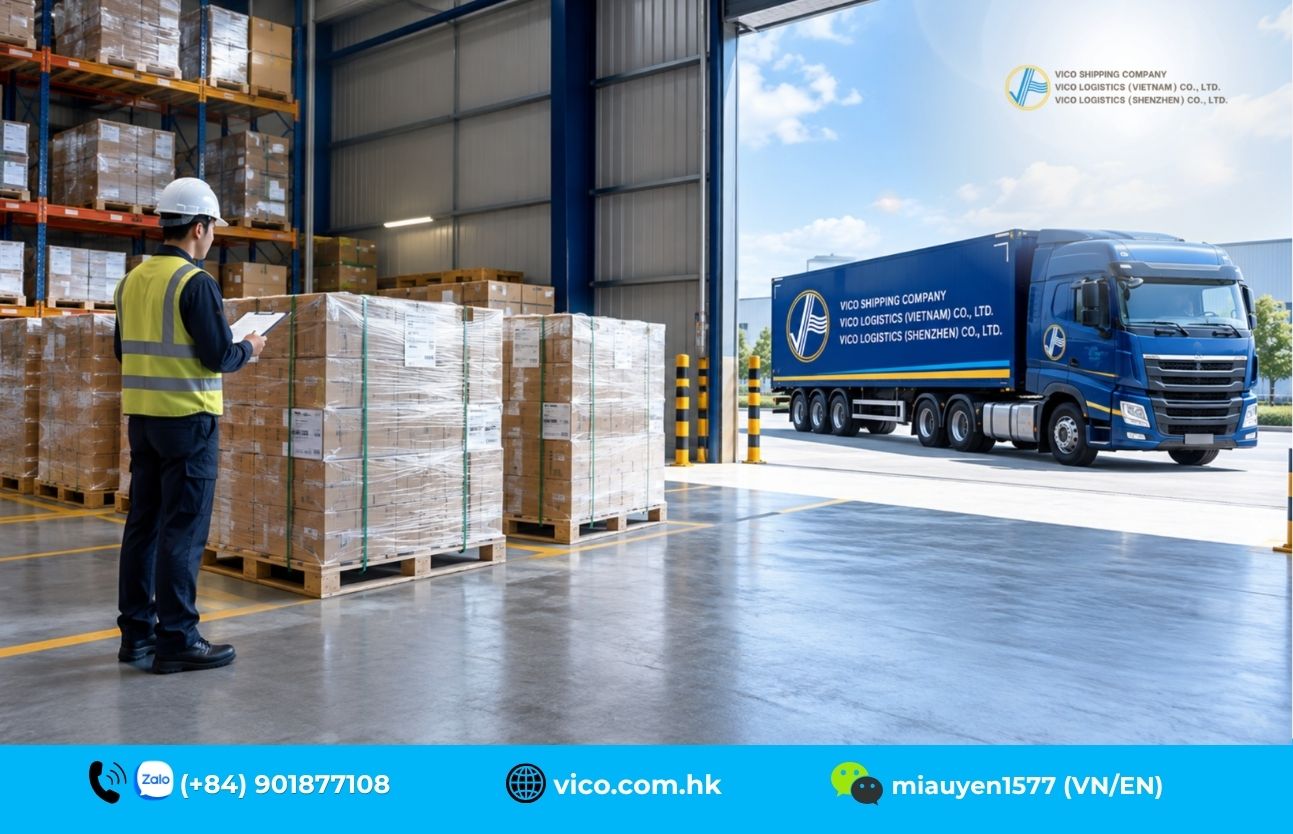
Suppose a Vietnamese enterprise purchases goods from a factory in Guangzhou under EXW terms. The seller notifies that the goods are ready at the factory, and the buyer needs to arrange for the goods to be brought to their warehouse in Vietnam.
The process may include the following steps:
-
Step 1. Confirm goods at the factory: Verify quantity, weight, dimensions, packaging specifications, pickup address, and the time the goods will be ready.
-
Step 2. Arrange pickup and domestic transport: Coordinate with the factory and transport provider regarding vehicles, loading personnel, pickup schedule, and related documents.
-
Step 3. Check export clearance feasibility: Identify the entity capable of executing export procedures in China and agree on a suitable plan before the goods leave the factory.
-
Step 4. International transport: Select the transport mode and route suited to the cargo type, volume, delivery schedule, and budget.
-
Step 5. Import customs clearance and delivery: Review documents, HS codes, commodity policies, duties, and import requirements before arranging transport to the warehouse in Vietnam.
In this example, the buyer needs to coordinate these steps or hire a logistics provider for support. Not all shipments follow the same route or incur the same types of fees; the actual plan depends on the cargo type, pickup location, and relevant regulations.
Important Note: If the buyer cannot directly or indirectly complete export procedures in the seller's country, they should discuss and consider FCA or an alternative contract arrangement before confirming the transaction.
5. Advantages and Disadvantages of EXW
EXW can be suitable for transactions where the buyer wants to independently organize pickup and control the logistics chain. However, this term also imposes high demands on transport capabilities and procedural handling.
|
Advantages
|
Disadvantages
|
|
The seller has fewer transport organization obligations.
|
The buyer must coordinate multiple stages.
|
|
The buyer proactively selects transport providers and routes.
|
Executing export procedures in the seller's country can be difficult.
|
|
Easy to compare product prices at the delivery location.
|
The EXW price does not fully reflect the total cost to the warehouse.
|
|
Suitable for domestic transactions or buyers with a logistics network in the exporting country.
|
Requires clarifying responsibilities for loading, documentation, and risk.
|
When is EXW a suitable choice?
EXW is worth considering when the buyer has the capability to organize pickup at the delivery location, control transport legs, and fulfill related customs obligations.
Conversely, if the buyer lacks agents or cannot handle export procedures in the seller's country, EXW can increase transaction complexity. In such situations, FCA or a more appropriate term should be evaluated instead of relying solely on the initial product price.
6. Comparing EXW with FCA, FOB, and DDP
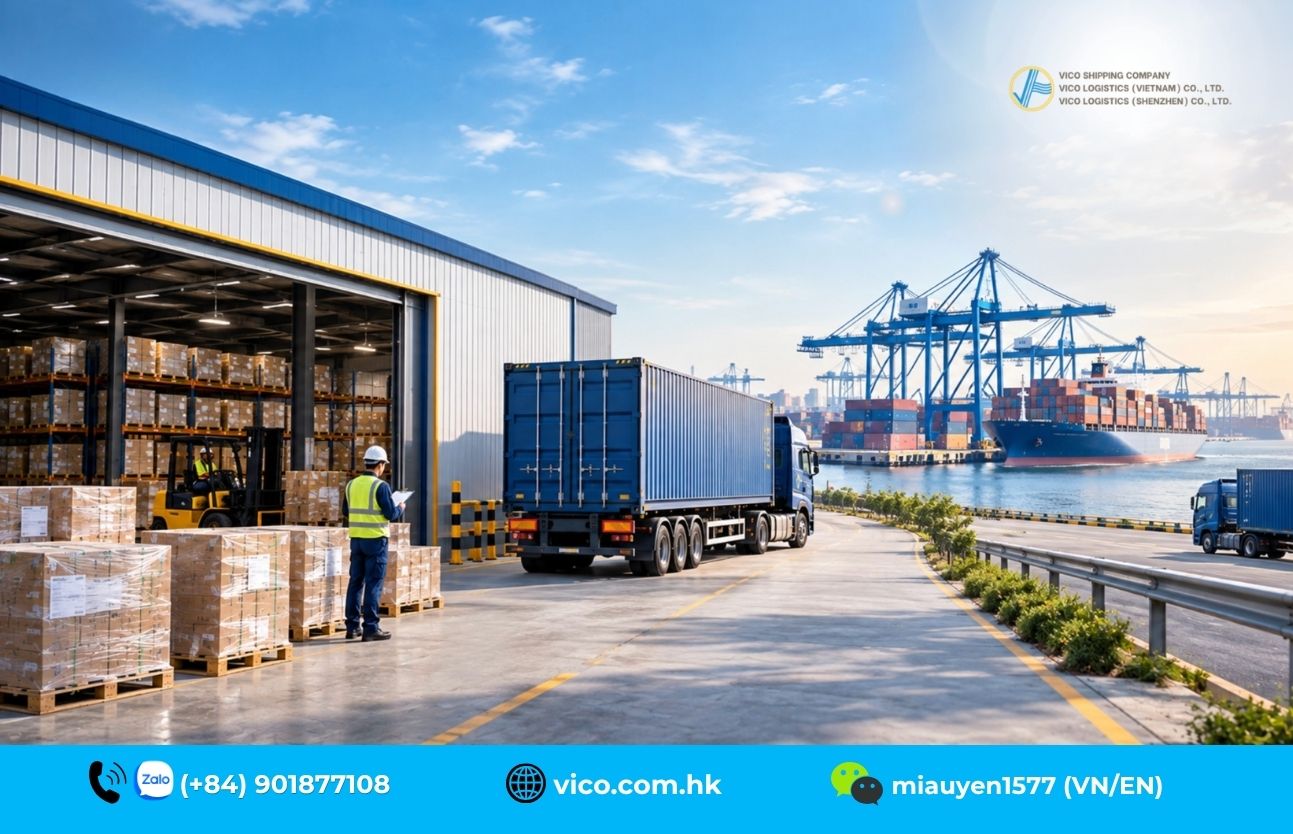
EXW is frequently compared with FCA, FOB, and DDP because these terms allocate transport and delivery responsibilities differently.
|
Criteria
|
EXW
|
FCA
|
FOB
|
DDP
|
|
English Name
|
Ex Works
|
Free Carrier
|
Free on Board
|
Delivered Duty Paid
|
|
Delivery Point
|
Goods placed at disposal at named place
|
Delivered to carrier at named place
|
Goods loaded on board vessel at port of shipment
|
Goods arrived at destination, ready for unloading
|
|
Loading onto Receiving Vehicle
|
Buyer bears by default
|
Seller loads if delivered at seller's premises under FCA
|
Seller bears loading onto vessel
|
Depends on incoming vehicle and transport contract; buyer usually unloads
|
|
Export Procedures
|
Buyer under default rule
|
Seller
|
Seller
|
Seller
|
|
Main Transport
|
Buyer organizes
|
Buyer usually organizes
|
Buyer usually organizes
|
Seller organizes
|
|
Import Procedures & Duties
|
Buyer
|
Buyer
|
Buyer
|
Seller under applicable rule
|
|
Modes of Transport
|
All modes
|
All modes
|
Sea and inland waterway only
|
All modes
|
Summary table based on general principles of Incoterms 2020. Specific responsibilities must be determined based on the delivery location, chosen rule, and contract.
How do EXW and FCA differ?
The most important difference lies in delivery responsibility and export procedures.
-
Under EXW, the seller places goods at a designated location with no default obligation to load them onto the collecting vehicle or handle export clearance.
-
Under FCA, the seller delivers goods to the carrier or another person nominated by the buyer at the agreed location and performs export clearance. If delivery occurs at the seller's premises, the seller is obliged to load the goods onto the collecting vehicle under FCA.
Therefore, FCA is generally more advisable for international export shipments when the buyer cannot independently handle export procedures in the seller's country.
How do EXW and FOB differ?
EXW can be applied to all modes of transport, whereas FOB is restricted to sea and inland waterway transport.
Under EXW, goods are delivered at a designated location, typically a factory or warehouse. Under FOB, the seller delivers goods once they are loaded on board the vessel at the port of shipment and assumes responsibility for export clearance.
If goods are containerized and handed over to the carrier at a container yard (CY) before loading on board, businesses should evaluate FCA rather than defaulting to FOB.
How do EXW and DDP differ?
EXW places minimal delivery obligations on the seller, while DDP requires the seller to assume most of the work to bring goods to the destination, including import procedures and tax obligations under the applicable rule.
DDP may be more convenient for the buyer, but the seller must verify their capability to fulfill import obligations in the destination country. DDP should not be committed to without clarifying import status, procedures, and related taxes.
7. When to Use EXW vs. When to Consider FCA
Before signing a contract, businesses should evaluate the following factors:
You may consider EXW when:
-
The buyer proactively organizes pickup at the delivery location.
-
The buyer has the capacity to coordinate transport and handle related procedures.
-
Both parties have clearly agreed on the delivery location, pickup time, and loading responsibilities.
You should evaluate FCA when:
-
Goods are exported across borders and the buyer faces difficulties with export procedures.
-
The seller is able to handle export customs clearance and deliver the goods to the carrier.
-
Goods are handed over to the carrier at the factory, warehouse, or staging point prior to international transport.
There is no single rule fit for every transaction. Choosing between EXW and FCA must be based on the actual delivery location, procedural execution capabilities, and how both parties wish to divide responsibilities.
8. Considerations When Signing Contracts under EXW Incoterms 2020
-
Specify the delivery location clearly: Avoid writing merely "EXW China" or "EXW warehouse." Specify the exact factory address or warehouse, and clarify the pickup point within that location.Example formulation:
EXW [named factory or warehouse address], Incoterms® 2020 -
Agree on loading responsibilities: Under EXW, the seller has no default obligation to load goods onto the vehicle arranged by the buyer. If the seller will actually assist with loading, both parties should clearly agree on responsibilities, costs, and procedures for handling any loss incurred during loading.
-
Check export procedures before closing the order: This is exceptionally critical for goods purchased internationally. The buyer must determine who can perform export procedures, what documents must be provided, and which plan aligns with the exporting country's regulations.
-
Estimate total cost instead of looking only at the EXW price: Request transport quotations based on pickup location, cargo type, dimensions, weight, transport mode, and final destination. Simultaneously, clearly identify included items to avoid duplication or omissions.
-
Consider cargo insurance: EXW does not obligate the seller to purchase insurance for the goods. The buyer should evaluate insurance needs based on cargo value, transport route, and potential risks.
-
State the applied Incoterms version: When selecting EXW, clearly state
Incoterms® 2020in the contract to identify the governing rulebook. The parties must also separately regulate matters outside the scope of Incoterms, such as payment methods and the timing of the transfer of title.
9. Frequently Asked Questions about EXW
What does EXW stand for?
EXW stands for Ex Works, meaning delivery at the workshop/factory. This is one of the 11 Incoterms 2020 rules.
Does EXW apply to sea and air freight?
Yes. EXW applies to all modes of transport, including road, sea, air, and multimodal transport.
Under EXW, who bears transportation costs?
Under default allocation, the buyer is responsible for organizing and paying for transport legs after goods are delivered at the designated location, along with related costs falling under the buyer's obligations.
Under EXW, who handles export customs clearance?
Under the EXW rule, the buyer is responsible for executing export procedures. However, if the buyer cannot fulfill this obligation per regulations in the exporting country, both parties should consider FCA or a more appropriate contract plan.
Does the EXW price include international freight?
Typically, the EXW price does not include international freight since the buyer organizes transport under default allocation. Specific quotations and contracts must be reviewed to accurately determine cost scope.
EXW vs. FCA: Which condition is better?
Neither condition is universally better. EXW is suitable when the buyer can receive goods and self-organize related obligations; FCA is worth considering when the seller can handle export procedures and deliver goods to the carrier.
Should you choose EXW when importing goods from China to Vietnam?
It is possible, but you must evaluate the feasibility of factory pickup, executing export procedures in China, organizing international transport, and clearing imports in Vietnam. If the buyer faces difficulty with export procedures, they should discuss with the supplier to consider FCA.
10. VICO Logistics Supports Businesses in Transporting EXW Cargo
Choosing the correct delivery term is the first step to controlling costs and mitigating risks in the supply chain. For EXW shipments, businesses must coordinate multiple stages—from factory pickup, domestic transport, and import/export procedures to final-point delivery.
Before confirming an order, businesses should evaluate total logistics costs, procedural execution capabilities in the exporting country, and the responsibilities of each party during transit.
Are you looking to ship cargo under EXW terms?
Please prepare basic information:
-
Factory or warehouse pickup address.
-
Commodity name, quantity, weight, and dimensions.
-
Destination in Vietnam or receiving country.
-
Intended mode of transport.
-
Requirements for transport support, customs clearance, and door-to-door delivery.
VICO Logistics can discuss your shipping needs and logistics solutions tailored to the characteristics of your shipment.
Contact VICO Logistics for consultation on international transport solutions and cost estimation based on your actual shipment details.
- How to Calculate Import Duty in Vietnam (2026 Guide)
- What Are Green, Yellow, and Red Customs Channels? Differences & Handling Guide
- What Is a Customs Declaration? A Complete A–Z Guide for Businesses
- What Is an HS Code? How to Find HS Codes, Calculate Duties, and Avoid Incorrect Declarations
- What Is a Sales Contract? 12 Key Details to Check Before Signing
- What Is MSDS/SDS? 16 Sections and Its Role in Import and Export
- What Is an Insurance Certificate? How to Verify and Use It
- What Is an Air Waybill (AWB)? How to Read & Track an AWB
Get a Logistics Quote in just 5 minutes
Professional international transportation and supply chain solutions tailored for your business.
Get a quote now ↗Quick Contact
🇻🇳 Ms Uyen
Hotline / Zalo
(+84) 901 877 108WeChat (VN/EN)
miauyen1577Scan to Contact
Zalo
🇨🇳 Ms Schyler
Office Hotline
(+852) 3759 9300WeChat ID
Schyler_skylarScan to Contact
VICO International Logistics — Your Trusted Logistics Partner in Indochina
Senior member of international logistics and trade associations: Eurocham, JCtrans, VICOFA, VITAS, and more.